
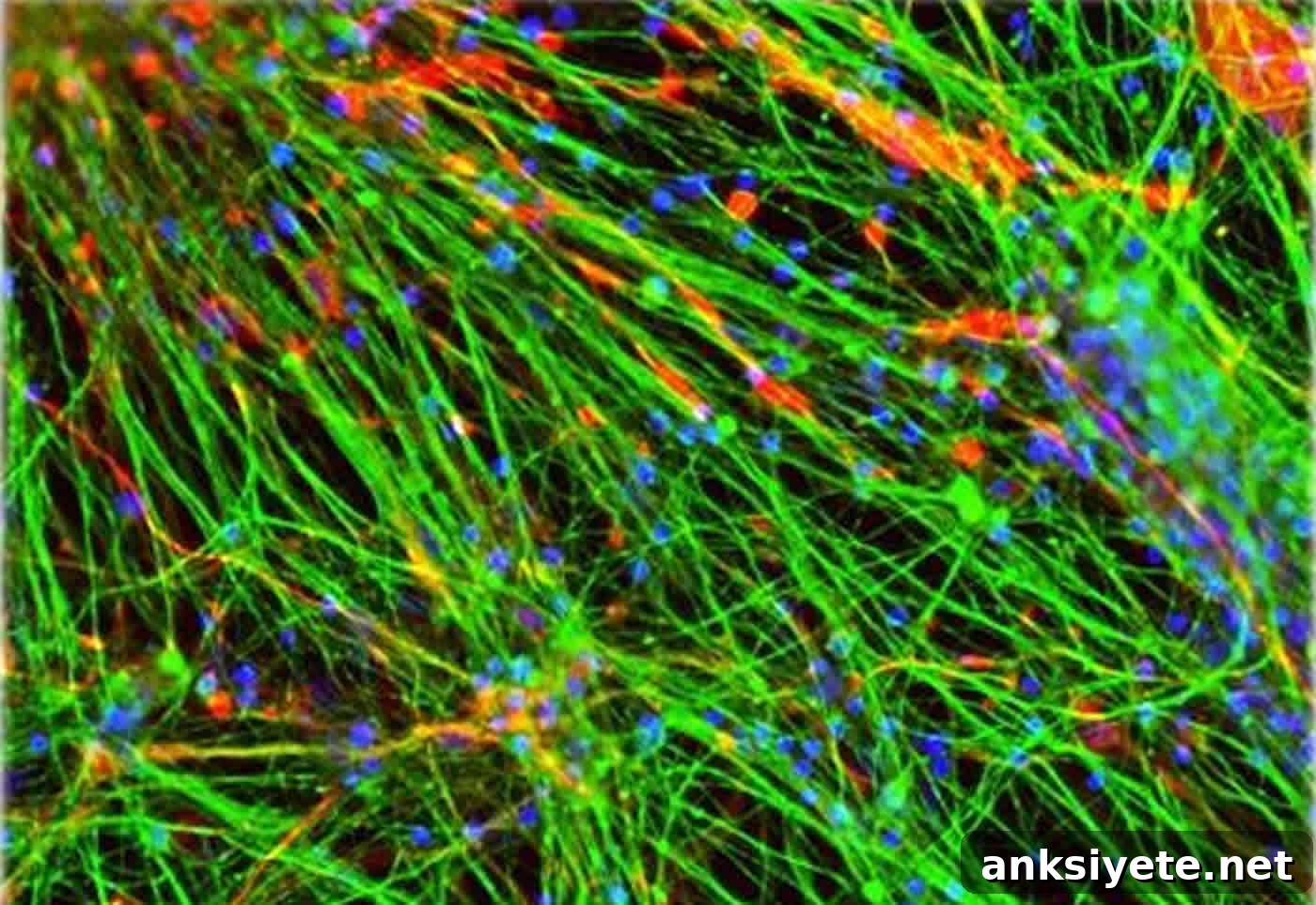
Summary: Researchers at Tufts University have developed a faster method to produce human neural stem cells that differentiate rapidly, improving options for tissue engineering and three-dimensional brain models.
Source: Tufts University
New process may enable engineering of innervated tissues such as skin, cornea, and functional human brain models.
Scientists at Tufts University report a streamlined technique for creating human induced neural stem cell (hiNSC) lines that differentiate into active neurons far more quickly than existing methods. Published in Stem Cell Reports, the study describes how adult human fibroblasts and adipose-derived stem cells can be converted into stable hiNSC lines that acquire neuronal characteristics in as little as four days—compared with the typical four-week timeline in many current protocols. This acceleration could expand the feasibility of complex tissue-engineering projects, including innervated co-cultures and three-dimensional (3D) human brain models for studying neurological disease.
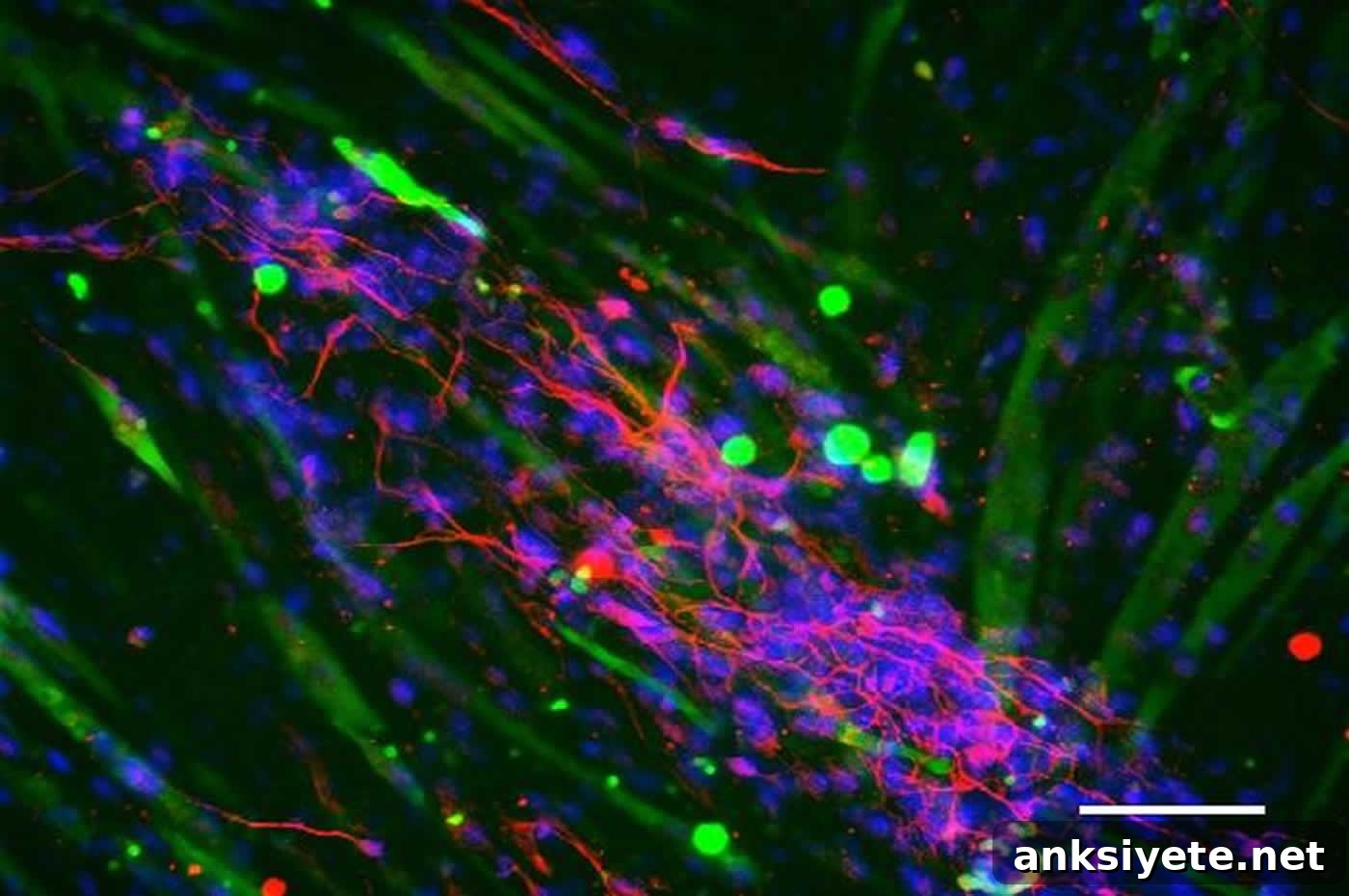
The resulting hiNSC lines are robust: they can be expanded through repeated passaging, cryopreserved as colonies, and cultured indefinitely. They show reliable, media-independent differentiation into TUJ1-positive neurons within days, and they integrate well with other cell types in vitro, including skeletal muscle. When introduced into early-stage chicken embryos, these hiNSCs migrated and incorporated into both central nervous system structures and peripheral neurons that innervate developing limbs, demonstrating in vivo capacity for contributing to multiple neural compartments.
While other groups have generated hiNSCs, the Tufts method is notable for its relative simplicity, speed, and reproducibility. According to corresponding author David L. Kaplan, Ph.D., Stern Family Professor in the Department of Biomedical Engineering at Tufts School of Engineering, the approach reduces a major bottleneck in human nervous system research. Kaplan highlights potential uses such as high-throughput drug screening, complex innervated co-culture systems, and 3D tissue models incorporating cells from healthy donors or patients with neurodegenerative disease.
The new hiNSCs also build on prior work from Kaplan’s laboratory. In 2014, the team produced a complex 3D cortical tissue model derived from rat neurons grown on a porous silk protein scaffold, demonstrating stable biochemical and electrophysiological responses over months in culture. Using the same silk and collagen scaffold materials, the researchers applied the new human-derived hiNSCs to create a working 3D human brain model. Imaging of these cultures revealed neurons forming networks and firing activity, confirming functional connectivity in the engineered tissue.
Postdoctoral researcher Dana M. Cairns, first author on the paper, notes that the speed of differentiation can shorten experimental timelines dramatically. Emerging brain models often require months of maturation before achieving brain-like features; by contrast, the hiNSC-derived cultures display network formation within a few weeks on scaffold materials, speeding experimental cycles and enabling larger, more sustainable 3D constructs.
The study’s author list includes Dana M. Cairns, Karolina Chwalek, Yvonne E. Moore, Matthew R. Kelley, Rosalyn D. Abbott, Stephen Moss, and David L. Kaplan. Contributors span Tufts’ Department of Biomedical Engineering, the Sackler School of Graduate Biomedical Sciences, and the Tufts University School of Medicine.
Funding: The work was supported by the National Institute of Biomedical Imaging and Bioengineering (NIH EB002520), the National Institute of Neurological Disorders and Stroke (NIH R01NS092847), and the German Research Foundation (DFG: CH 1400/2-1).
Original research: “Expandable and Rapidly Differentiating Human Induced Neural Stem Cell Lines for Multiple Tissue Engineering Applications” by Dana M. Cairns et al., published in Stem Cell Reports. Published online July 25, 2016. doi:10.1016/j.stemcr.2016.07.017
Limited access to human neurons constrains biological and preclinical studies of the human nervous system. Current stem cell approaches for neuron production can be time-consuming and variable. This study establishes stable hiNSC lines via direct reprogramming of neonatal fibroblasts and adult adipose-derived stem cells. The hiNSC lines can be passaged indefinitely and cryopreserved; they undergo rapid, media-independent differentiation into TUJ1-positive neurons within four days. In vivo experiments show hiNSCs migrate, engraft, and contribute to both central and peripheral nervous systems. The lines are demonstrated in innervated muscle co-cultures and a 3D human brain model, offering a practical tool for drug screening and patient-specific disease modeling related to innervation and brain disorders.
Highlights
- hiNSC lines are expandable and can be cryopreserved.
- Robust differentiation into neurons can occur within four days, independent of media.
- hiNSCs integrate into both central and peripheral nervous system structures in vivo.
- Practical demonstration in innervated muscle co-culture and a 3D human brain model.
This research advances tools for tissue engineering and neurological study by enabling rapid generation of functional human neural cells suitable for scalable co-culture and 3D modeling applications.