
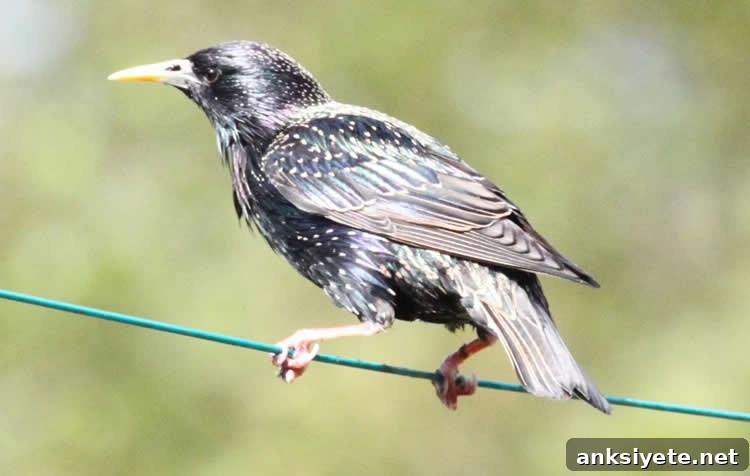
Male Starlings Sing Less to Females Exposed to Low Levels of Antidepressants
Summary: A new study finds that male songbirds reduce courtship singing to females that have been exposed to low, environmentally relevant levels of the SSRI antidepressant fluoxetine (Prozac).
Source: University of York
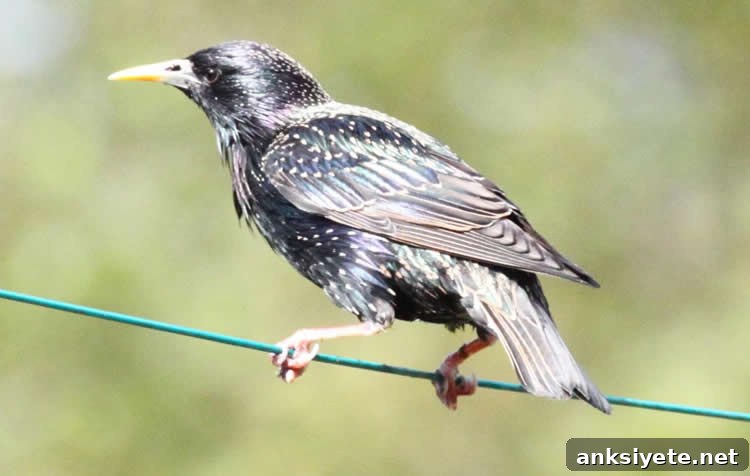
Key finding: In a field-relevant experiment, male European starlings (Sturnus vulgaris) sang significantly less and acted more aggressively toward females that had received dilute doses of the antidepressant fluoxetine—concentrations similar to those detected at wastewater treatment sites.
Background and rationale
Pharmaceuticals, including selective serotonin reuptake inhibitors (SSRIs) like fluoxetine (Prozac), enter aquatic and terrestrial environments when they pass through human bodies and reach sewage-treatment facilities. Many such compounds are persistent and can accumulate in the invertebrates that birds feed on at locations such as wastewater treatment works. Because birds forage on worms, maggots and flies at these sites year-round, they can be exposed chronically to low concentrations of human medications. The ecological consequences of this exposure are not yet fully understood.
Study design and measures
Researchers from the University of York’s Environment Department, together with collaborators at the NERC Centre for Ecology and Hydrology and the Animal and Plant Health Agency, conducted a three-year experimental study. Wild-caught female starlings received a maximally environmentally relevant dose of fluoxetine (2.7 μg per day) over a period intended to mimic exposure at sewage works. The team observed courtship interactions by pairing treated and untreated females with males and recording male song frequency and duration, male aggression, and female behaviour over two-day trials. Female body condition and circulating hormone levels (testosterone and estradiol) were also measured to identify physiological effects that might explain any behavioural changes.
Findings
The experiments showed clear behavioural effects. Males directed more than twice as many songs, and sang for longer, to untreated females than to females that had been given fluoxetine. Instead of typical courtship, males paired with treated females displayed higher levels of aggression—chasing, pecking and clawing—toward those females. Females given fluoxetine showed an initially higher level of aggression toward males that declined by the second day, whereas control females maintained intermediate aggression across the trial. The treatment did not affect female courtship displays, body condition, or circulating testosterone and estradiol concentrations, suggesting that altered female attractiveness rather than gross physiological change explained male preference.
Implications
These results provide the first experimental evidence that low, environmentally realistic concentrations of an antidepressant can disrupt songbird courtship. Because singing plays a crucial role in mate attraction and selection—males use song to court, and females use it to assess male quality—reductions in male courtship singing and increased male aggression toward exposed females could lower mating success. Slower mate acquisition or reduced pairing success can reduce reproductive opportunities, with potential impacts on individual fitness and population dynamics. Given ongoing declines in many wildlife populations, the findings raise questions about whether current wastewater treatment practices sufficiently remove pharmaceutical contaminants before they enter habitats used by foraging birds.
Study and publication details
The work was led by Dr Kathryn Arnold and researcher Sophia Whitlock at the University of York and was funded by the Natural Environment Research Council (NERC). The peer-reviewed results were published in the journal Chemosphere under the title “Environmentally relevant exposure to an antidepressant alters courtship behaviours in a songbird.” Authors include Sophia E. Whitlock, M. Glória Pereira, Richard F. Shore, Julie Lane, and Kathryn E. Arnold. DOI: 10.1016/j.chemosphere.2018.07.074.
Note: In the UK alone, tens of millions of antidepressant prescriptions are dispensed annually, and some active compounds are known to persist through sewage treatment and into the wider environment. This study highlights one pathway by which such contaminants can affect wild birds.
The study documents behavioural changes in starlings that could increase risk in natural populations and adds to a growing body of evidence that environmental concentrations of pharmaceuticals can alter traits related to fitness. Continued research and improved wastewater management may be needed to reduce unintended impacts of human medications on wildlife.