
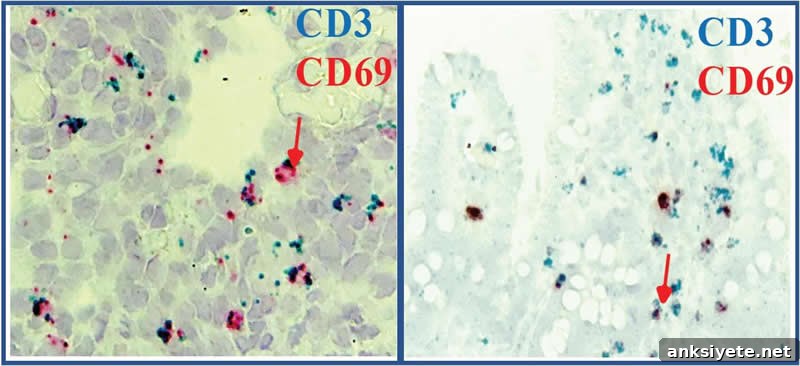
Summary: New research reveals that the fetal intestine develops a much more mature immune system than previously believed. These results could inform maternal vaccine design and offer earlier clues about future autoimmune or inflammatory diseases.
Source: University of Pittsburgh
Overview: Traditional textbooks portray the fetal immune system as immature and largely naive until after birth. Research from the University of Pittsburgh School of Medicine and UPMC Children’s Hospital of Pittsburgh offers a different picture. Published in Developmental Cell, this study provides the first comprehensive characterization of immune cells in the developing human gut and demonstrates that significant immune maturation takes place during the second trimester.
“Mapping intestinal immune development is essential because early immune programming may influence the risk of autoimmune and autoinflammatory disorders, including inflammatory bowel disease, later in life,” said co-senior author Liza Konnikova, M.D., Ph.D., assistant professor of pediatrics at the Pitt School of Medicine and a neonatologist at UPMC Children’s Hospital.
“These findings also open new possibilities for maternal vaccination strategies that could protect infants before birth.”
Using advanced single-cell and genomic technologies, Konnikova and colleagues analyzed gut tissue collected from fetuses aged 14 to 23 weeks and from infants undergoing corrective surgeries for intestinal defects. Their detailed cellular and molecular profiling uncovered both innate and adaptive immune components in the fetal gut, with many elements already well established by about 14 weeks’ gestation and remaining largely stable into infancy.
The team identified a diverse population of innate immune cells, including macrophages, dendritic cells and natural killer (NK) cells—key players in early defense and immune regulation. Antigen-presenting cells, which are crucial for initiating adaptive immune responses, were abundant, suggesting the fetal gut is already equipped to prime and shape adaptive immunity.
Adaptive immune cells were also present in substantial numbers. The researchers found numerous B cells and a surprising abundance of T cells. Remarkably, a large proportion of those T cells displayed a tissue-resident memory (TRM) phenotype—cells normally associated with previous exposure to antigens and rapid, localized responses to repeat challenges.
Memory T cells are typically thought to arise after pathogen exposure, so their presence in the fetal gut was unexpected. Konnikova and colleagues propose that fetuses may encounter antigenic or microbial molecular fragments through the amniotic fluid, which the fetus swallows beginning around 12 weeks. These exposures could prime the developing mucosal immune system without causing overt infection.
The prevalence of TRM-like T cells in utero suggests a mechanism that may help newborns manage the dramatic microbial exposure that follows birth while avoiding excessive immune activation. In contrast, certain inflammation-recruited innate cells, such as neutrophils, were found mainly in infants after birth rather than in fetal tissue.
Konnikova emphasized limitations of the study: the intestinal immune profile may not represent other fetal tissues, the samples were limited to the second trimester, and neonatal specimens came from infants who required surgical care rather than from completely healthy newborns. Despite these caveats, the findings establish a second-trimester and infant intestinal immune atlas and challenge the notion that mucosal immunity develops only after birth.
Looking ahead, the research team plans to identify the specific antigenic exposures that shape fetal immune development and to determine if and how this process can be modulated to benefit fetal and neonatal health. Long-term goals include prenatal immune monitoring, early diagnosis of immune-related diseases, and development of maternal vaccines designed to optimize infant protection before birth.
Funding: This research was supported by the University of Pittsburgh.
Contributing authors: Stephanie Stras, Jessica Toothaker, Collin McCourt, Austin Oldham, Oluwabunmi Olaloye (all University of Pittsburgh); Lael Warner, Ph.D., Yu Nee Lee, Ph.D., Erez Rechavi, M.D., and Dror S. Shouval, M.D. (Tel Aviv University); with additional contributions from the Konnikova Lab and collaborators.
Source:
University of Pittsburgh
Media contact:
Arvind Suresh – University of Pittsburgh
Image credit:
Cell Press / Konnikova Lab
Original research: Developmental Cell. Title: “Maturation of the Human Intestinal Immune System Occurs Early in Fetal Development.” This open-access study combines mass cytometry (CyTOF) and next-generation sequencing of B and T cell receptors to reveal a complex and diverse intestinal immune landscape as early as the second trimester.
Key findings:
- Complex cellular diversity in the 2nd trimester human intestine demonstrated by CyTOF analysis.
- Presence of CD4+ and CD8+ tissue-resident memory T cells capable of cytokine secretion in fetal and infant intestines.
- Diverse B and T cell receptor repertoires detectable in early second trimester, with developmental changes as gestation advances.
- Shared T cell clones are abundant in the fetal intestine, indicating early clonal expansion and tissue-specific immune programming.
This study lays the groundwork for further investigation into prenatal immune development, maternal vaccination strategies, and early prediction or prevention of immune-mediated diseases.