
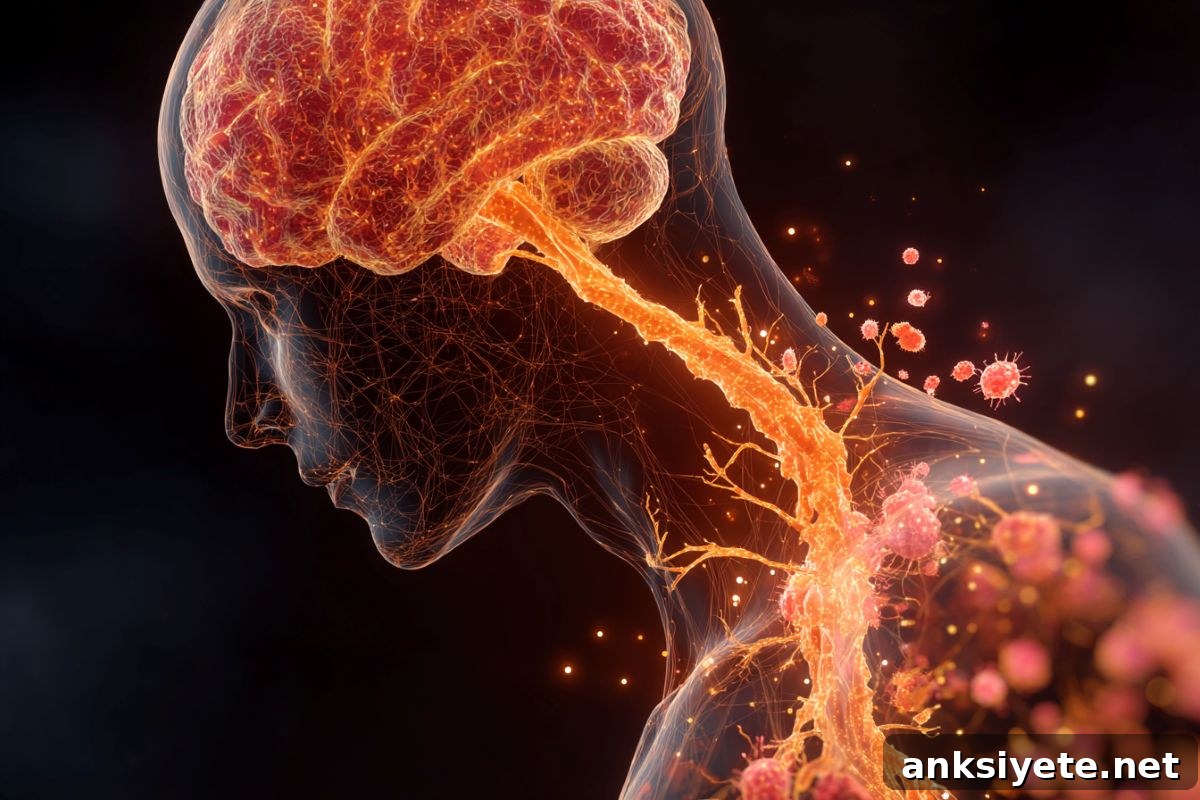
Summary: Clinical observations have long linked psychological stress with skin flare-ups, but the biological mechanism remained unclear. New research maps a direct neural route from the brain to the skin that explains how stress worsens atopic dermatitis (eczema).
Analyzing data from 51 patients and multiple mouse models, researchers identified a distinct group of sympathetic neurons that transmit stress signals to the skin and recruit inflammatory immune cells that drive redness and itching.
Key Facts & Findings
- Pdyn+ sympathetic pathway: A specific subset of prodynorphin-positive (Pdyn+) noradrenergic sympathetic neurons serves as a direct neural link between the brain’s stress response and immune activation in the skin.
- Hairy skin sensitivity: These Pdyn+ neurons preferentially innervate hairy skin, helping explain why some body regions are more reactive to emotional stress.
- Eosinophil recruitment mechanism: Pdyn+ neurons release the chemokine CCL11, which signals through the CCR3 receptor to attract eosinophils—white blood cells associated with allergic inflammation.
- Activation by adrenergic signaling: Recruited eosinophils are activated via beta-2 adrenergic receptors (Adrb2), prompting release of inflammatory proteins and cytokines that aggravate eczema symptoms.
- Therapeutic implications: Removing Pdyn+ neurons or depleting eosinophils in experimental models prevented stress-induced skin inflammation, suggesting neuro-immune targets could complement topical therapies and stress management.
Source: AAAS
New findings from patient data and mouse experiments reveal how psychological stress intensifies atopic dermatitis by activating a neural pathway that links the brain to immune responses in the skin.
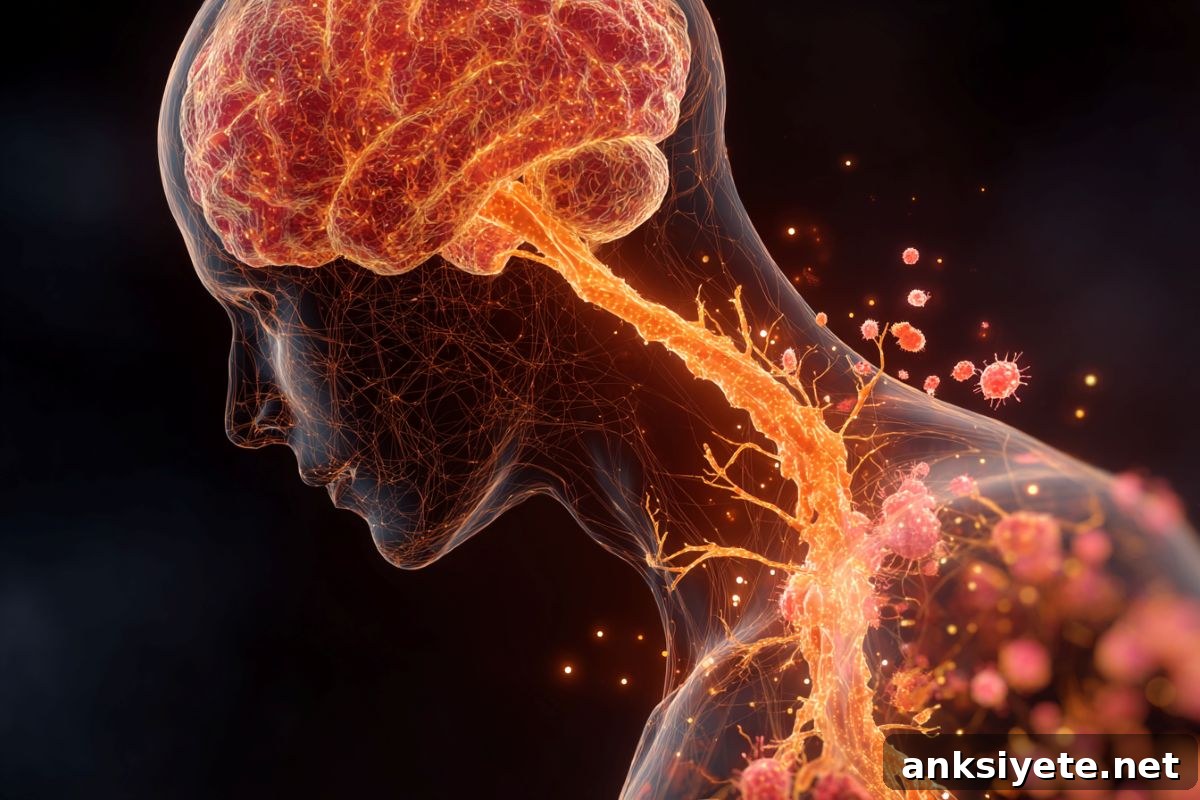
The study provides a clear mechanistic explanation for the commonly observed link between stress and eczema flare-ups. The authors suggest that addressing psychological stress alongside standard dermatological treatments may improve outcomes for people with atopic dermatitis.
Psychological stress can disrupt immune balance across the body. The skin is uniquely susceptible because it hosts dense networks of nerves and immune cells, making it particularly responsive to stress-related neural signals. Eosinophils—immune cells that release inflammatory mediators—are closely tied to dermatitis severity, but how stress recruits and activates these cells was not well understood until now.
To clarify this pathway, Jiahe Tian and colleagues combined clinical analysis of 51 eczema patients with experimental mouse models. They identified Pdyn+ noradrenergic sympathetic neurons that preferentially innervate hairy skin and respond to psychological stress. Using genetic ablation and optogenetic activation, the team demonstrated that these neurons are necessary and sufficient to increase eosinophil recruitment and worsen skin inflammation in stressed animals. Patient data similarly showed a correlation between higher stress levels and increased skin eosinophilia.
How the pathway works
Pdyn+ sympathetic neurons transmit stress signals from the brain to the skin. At the skin, these neurons release CCL11, which attracts eosinophils by acting on CCR3. Once eosinophils arrive, adrenergic signaling through Adrb2 activates them, prompting release of granule proteins and cytokines that drive itch, redness, and barrier disruption. Experimentally removing Pdyn+ neurons or eosinophils reduced stress-driven inflammation, while activating the neurons amplified it.
Key Questions Answered
A: No. The study shows eczema flares triggered by stress are a real neuro-immune event. Stress activates specific sympathetic nerve fibers (Pdyn+ neurons) that send physical signals to skin immune cells, prompting inflammation. The brain initiates the response, but the inflammation is biological and measurable in the skin.
A: Stress activates the sympathetic nervous system. The Pdyn+ neurons respond by releasing signals—such as CCL11—that draw eosinophils into the skin. Those immune cells then release inflammatory proteins that produce sudden, intense itching and redness.
A: Stress management can help and should be part of care, but the study suggests a combined approach will be most effective. Topical therapies treat skin symptoms, while potential future “neuro-immune” treatments might target beta-2 adrenergic receptors or the CCL11–CCR3 pathway to block the stress signal before it triggers skin inflammation.
Editorial Notes
- Edited by a Neuroscience News editor.
- Journal paper reviewed in full.
- Additional context added by editorial staff.
About this research
Author: Science Press Package Team
Source: AAAS
Contact: Science Press Package Team – AAAS
Image: Credit to Neuroscience News
Original Research: Closed access. “A sympathetic-eosinophil axis orchestrates psychological stress to exacerbate skin inflammation” by Jiahe Tian, Yudian Cao, Yilei Li, Junlong Sun, Cheng Zhan, Wei Ni, Yongjun Zheng, Yanqing Wang, and Shenbin Liu. Science. DOI: 10.1126/science.adv5974
Abstract
A sympathetic-eosinophil axis orchestrates psychological stress to exacerbate skin inflammation
INTRODUCTION
Psychological stress is a well-established trigger that worsens atopic dermatitis (AD). Stress hormones and neural signals can impair the skin barrier, amplify inflammation, and intensify itch. Repeated scratching further damages the barrier and perpetuates a cycle of inflammation and psychological distress, making stress management an important element of AD care.
RATIONALE
Eosinophil accumulation is a notable feature of AD. Eosinophils release granule proteins (for example, eosinophil peroxidase and major basic protein) and cytokines such as interleukin-31 that amplify inflammation and correlate with disease severity. How psychological stress specifically promotes eosinophil recruitment and activation in the skin was previously unclear.
RESULTS
The researchers combined a retrospective analysis of AD patients with controlled mouse experiments. Patient data revealed a link between higher stress and greater eosinophil accumulation in affected skin. In mice, eliminating eosinophils reduced stress-related worsening of dermatitis. Experiments showed that peripheral sympathetic nerves—not adrenal or systemic hormone pathways—mediate the effect. Single-nucleus RNA sequencing and genetic tools identified two major sympathetic neuron populations marked by prodynorphin (Pdyn) and neuropeptide Y (Npy). Skin-innervating Pdyn+ neurons, specifically, were necessary and sufficient to drive stress-induced eosinophil recruitment and inflammation. These neurons release CCL11 to attract eosinophils via CCR3, and adrenergic activation through Adrb2 on eosinophils is required for their inflammatory response.
CONCLUSION
These results demonstrate that psychological stress can worsen atopic dermatitis through a specialized Pdyn+ noradrenergic sympathetic neuron–eosinophil axis. Stress-induced eosinophilia could serve as a biomarker of AD severity, and interrupting the Pdyn+ neuron–eosinophil interaction may offer a new therapeutic strategy to reduce stress-driven skin inflammation.