
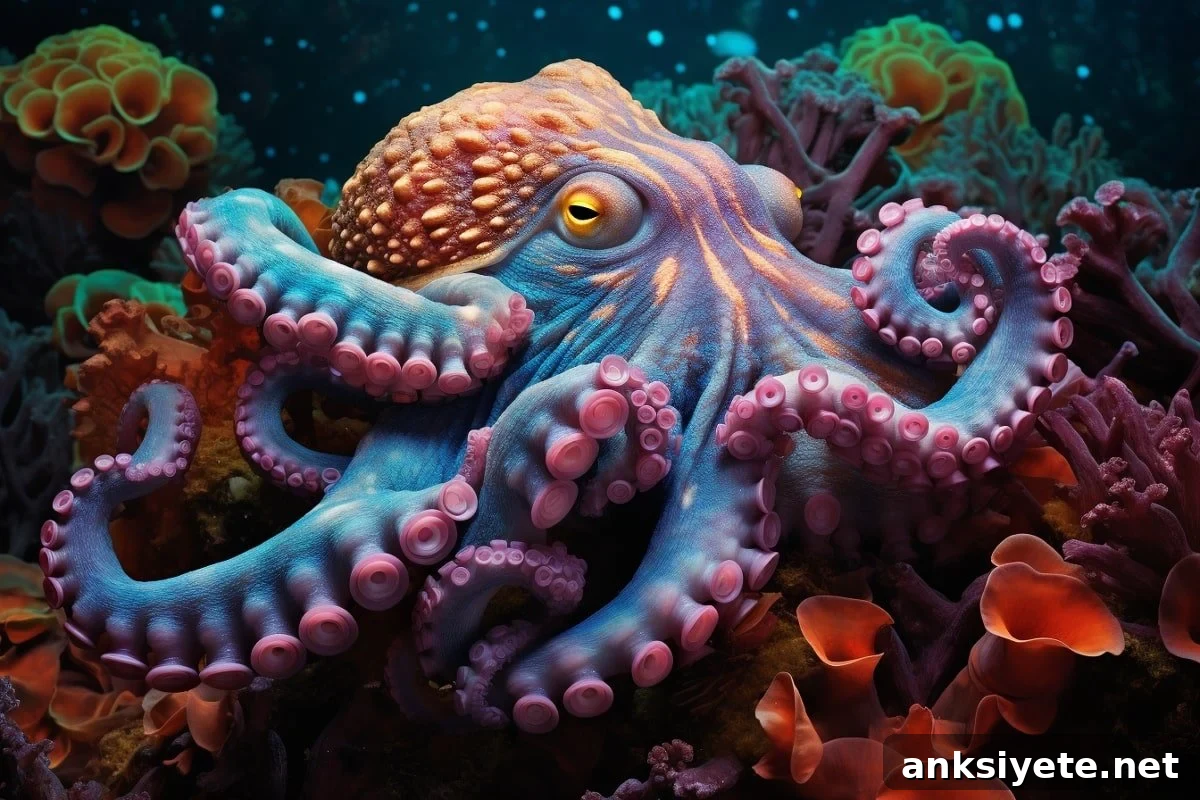
Octopus Sleep Mirrors Human REM-like Activity: Study Finds Wake-like Brain Patterns and Skin Displays
Summary: Octopuses show two distinct sleep stages, including an active, wake-like phase that closely resembles REM sleep in mammals. This finding suggests that an active sleep stage may be a convergent feature of complex cognition across distant animal lineages.
Researchers from the Okinawa Institute of Science and Technology (OIST), together with colleagues from the University of Washington, examined neural activity and ultra-high-resolution skin patterning in Octopus laqueus. They found recurring, brief episodes of active sleep during which the animals’ arms and eyes twitch, breathing speeds up, and skin color and texture change rapidly—behaviors that mirror wakeful patterns and resemble mammalian REM sleep.
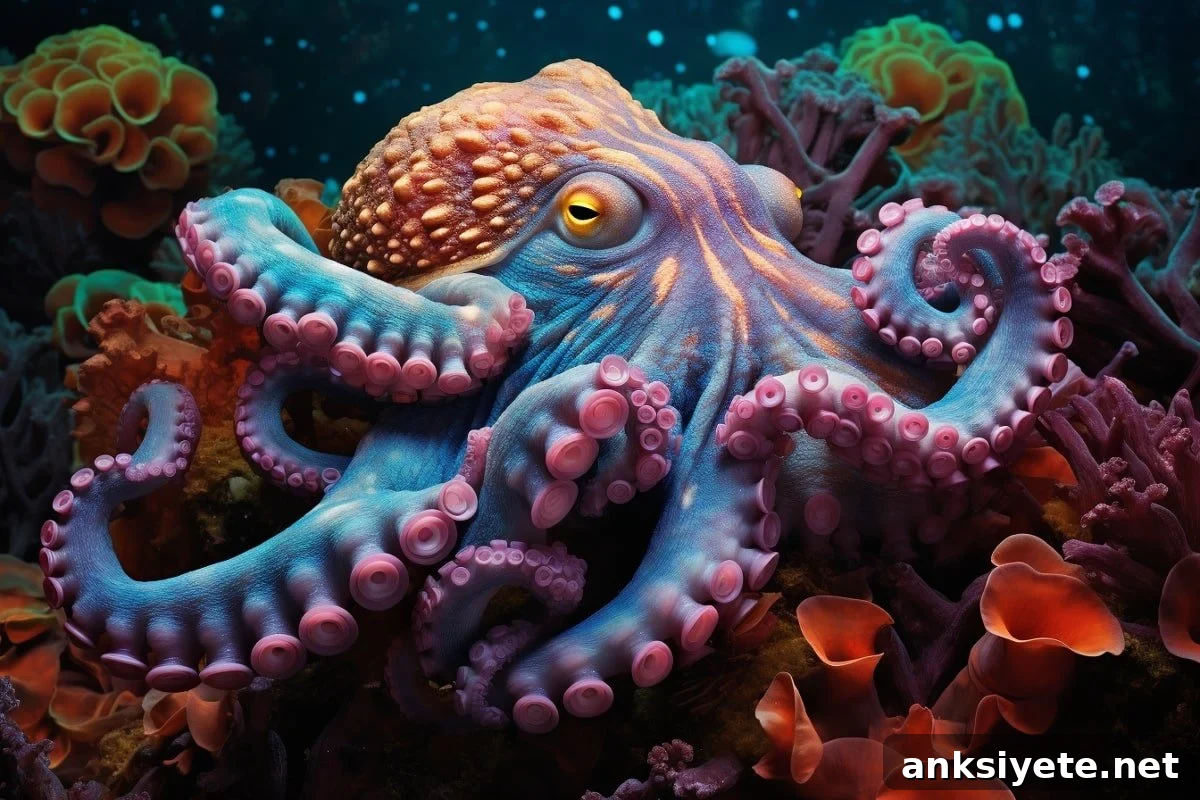
Published on 28 June in Nature, the study documents striking parallels between octopus sleep and human sleep architecture and offers new clues about the evolution and function of sleep. Octopuses, which diverged from vertebrates roughly 550 million years ago and evolved large, sophisticated brains independently, display a rhythmic alternation between a quiet sleep and a distinct active sleep stage.
To verify that these episodes represented genuine sleep states, researchers tested the animals’ responsiveness to tactile stimuli. Octopuses in both quiet and active sleep required stronger stimulation to elicit a reaction versus when awake, confirming reduced responsiveness consistent with sleep. The team also showed that sleep deprivation or disruption during the active phase led to compensatory increases in the frequency and rapidity with which octopuses entered the active stage—evidence that this stage serves an essential physiological function.
Electrophysiological recordings revealed two complementary neural signatures. During quiet sleep, the central brain produced rhythmic oscillations resembling mammalian sleep spindles—waveforms linked in other species to memory consolidation—especially in brain regions associated with learning and memory. In contrast, active sleep bouts, lasting about a minute and occurring roughly every hour, featured local field potential patterns that closely matched waking brain activity, mirroring the wake-like neural state of REM sleep in mammals.
Beyond brain signals, the study leveraged 8K imaging to capture skin-pattern dynamics at cellular resolution. Awake octopuses control thousands of pigmented cells to generate camouflage, social displays, and threat signals. During active sleep, they cycled through many of the same skin patterns observed while awake. This visual readout of sleep-stage activity offers a rare window into an animal’s internal state: the skin itself displays patterns that correspond to brain dynamics.
The researchers propose several, nonexclusive interpretations for these wake-like patterns. One possibility is that active sleep helps maintain or rehearse skin patterning circuits—essential for effective camouflage and signaling—or simply keeps pigment cells functional. Another compelling idea is that octopuses may be reactivating waking experiences, such as hunting or hiding, in a manner akin to dreaming, with skin patterns reflecting replay of prior sensory-motor events. While intriguing, the team emphasizes that current evidence does not yet allow them to determine which explanation is correct.
“The independent evolution of a two-stage sleep system in such distantly related animals suggests that an active, wake-like stage may be a general feature of complex cognition,” said Dr. Leenoy Meshulam, who helped design the study. Co-first author Aditi Pophale noted that the compensatory increase in active sleep following disruption “nails down the active stage as being an essential stage of sleep that is needed for octopuses to properly function.”
The study’s combination of behavioral observation, high-density electrophysiology, and ultra-high-resolution imaging creates a detailed picture of how octopus brains and bodies behave across sleep states. It highlights conserved functional motifs—such as spindle-like oscillations in memory-related regions during quiet sleep and wake-like activation during active sleep—that mirror key aspects of vertebrate sleep architecture despite vastly different neural anatomies.
About this neuroscience research news
Author: Tomomi Okubo
Source: OIST
Contact: Tomomi Okubo – OIST
Image: Image credited to Neuroscience News
Original Research: Wake-like skin patterning and neural activity during octopus sleep by Sam Reiter et al., published in Nature. The paper is open access.
Abstract (condensed)
Many vertebrates exhibit at least two sleep stages—slow-wave and REM—characterized by synchronous and wake-like brain activity, respectively. This study identifies parallel sleep stages in octopuses: a quiet sleep with spindle-like oscillations and a distinct active sleep with wake-like neural activity and rapid, reversible behavioral changes. Active sleep bouts are homeostatically regulated and display skin pattern dynamics that strongly resemble waking patterns. High-density recordings show region-specific activity, with learning- and memory-associated lobes active during the active stage and relatively silent during quiet sleep. The shared features between octopus and vertebrate sleep support the idea that aspects of two-stage sleep represent convergent solutions tied to complex cognition.