
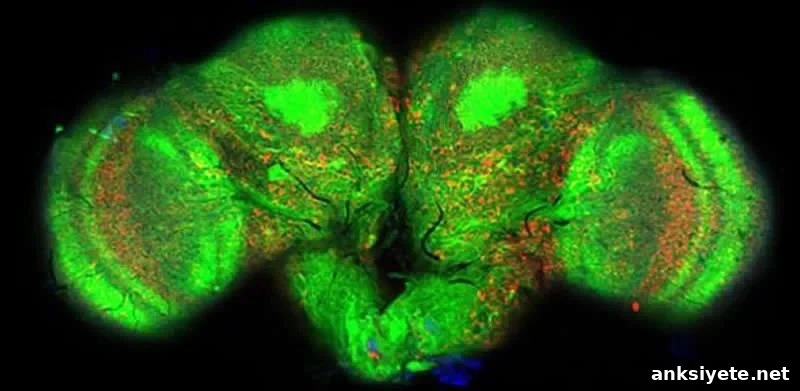
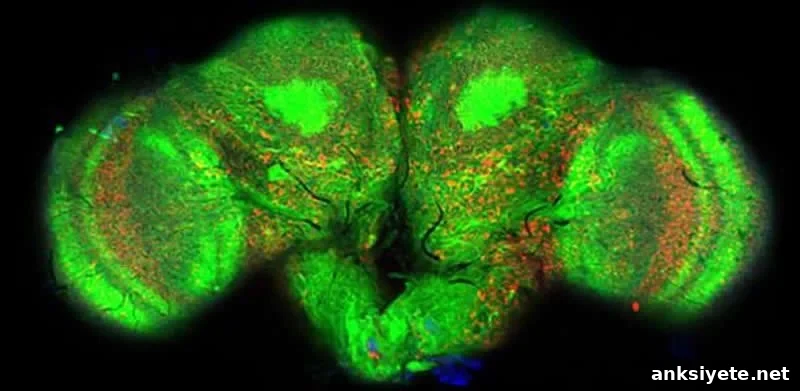
New research using fruit flies expressing an Alzheimer’s-related protein shows the disease does not stop the internal biological clock from running, but it does disconnect that clock from the sleep–wake cycle it normally controls. These findings could point to more effective ways to restore healthier sleep patterns in people living with Alzheimer’s disease.
Disrupted sleep—staying awake at night and dozing during the day—is an early and distressing symptom experienced by many people with Alzheimer’s disease. How the condition interferes with the brain’s timekeeping mechanisms and produces these sleep disturbances has been unclear.
Researchers at the University of Cambridge have now shown, in a fruit fly (Drosophila) model of Alzheimer’s, that the molecular circadian clock continues to function but becomes uncoupled from the behaviours it normally regulates. Published in Disease Models & Mechanisms, the study suggests new avenues for treating sleep and circadian rhythm problems in Alzheimer’s by targeting the communication between the clock and behaviour rather than the clock itself.
People with Alzheimer’s commonly experience deterioration in daily rhythms: sleep episodes grow shorter and more fragmented, nights are interrupted by wakefulness, and daytime napping increases. Sundowning—late afternoon or early evening agitation and confusion—is another frequent and troubling symptom for patients and caregivers alike.
Circadian clocks are a fundamental feature of life, present from single-celled organisms to insects and humans. They permit organisms to synchronize physiology and behaviour with daily light–dark cycles. Prior to this study it was not clear whether Alzheimer’s-associated changes in sleep and activity resulted from a stopped clock or from a normally running clock that was no longer able to control behaviour.
Dr Damian Crowther of Cambridge’s Department of Genetics, a co-author of the study, explains: “We wanted to know whether people with Alzheimer’s have poor behavioural rhythms because their clock has stopped, or because the rest of the brain no longer responds to a functioning clock.”
The team used genetically modified fruit flies that express the human amyloid-beta (Aβ) peptide, a protein implicated in Alzheimer’s disease and commonly used to model early stages of the condition in animals. Comparing these Alzheimer’s-model flies with healthy controls, the researchers tracked both sleep–wake behaviour and the molecular activity of the internal clock.
Sleep and activity were monitored with a simple infrared beam system: individual flies were housed in glass tubes and movement was recorded when a fly broke the beam, producing a continuous log of activity and rest periods. To follow the internal clock at the molecular level, the researchers fused the clock protein to luciferase, an enzyme that emits light. The luciferase signal rises and falls over the daily cycle, allowing the team to observe the clock’s molecular rhythm directly as a glowing signal in the fly brain.
“The luciferase tag lets us see the brain glow brighter at night and dimmer during the day, so we can visualise the molecular clock in the same animal whose behaviour we also measure,” said Dr Crowther. “It’s powerful to study the molecular clock and behaviour together.”
The results were striking. Healthy flies displayed the expected pattern of daytime activity and nighttime sleep, while Alzheimer’s-model flies showed disordered, fragmented sleep and irregular activity across day and night. Yet the luciferase-recorded molecular rhythms were intact and followed normal day–night cycles in both healthy and Alzheimer’s-model flies. In other words, the central molecular clock continued to tick even when behavioural rhythms had broken down.
“Until now, the prevailing view was that Alzheimer’s destroyed the biological clock,” Crowther said. “Our findings show that in this fly model the clock itself remains robust, but its signals are being ignored by the neural circuits and systems that produce normal sleep–wake behaviour. Understanding how that uncoupling happens could lead to therapies that restore better sleep in people with Alzheimer’s.”
Dr Simon Ridley, Head of Research at Alzheimer’s Research UK and a funder of the work, commented that clarifying the biology behind distressing symptoms like sleep disturbance is vital for developing effective treatments. He said the study offers new insight into how features of Alzheimer’s pathology can alter molecular mechanisms controlling sleep–wake cycles in an experimental model, and that these findings should inform future research in human patients.
Notes about this Alzheimer’s disease research
Contact: Damian Crowther – University of Cambridge
Source: University of Cambridge press release
Image Source: Image credited to Dr. Stanislav Ott and adapted from the University of Cambridge release.
Original Research: Full open-access research report: “The central molecular clock is robust in the face of behavioural arrhythmia in a Drosophila model of Alzheimer’s disease” by Ko-Fan Chen, Bernard Possidente, David A. Lomas and Damian C. Crowther in Disease Models & Mechanisms. Published online February 26, 2014. DOI: 10.1242/dmm.014134.