
Study Finds a Person’s Walk Can Reveal Aggressive Personality Traits
Summary: A new exploratory study suggests that certain gait patterns — the way a person walks — can indicate higher levels of aggression and relate to established personality traits.
Source: University of Portsmouth
Overview
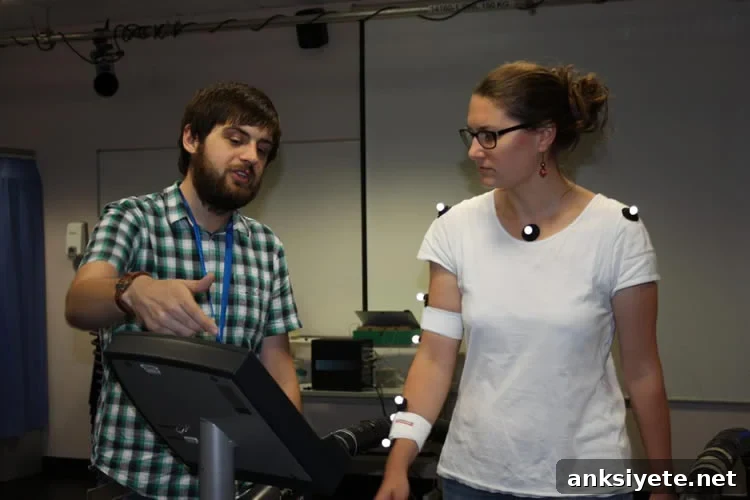
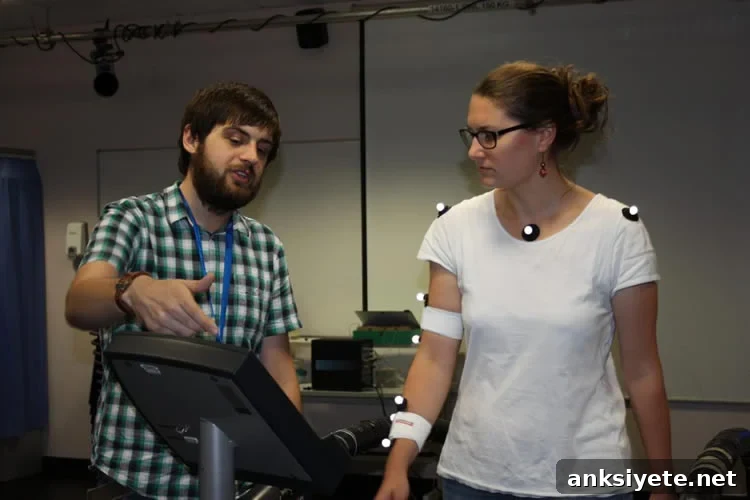
Researchers in the Department of Psychology at the University of Portsmouth have found evidence that aspects of a person’s gait — particularly exaggerated rotation of the upper and lower body — can be associated with self-reported aggression and with several dimensions of the Big Five personality traits. The study used motion-capture technology to measure subtle biomechanical features while participants walked at a natural speed on a treadmill, then compared those measures with standard personality questionnaires.
Study design and methods
The exploratory study involved 29 volunteer participants. Each participant completed validated questionnaires that measured trait aggression as well as a Big Five personality inventory assessing openness, conscientiousness, extraversion, agreeableness and neuroticism. Following the questionnaire session, participants walked on a treadmill while motion-capture equipment recorded their movements.
Motion-capture analysis focused on thorax (upper body) and pelvis (lower body) rotations and overall walking speed. These biomechanical measures capture automatic, largely unconscious aspects of movement that are difficult to alter deliberately. The researchers applied quantitative biomechanics techniques rather than relying on human observers to code behavior, providing precise measures of body rotation and gait dynamics.
Key findings
The analysis revealed clear links between gait biomechanics and personality measures. Specifically, larger magnitudes of upper-body and lower-body movement and faster walking speed were associated with higher scores on measures of aggression and with several Big Five traits. The pattern described by the researchers is a walk in which the natural rotation between pelvis and shoulders is amplified: as one leg steps forward and the corresponding side of the pelvis advances, the shoulders rotate more noticeably in the opposite direction. This exaggerated rotation was identified as a marker of an aggressive gait.
Lead researcher Liam Satchell commented on the findings: “People are generally aware that there is a relationship between swagger and psychology. Our research provides empirical evidence to confirm that personality is indeed manifest in the way we walk.” He emphasized that this is one of the first studies to show correlations between objective gait measures and self-reported personality traits, highlighting the value of biomechanical methods for studying largely automatic human movement.
Implications and future research
The study’s results point to several potential applications and avenues for further work. From a practical perspective, identifying a relationship between biological motion and intent could inform efforts to detect or prevent harmful behavior. The researchers suggested that training observers to recognise distinctive aggressive walking patterns — for example in surveillance contexts — might improve the early detection of threatening behavior and support public safety efforts.
Scientifically, the authors call for more research using biomechanical and motion-capture methods to explore how automatic movement patterns reflect personality, emotional states, and intentions. Larger samples, diverse populations, and real-world observational studies would help determine how robust and generalisable the observed gait–personality links are, and whether they can be applied reliably outside laboratory conditions.
About the research
The study, titled “Evidence of Big Five and Aggressive Personalities in Gait Biomechanics,” was conducted by Liam Satchell, Paul Morris, Chris Mills, Liam O’Reilly, Paul Marshman, and Lucy Akehurst. The research was published online in the Journal of Nonverbal Behavior in September 2016. The study combines personality assessment with objective motion-capture measures to explore how personality traits and aggression are expressed in everyday, largely automatic movement.
The findings reinforce the idea that nonverbal behavior, including gait, can offer meaningful information about underlying personality characteristics. They also demonstrate the value of combining psychological assessment with biomechanical measurement to reveal links between mind and movement.