
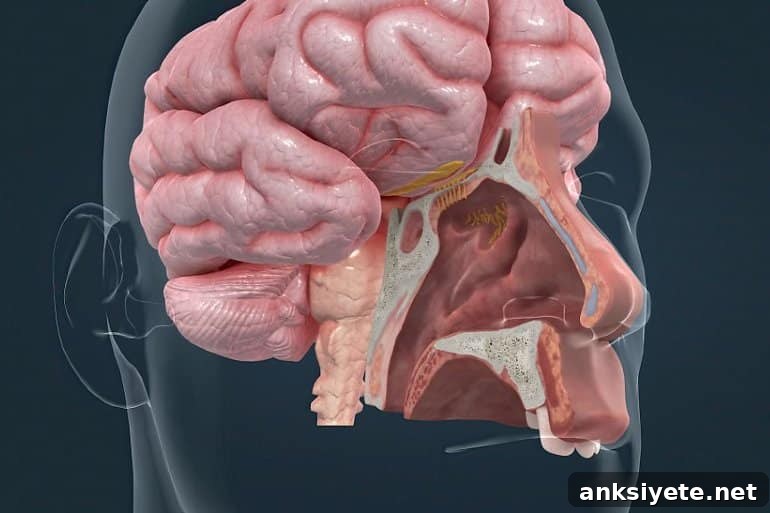
Summary: Up to 90% of people with Parkinson’s disease experience a reduced sense of smell, often years before motor symptoms appear. New research from Yale identifies biological changes in the olfactory system that explain this early loss of smell: mice engineered to model Parkinson’s show severe pathology in the projection neurons of the olfactory pathway and a pronounced decline in neurogenesis within the olfactory bulb.
Source: Yale
Parkinson’s disease is commonly associated with motor symptoms such as tremor, rigidity, and slowed movement. Less widely recognized, but frequently reported, is a marked decline in the sense of smell (olfactory dysfunction). A recent study published in the Journal of Neuroscience by researchers at Yale School of Medicine reveals the biological mechanisms that underlie smell loss in Parkinson’s disease.
Between roughly 75% and 90% of people with Parkinson’s report a diminished ability to smell, and for many this change precedes the classic motor features by several years. As a result, olfactory impairment is now considered an important non-motor sign of Parkinson’s disease with potential value for early detection.
Investigators in the Greer and Chandra laboratories used a transgenic mouse model that expresses the human A30P mutant form of alpha-synuclein (α-syn), a protein central to Parkinson’s pathology. These α-syn A30P mice reproduce many features of the disease and allowed the team to examine the olfactory system across stages of disease progression.
Behavioral testing using a buried food paradigm revealed clear olfactory deficits in mice at later stages of disease progression. The researchers then examined the olfactory pathway and found severe α-syn pathology concentrated in projection neurons, the cells that transmit information from the olfactory bulb to other brain regions. This neuronal pathology closely correlated with the observed loss of smell.
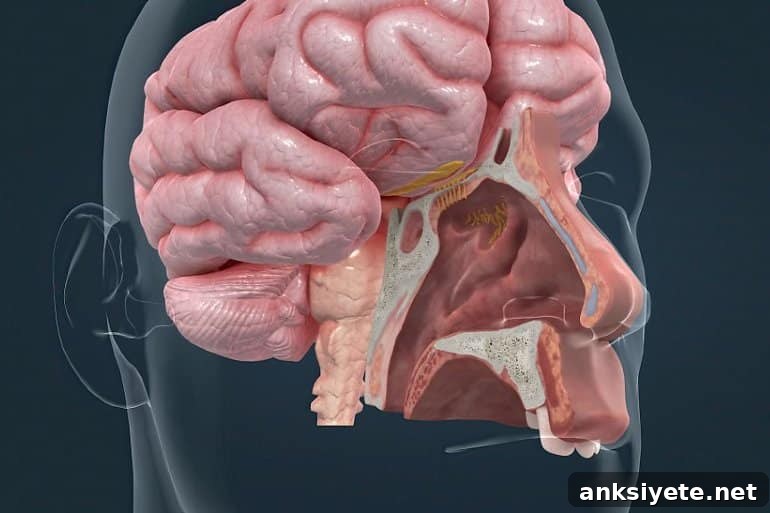
In addition to accumulation of pathological α-syn in projection neurons, the team documented a substantial reduction in adult neurogenesis within the olfactory bulb. Specifically, new granule cells in the olfactory bulb were reduced at six to seven months, and reductions in periglomerular cells became apparent by 12 to 14 months. In healthy aging brains, the olfactory bulb continues to generate new neurons throughout life, supporting ongoing olfactory function; the loss of this regenerative capacity in the Parkinson’s model likely contributes to decline in smell.
Proteomic studies of the olfactory bulb provided further insight: early disruptions were detected in proteins involved in endocytic and exocytic pathways, processes essential for synaptic communication. These defects became more pronounced at synaptic terminals as the animals progressed to the stage at which olfactory behavior declined, suggesting that synaptic dysfunction compounds the direct neuronal pathology and reduced neurogenesis to produce measurable olfactory impairment.
“Patients often report loss of smell well before motor symptoms arise, but until now the specific neural changes responsible were unclear,” says Charles Greer, PhD, vice chair for research in the Department of Neurosurgery and professor of neuroscience. Co-author Sreeganga Chandra, PhD, associate professor of neurology and neuroscience, adds: “We are beginning to identify the cellular and molecular basis of anosmia in Parkinson’s disease.”
Understanding these early olfactory changes has practical implications. Because smell loss can precede motor symptoms by up to a decade in some patients, the olfactory system may offer a window for earlier diagnosis and intervention. The findings suggest that measuring olfactory function, combined with biomarkers that reflect α-syn pathology or impaired neurogenesis, could help identify individuals at high risk for developing Parkinson’s disease.
About this Parkinson’s disease research news
Author: Jennifer Chen
Source: Yale School of Medicine
Contact: Jennifer Chen – Yale
Image: The image is credited to Yale
Original Research: Closed access. “α-Synuclein Pathology and Reduced Neurogenesis in the Olfactory System Affect Olfaction in a Mouse Model of Parkinson’s Disease” by Eduardo Martin-Lopez et al., Journal of Neuroscience
Abstract
α-Synuclein Pathology and Reduced Neurogenesis in the Olfactory System Affect Olfaction in a Mouse Model of Parkinson’s Disease
Parkinson’s disease (PD) includes both motor and non-motor symptoms, with olfactory dysfunction among the most common non-motor features; however, the mechanisms behind smell loss have remained unclear.
This study examined olfactory pathway changes in transgenic mice of both sexes expressing the human A30P mutant α-synuclein (α-syn-Tg) at ages corresponding to early (6–7 months) and late (12–14 months) stages of motor progression. Late-stage α-syn-Tg mice displayed behavioral olfactory deficits that correlated with severe α-syn pathology localized to projection neurons in the olfactory pathway.
Concurrently, neurogenesis in the olfactory bulb (OB) was reduced: OB granule cell generation declined at six to seven months, and OB periglomerular cell generation was reduced by 12–14 months. These reductions likely contribute to olfactory dysfunction. Proteomic analyses revealed early disruption of endocytic and exocytic pathways in the OB, which became more pronounced at synaptic terminals when the mice developed overt olfactory deficits.
Collectively, the data indicate that: (1) the α-syn-Tg mice reproduce the olfactory deficits seen in PD; (2) different olfactory structures show distinct timing and vulnerability to α-syn pathology; (3) α-syn pathology is concentrated in projection neurons; (4) adult neurogenesis in the OB is reduced in α-syn-Tg mice; and (5) impaired synaptic endocytosis and exocytosis in the OB may further explain olfactory deficits.