
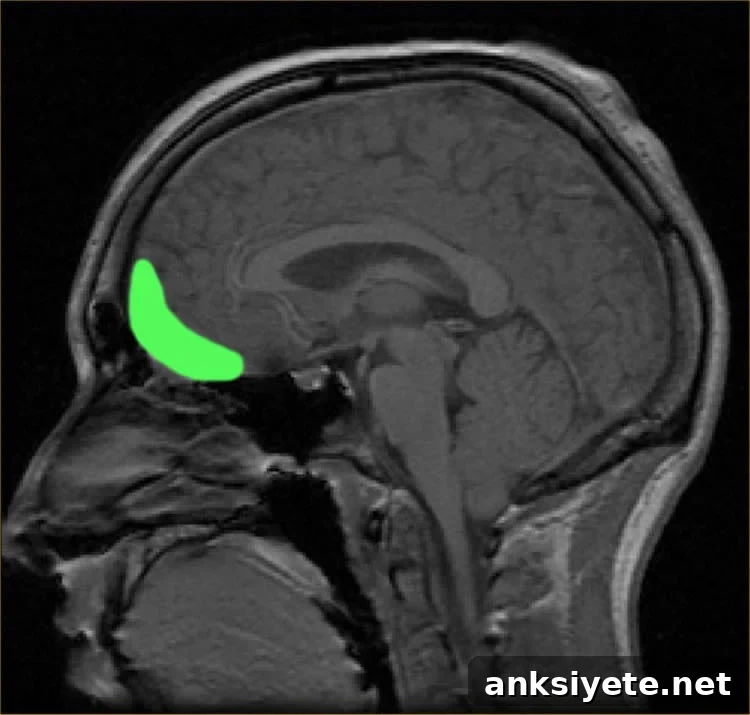
Area’s neurons then can re-map to make different decisions when circumstances change.
Everyday choices — from picking a shirt or deciding what to order for lunch to selecting a robust red wine over a light white — require the brain to assign value to competing options. A small region of the brain, the orbitofrontal cortex (OFC), has long been known to play a central role in these value-based, or economic, decisions. Yet researchers have asked how a finite population of neurons in this compact region can support the vast variety of decisions people and animals make.
New research from Washington University School of Medicine in St. Louis sheds light on this question. By observing macaque monkeys choosing between different juice rewards, the team found that distinct groups of OFC neurons perform separate roles: some neurons encode the value of an offered item, while others reflect the eventual choice. Crucially, individual neurons can remap their associations so they represent different options when the decision context changes, while the overall circuit organization remains stable.
The study, led by senior investigator Camillo Padoa-Schioppa, PhD, with first author Jue Xie, was published May 9, 2016 in Nature Neuroscience. The researchers recorded neural activity as monkeys made repeated choices among a set of roughly a dozen different juices. In each session the animals compared pairs of juices, with the available pairings changing across trials.
Rather than finding fixed “grape juice cells” or “apple juice cells,” the team observed that neurons labeled as offer-value cells flexibly reassigned which option they represented depending on the current pair of goods. For example, a neuron that encoded the value of grape juice in one choice set could encode the value of kiwi punch in a later set. At the same time, a separate population of neurons consistently tracked the choice outcome, representing which option the animal ultimately selected.
“Some cells in the orbitofrontal cortex assign values to individual options, and other cells represent the choice outcome,” Padoa-Schioppa explained. “Offer-value cells always represent the value of one of the available options, but that option can change with context. The same neuron might represent the value of roasted chicken in a food decision, and the value of a mutual fund when making a financial decision, depending on what goods are under consideration.”
Although individual neurons were highly flexible, the researchers emphasize that circuit-level organization persisted across contexts. The functional role of each neuron — whether it served as an offer-value cell or a choice-outcome cell — remained consistent even as the specific goods those cells represented changed. Furthermore, neurons that jointly supported the same decision in one context tended to support the same decision in another, indicating a persistent network structure despite remapping at the single-cell level.
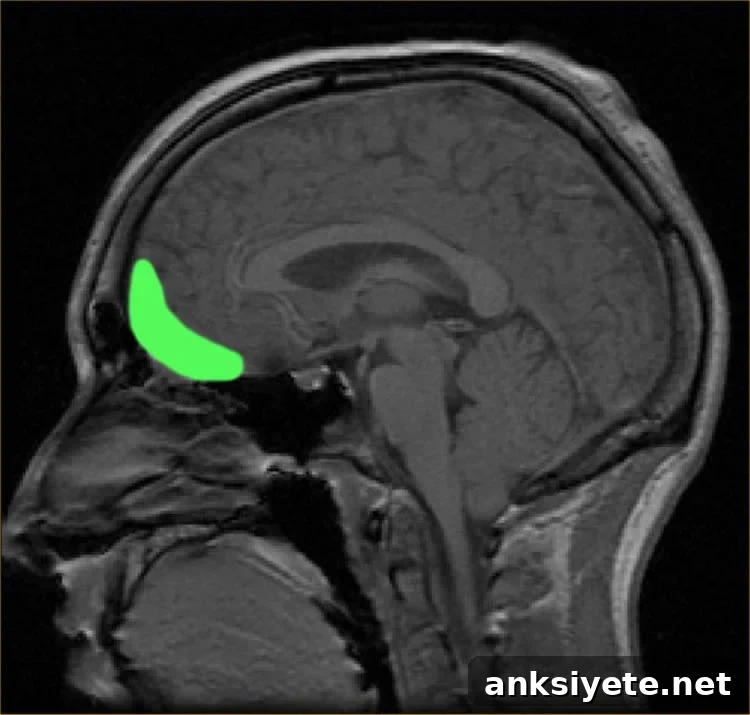
Lead author Jue Xie noted that this combination of neuronal flexibility and circuit stability is key to understanding how the brain generates decisions across a nearly infinite range of goods. “If we look at individual cells, neurons are very flexible,” he said. “However, if we consider the whole network, the decision circuit is remarkably stable. This balance makes it possible for the same brain region to handle decisions between any two goods.”
These findings clarify a fundamental property of value-based decision-making: the brain reuses circuitry by allowing neurons to remap their specific associations while preserving the functional roles and interactions that produce coherent choices. The result is an efficient and adaptable system capable of supporting diverse economic choices without the need for dedicated neurons for every possible item.
Funding: This work was supported by the National Institute on Drug Abuse and the National Institute of Mental Health of the National Institutes of Health (NIH), grant numbers R01 DA032758 and R01 MH104494. Additional support came from the McDonnell Center for Systems Neuroscience.
Source: Jim Dryden, Washington University School of Medicine in St. Louis
Original research: Jue Xie and Camillo Padoa-Schioppa. “Neuronal remapping and circuit persistence in economic decisions.” Nature Neuroscience. Published online May 9, 2016. doi:10.1038/nn.4300
Abstract
Neuronal remapping and circuit persistence in economic decisions
The orbitofrontal cortex plays a central role in good-based economic decisions. When subjects make choices, neurons in this region represent the identities and values of offered and chosen goods. Notably, choices in different behavioral contexts may involve a potentially infinite variety of goods. Thus a fundamental question concerns the stability versus flexibility of the decision circuit. Here we show in rhesus monkeys that neurons encoding the identity or the subjective value of particular goods in a given context “remap” and become associated with different goods when the context changes. At the same time, the overall organization of the decision circuit and the function of individual cells remain stable across contexts. In particular, two neurons supporting the same decision in one context also support the same decision in different contexts. These results demonstrate how the same neural circuit can underlie economic decisions involving a large variety of goods.
“Neuronal remapping and circuit persistence in economic decisions” by Jue Xie and Camillo Padoa-Schioppa in Nature Neuroscience. Published online May 9, 2016. doi:10.1038/nn.4300