
High Aluminum Co-locates with Amyloid-β in Familial Alzheimer’s Brain Tissue, Study Finds
Summary: Researchers report a strong association between elevated aluminum levels in brain tissue and the presence and location of amyloid-β in post-mortem samples from people with familial Alzheimer’s disease, reinforcing evidence that aluminum exposure may play a role in the disease.
Study Overview and Context
A recent peer-reviewed study published in the Journal of Alzheimer’s Disease examined brain tissue from donors with familial Alzheimer’s disease (fAD) and found consistently high aluminum content. Investigators also documented a striking co-location of aluminum deposits with amyloid-β, the protein strongly implicated in Alzheimer’s disease pathology. These observations add to a growing body of research that explores how human exposure to aluminum might influence the development and progression of neurodegenerative disease.
Research Team and Objective
The study was led by Christopher Exley, PhD, at the Birchall Centre, Lennard-Jones Laboratories, Keele University, UK. The research aimed to determine whether brain tissues from donors with a known familial Alzheimer’s mutation—characterized by elevated amyloid-β, earlier disease onset, and aggressive progression—also contained elevated aluminum, and whether aluminum and amyloid-β are spatially associated within affected tissue.
Methods
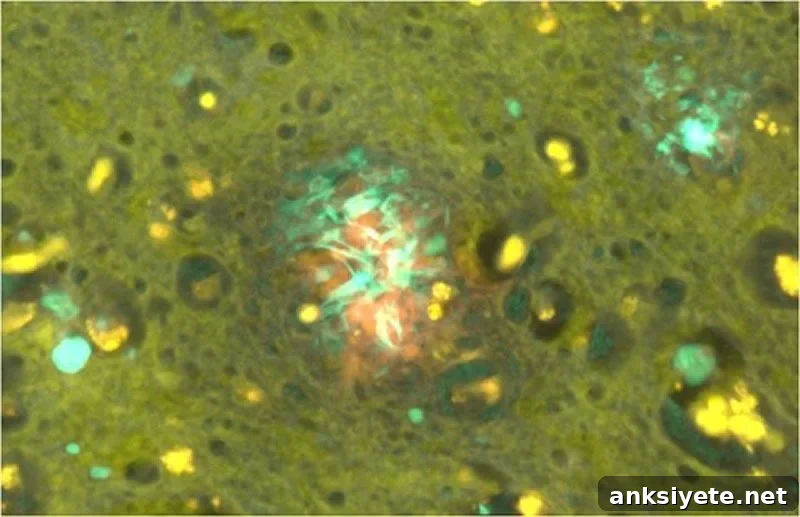
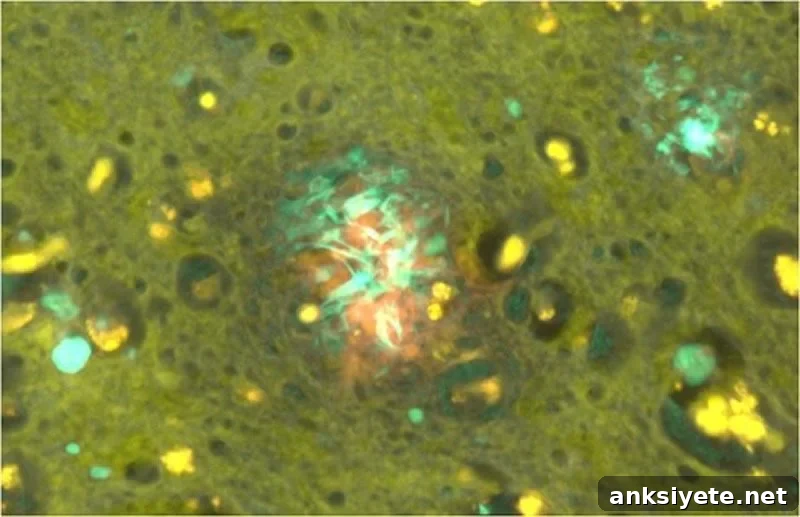
Researchers analyzed post-mortem brain tissues from a Colombian cohort of familial Alzheimer’s donors who share the same genetic mutation. They measured aluminum concentrations using established analytical methods and compared these measurements with control brain tissues from donors without neuropathological disease. In addition, the team used aluminum-specific fluorescence microscopy combined with complementary imaging of amyloid-β to visualize the distribution and co-localization of aluminum and amyloid-β within brain tissue.
Key Findings
The results were notable. Brain tissue from familial Alzheimer’s donors showed universally high aluminum levels, with 42% of samples reaching concentrations considered pathologically significant. Overall aluminum content in the fAD group was significantly higher than in control tissues. Fluorescence imaging detected aluminum deposits in every fAD brain sample examined.
Most importantly, aluminum deposits were predominantly co-located with amyloid-β in senile plaques and, in some instances, in brain blood vessels resembling cerebral amyloid angiopathy. The study also identified aluminum that was not associated with amyloid-β, found within intracellular compartments such as glial cells and neuronal axons. Together, these observations suggest that genetic predispositions that raise amyloid-β levels may also render brain tissue more susceptible to accumulating and retaining aluminum.
Interpretation and Implications
Experts involved in or commenting on the work emphasize that the clear spatial association between aluminum and a central pathological feature of Alzheimer’s disease—amyloid-β—strengthens the case that aluminum may be involved in disease pathogenesis. As noted by George Perry, PhD, Editor-in-Chief of the Journal of Alzheimer’s Disease, the compelling localization of aluminum with amyloid-β bolsters links between aluminum exposure and Alzheimer’s-related neurobiology.
Lead investigator Dr. Exley observed that elevated amyloid-β might be a biological response to high aluminum content, or conversely, that aluminum may promote amyloid-β accumulation. He stated his view that, within a normal human lifespan, absence of aluminum in brain tissue would likely correspond to an absence of Alzheimer’s disease—summarizing a hypothesis rather than asserting causal proof.
Study Citation and Notes
Source: IOS Press. The published article is titled “Aluminum and Amyloid-β in Familial Alzheimer’s Disease” by Matthew Mold, Caroline Linhart, Johana Gómez-Ramírez, Andrés Villegas-Lanau, and Christopher Exley, in the Journal of Alzheimer’s Disease (open access).
Abstract Summary
Familial Alzheimer’s disease is driven by genetic predispositions that alter amyloid-β precursor metabolism, producing elevated cortical amyloid-β and early disease onset. This study measured aluminum in brain tissues from a Colombian cohort with familial Alzheimer’s disease and compared results to control brain tissues. Significantly higher aluminum levels were found in fAD tissues. Aluminum-specific fluorescence microscopy and amyloid-β imaging revealed a high degree of co-localization in senile plaques and vasculature, with additional aluminum found intracellularly in glia and axons. The findings identify a notable association between high brain aluminum content and amyloid-β in familial Alzheimer’s disease and support the hypothesis that genetic factors underlying fAD may influence aluminum accumulation in the brain.