
Summary: High-resolution, three-dimensional structures of the brain’s most common nicotinic acetylcholine receptor reveal how nicotine binds and how the receptor assembles—insights that could guide development of new therapies for nicotine addiction.
Source: UT Southwestern Medical Center
UT Southwestern researchers have published atomic-scale blueprints of the most abundant class of human brain nicotinic acetylcholine receptors in Nature. These structures provide a detailed molecular framework that could inform new treatments for nicotine dependence related to smoking and vaping.
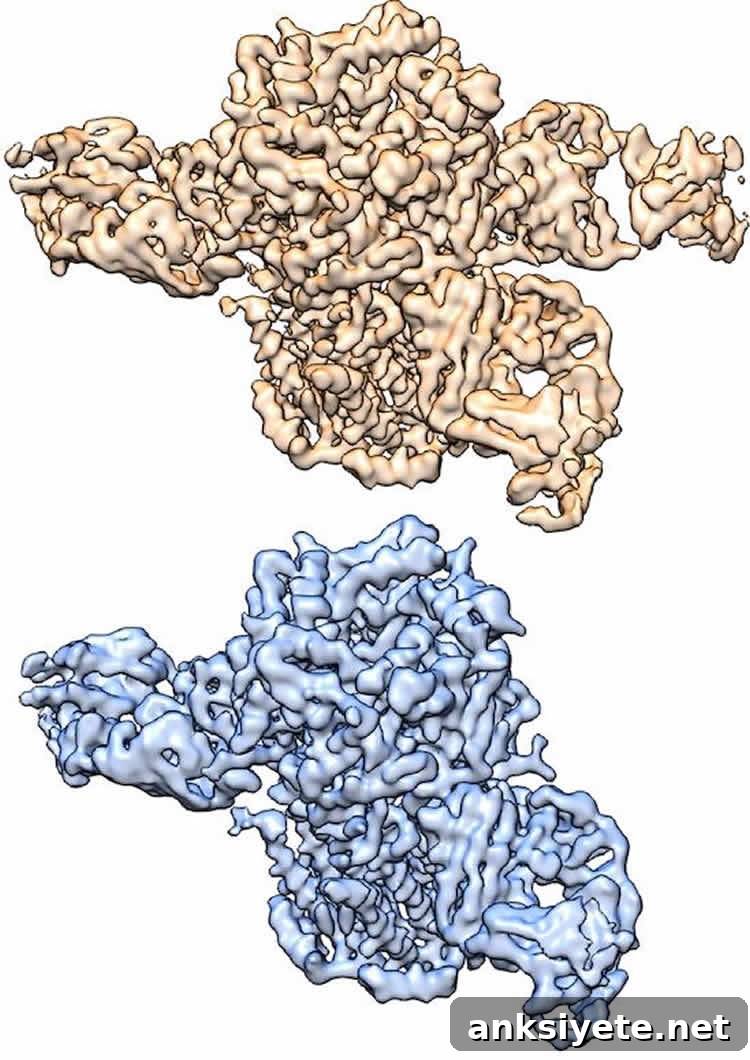
Using cryo-electron microscopy (cryo-EM), the team solved high-resolution, three-dimensional structures of the α4β2 nicotinic acetylcholine receptor, a neuronal protein closely linked to nicotine addiction. “When this receptor binds either the neurotransmitter acetylcholine or nicotine, it opens and activates the neuron, allowing rapid signaling between cells,” said Dr. Ryan Hibbs, corresponding author and Assistant Professor of Neuroscience and Biophysics at the Peter O’Donnell Jr. Brain Institute, UT Southwestern. “This receptor is central to fast chemical neurotransmission and plays a key role in nicotine dependence.”
The structures were obtained at UT Southwestern’s $22.5 million cryo-EM facility. Samples were rapidly frozen to cryogenic temperatures to prevent ice crystal formation and then imaged at high magnification. Operating 24/7, this facility is among the world’s leading centers for cryo-EM structural biology.
Two novel findings distinguish this work. First, the researchers revealed new details about how nicotine binds to the receptor in the brain, clarifying molecular interactions that influence activation and drug response. Second, they uncovered important principles governing how the receptor subunits assemble into functional complexes.
The receptor is a pentamer composed of five subunits of two types: α and β. In the brain, these subunits assemble into two distinct stoichiometries—3α:2β and 2α:3β—each forming a functional receptor with different biophysical and pharmacological properties. The balance between these two assemblies matters biologically; shifts in their ratio have been linked to nicotine addiction and to certain forms of congenital epilepsy.
Because the protein can assemble in multiple ways, standard structural methods that require a uniform sample face challenges. To overcome this, the team used an antibody-labeling strategy that specifically recognizes β2 subunits. By binding antibody fragments to the β subunits, the researchers broke the symmetry of particles during image analysis and separated the two stoichiometries computationally from a single biochemical preparation. This enabled high-resolution reconstructions of both assemblies in complex with nicotine—an approach that can be applied broadly to other multisubunit ion channels and receptors.
“Using an antibody that binds only β subunits allowed us to distinguish the two assemblies in the same sample,” explained lead author Richard Walsh Jr., a graduate student in the Molecular Biophysics program. “One receptor conformation had two antibody fragments bound, while the other displayed three, corresponding to the 3α:2β and 2α:3β stoichiometries.”
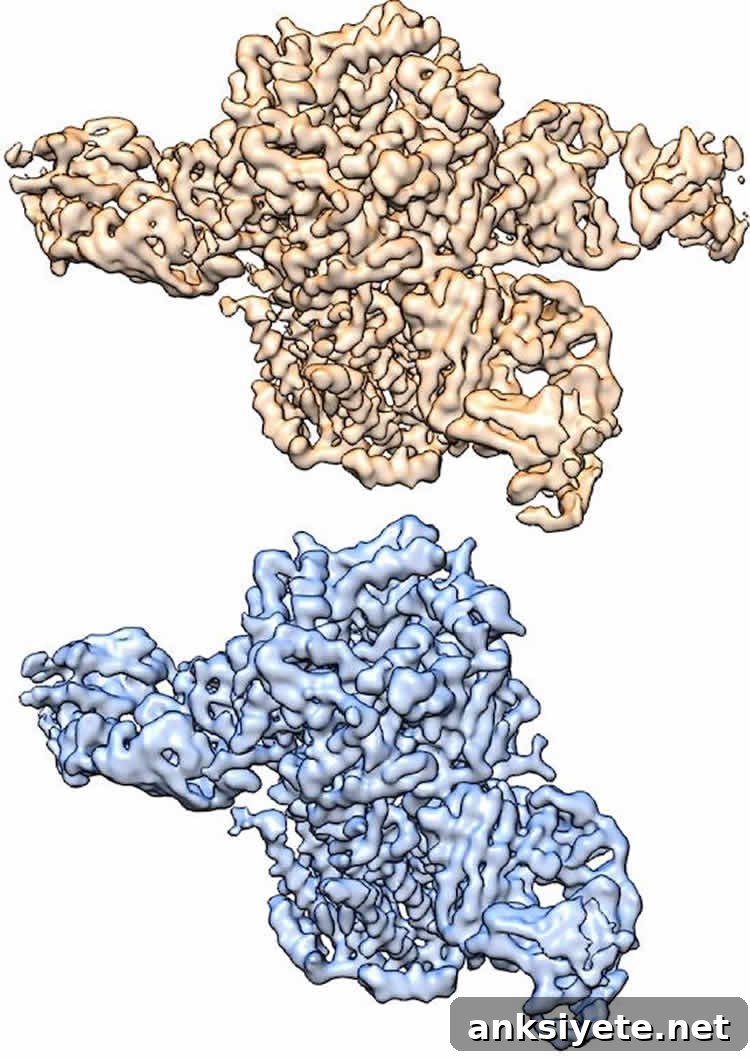
Dr. Hibbs noted that cryo-EM was particularly powerful for this work because membrane proteins are often difficult to crystallize for X-ray diffraction. Previously, the laboratory had obtained the structure of one stoichiometry using X-ray crystallography, but cryo-EM provided both arrangements from a single sample and at higher resolution.
Beyond clarifying nicotine binding and activation, the new structures illuminate how subunit arrangement affects the receptor’s functional and pharmacological characteristics. These structural principles help explain why the two stoichiometries respond differently to ligands and may guide design of drugs that selectively target one assembly over the other—an avenue that could yield therapies to reduce nicotine dependence or modify disease-related receptor imbalances.
UT Southwestern contributors to the study include Anant Gharpure and Claudio Morales-Perez, graduate students in Molecular Biophysics, and Dr. Jinfeng Teng, a research scientist in the Hibbs lab. The study’s co-lead author is Dr. Soung-Hun Roh of Stanford University.
Funding: The research was supported by the National Institutes of Health, the Sara and Frank McKnight Fund for Biochemical Research, and The Welch Foundation. The cryo-EM facility received support from the Howard Hughes Medical Institute, the UT System’s Science and Technology Acquisition and Retention Program, and the Cancer Prevention and Research Institute of Texas (CPRIT).
Original research: Structural principles of distinct assemblies of the human α4β2 nicotinic receptor. Published in Nature. doi:10.1038/s41586-018-0081-7
Abstract
Structural principles of distinct assemblies of the human α4β2 nicotinic receptor
Fast chemical signaling in the nervous system depends on neurotransmitter-gated ion channels, with nicotinic acetylcholine receptors serving as a prototypical example. These pentameric ligand-gated ion channels are typically hetero-oligomeric and can assemble in multiple stoichiometries, producing functional diversity that is critical for brain function but challenging for structural study. The α4β2 subtype is the most abundant nicotinic receptor in the human brain and a primary target of nicotine. It assembles in two stoichiometries, 2α:3β and 3α:2β, each with distinct biophysical and pharmacological properties. An imbalance between these assemblies is associated with nicotine addiction and some forms of congenital epilepsy. Here the authors use cryo-EM and β2-specific antibody fragments to resolve structures of both stoichiometries from a single sample in complex with nicotine. These reconstructions reveal the rules of subunit assembly and provide a structural basis for the differing functional and pharmacological behaviors of the two assemblies, offering a foundation for targeted therapeutic development.