
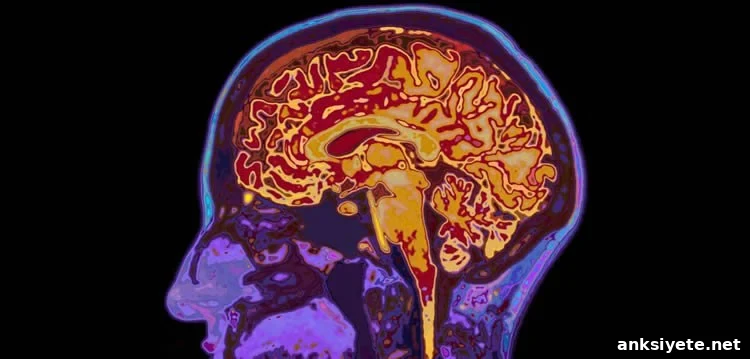
Summary: A new ultra-high field MRI study identifies distinct roles for the hippocampus and the neocortex in protecting memories from interference.
Source: University of Oxford.
How the Brain Protects Memories from Interference
Researchers at the Wellcome Centre for Integrative Neuroimaging, University of Oxford, have uncovered how two different brain systems work together to preserve precise memories when experiences overlap.
Using high-resolution 7T MRI combined with behavioral testing and noninvasive brain stimulation, the team examined how overlapping, context-dependent memories are stored and shielded from mutual interference. Participants learned two sets of related but contextually distinct memories across two days, and their recall and neural activity were tested on a third day inside the scanner.
Experimental approach
On day one and day two, volunteers memorized two overlapping memory sets that shared elements but were distinguished by context. On the third day, researchers measured how well participants could retrieve each memory and how much the memories interfered with one another while recording brain activity. Midway through the scanning session, the team applied a controlled intervention intended to reduce inhibitory signaling in neocortical regions to test how cortical inhibition contributes to memory stability.
Two complementary mechanisms prevent memory interference
The results reveal two complementary protective mechanisms. First, the hippocampus appears to separate overlapping memories by encoding contextual and relational information. Hippocampal activity predicted how susceptible participants were to interference: stronger pattern separation in hippocampal representations corresponded to more accurate, nonconfused recall.
Second, neocortical inhibition—largely mediated by the neurotransmitter GABA—prevented unwanted co-activation between competing memory traces stored in cortex. When the researchers transiently reduced neocortical GABA concentrations using noninvasive stimulation, cortical memory interference increased. Crucially, the degree of increased interference scaled with the amount of GABA reduction and aligned with declines in behavioral performance, demonstrating a causal role for cortical inhibition in maintaining distinct neocortical memory traces.
Implications for everyday memory and clinical conditions
Dr. Helen Barron, who led the study, said: “Our brains can store many similar events and still recall individual episodes with precise detail—like remembering where you parked your bike on different days. Understanding how overlapping memories are encoded and later separated is crucial for developing treatments for disorders where these processes break down.”
The findings help explain how people maintain accurate, context-specific memories in daily life despite extensive overlap between experiences. They also point to two distinct neural targets—hippocampal relational encoding and neocortical inhibitory control—that could be relevant for clinical interventions.
Collaborators at the University of Birmingham are planning follow-up studies in clinical populations, including people with schizophrenia and autism, to determine whether deficits in hippocampal pattern separation or cortical inhibition contribute to memory interference in these conditions and whether targeted therapies could improve memory function.
About the research
This study combines ultra-high field 7T MRI measures of brain activity, behavioral assessments of memory interference, and manipulations of neocortical inhibition to test causal mechanisms. The research provides converging evidence that the hippocampus and neocortex play distinct but cooperative roles: the hippocampus separates overlapping, context-dependent representations using relational information, while neocortical inhibitory circuits suppress inappropriate co-activation that would otherwise blur stored memories.
The original research, titled “The Hippocampus and Neocortical Inhibitory Engrams Protect against Memory Interference,” was published in Neuron (authors: Renée S. Koolschijn, Uzay E. Emir, Alexandros C. Pantelides, Hamed Nili, Timothy E. J. Behrens, and Helen C. Barron). The work advances our understanding of memory stability and suggests new directions for studying and treating memory dysfunction.
Key terms: memory interference, hippocampus, neocortex, GABA, 7T MRI, pattern separation, cortical inhibition, memory consolidation, cognitive neuroscience.