
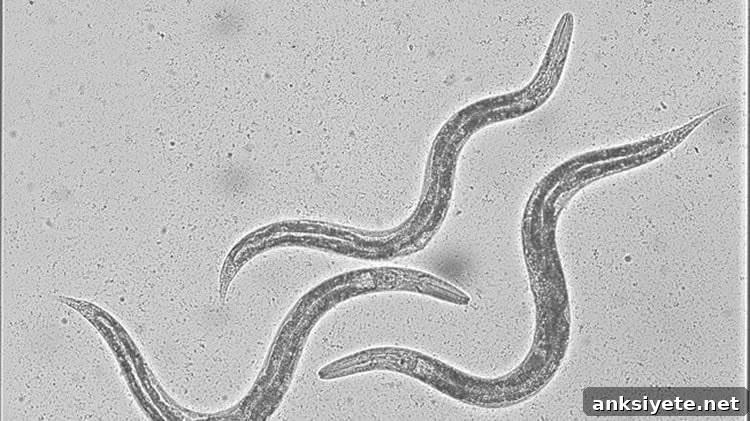
An innovative microfluidic platform lets researchers monitor protein aggregation in individual worms throughout their lives, enabling automated, real-time observation of processes that are central to many neurodegenerative diseases.
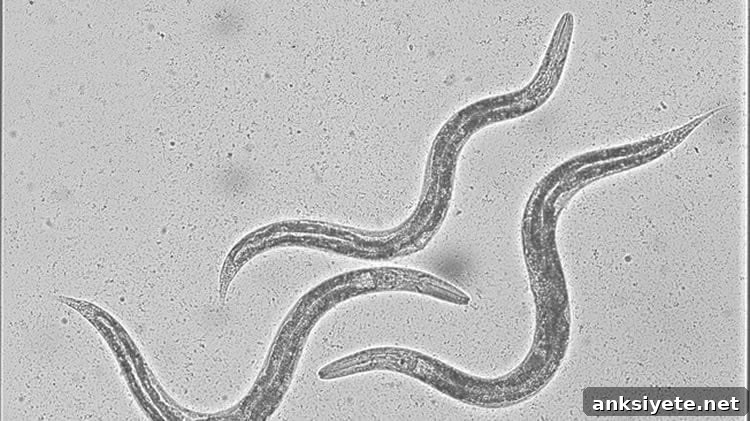
Researchers in biology and microfluidics at EPFL have developed a compact 2 cm by 2 cm chip containing 32 independent microchambers, each designed to house a single nematode (Caenorhabditis elegans), a widely used model organism in biomedical research. This device provides precise environmental control and continuous observation of single animals, and it is described in Molecular Neurodegeneration.
Single-animal monitoring with precise environmental control
Unlike conventional petri-dish cultures that observe populations, this platform isolates individual worms so scientists can follow development, behaviour and molecular events at single-animal resolution. Each chamber is connected to microfluidic channels that deliver defined concentrations of nutrients, drugs or other molecules. Temperature control is integrated into the platform, allowing experiments to run under actively regulated conditions.
Reversible immobilization for high-resolution imaging
To capture high-resolution images—essential when studying subcellular structures—worms must be immobilized temporarily. The EPFL team uses a temperature-sensitive solution that can be injected as a liquid at about 15°C and then gelled by raising the temperature to 25°C. This gel immobilizes the worm within minutes and is fully reversible: lowering the temperature returns the solution to liquid form and the worm can be rinsed free and resume normal movement and development. This approach allows repeated immobilization and imaging of the same animal over its lifetime without detectable long-term harm.
Tracking protein aggregates linked to neurodegeneration
The device is particularly useful for tracking protein aggregation—clumps of misfolded proteins implicated in diseases such as Alzheimer’s, Parkinson’s, Huntington’s and amyotrophic lateral sclerosis (ALS). Using fluorescent fusion proteins expressed in worm tissues, researchers can document when and where aggregates appear, how they grow, and how they change over days. Because the same individual is imaged repeatedly, the platform reveals dynamics and tissue-specific patterns of aggregation that are invisible in population-level studies.
The ability to monitor individual aggregates over time also enables researchers to test drug effects directly and measure how candidate compounds influence aggregation kinetics, distribution across tissues, and aggregate morphology. Early tests using this chip have already demonstrated observable effects of some treatments on aggregate formation and progression.
Funding: This work was supported by the Canada Research Chairs program, the Graham Boeckh Foundation and the Natural Sciences and Engineering Research Council.
Source: Emmanuel Barraud, EPFL. Image credit: Adapted from EPFL press materials. Original research: “Automated longitudinal monitoring of in vivo protein aggregation in neurodegenerative disease C. elegans models” by Matteo Cornaglia, Gopalan Krishnamani, Laurent Mouchiroud, Vincenzo Sorrentino, Thomas Lehnert, Johan Auwerx and Martin A. M. Gijs in Molecular Neurodegeneration. DOI: 10.1186/s13024-016-0083-6.
Abstract — summary of the platform and findings
Long-term study of molecular pathways underlying complex human disorders often requires whole-animal models. C. elegans is well suited for many of those studies, and automated, high-resolution tools for longitudinal observation are highly desirable. The EPFL microfluidic platform offers automated isolation and culture of individual worms, reversible immobilization for high-resolution imaging, and continuous control of culture parameters including temperature. The system enables time-resolved observation of biomolecules and automated analysis of protein aggregation in C. elegans disease models.
Using this platform, researchers tracked mutated human superoxide dismutase 1 tagged with a fluorescent protein (SOD1-YFP) in body wall muscles of individual worms over several days, documenting the emergence and progression of single aggregates at subcellular resolution. The method also proved suitable for monitoring aggregation in a Huntington’s disease worm model and for assessing long-term drug effects, such as doxycycline-related changes in aggregation profiles. The device supports high-throughput pharmacological screening because of its automation, single-animal resolution and capacity for repeated high-resolution imaging.
Conclusion
This microfluidic-based approach provides an unprecedented view of in vivo protein aggregation dynamics in C. elegans. By combining environmental control, reversible immobilization and automated imaging, the platform is poised to accelerate research into neurodegenerative disease mechanisms and the discovery and testing of therapeutic compounds.