
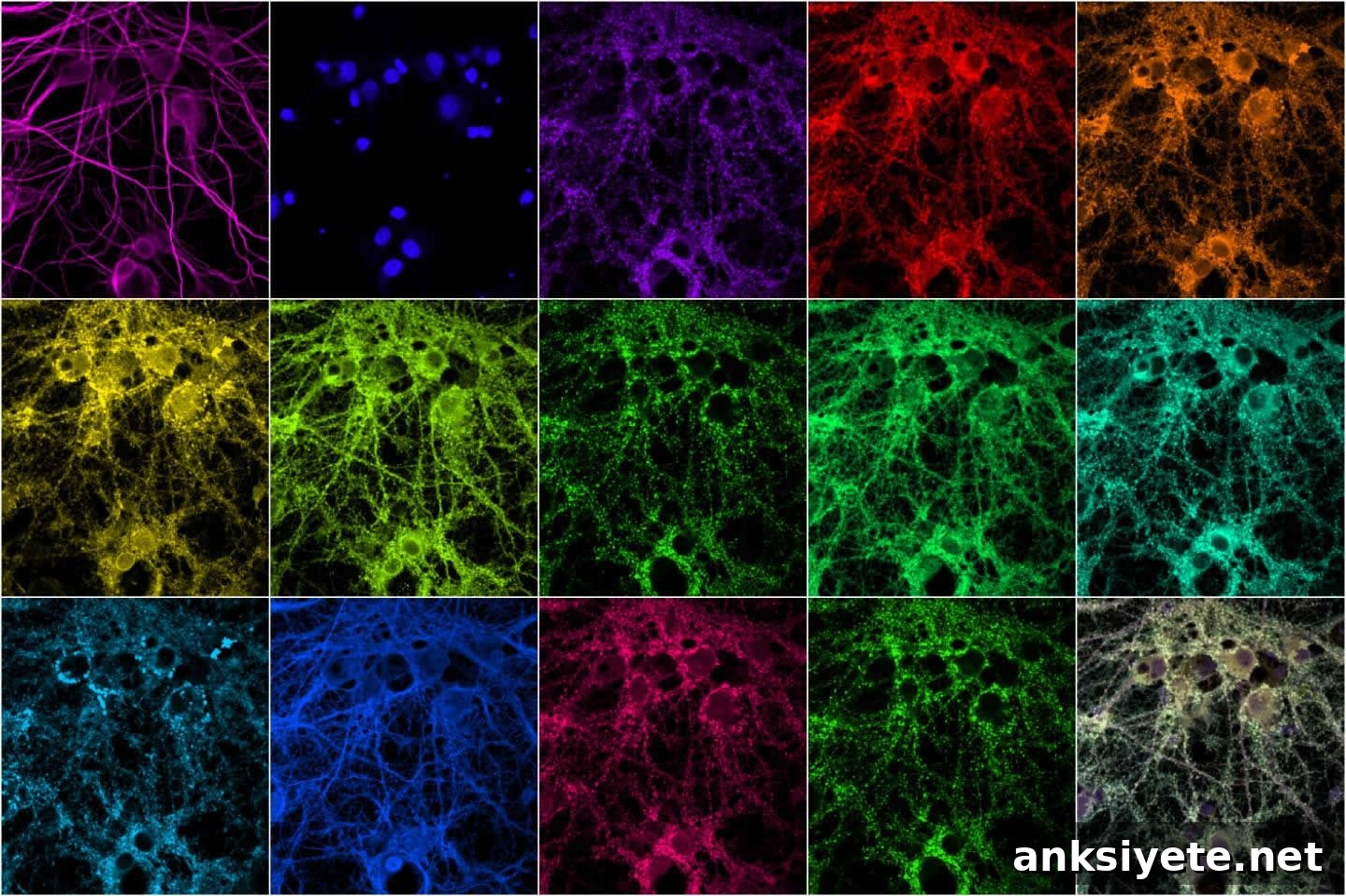
Summary: Researchers have developed a rapid, high-throughput imaging method that reveals the molecular composition of synapses at high resolution.
Source: MIT
Overview: The human brain contains millions of synapses—specialized junctions where neurons exchange signals. Each synapse hosts hundreds of proteins that shape connectivity and neural signaling. Dysregulation of these proteins can contribute to neurological and psychiatric disorders such as autism and schizophrenia. A team from MIT and the Broad Institute of Harvard and MIT has introduced a faster, multiplexed imaging approach that labels and images many synaptic proteins in the same sample, enabling large-scale, high-content studies of synapse composition and diversity.
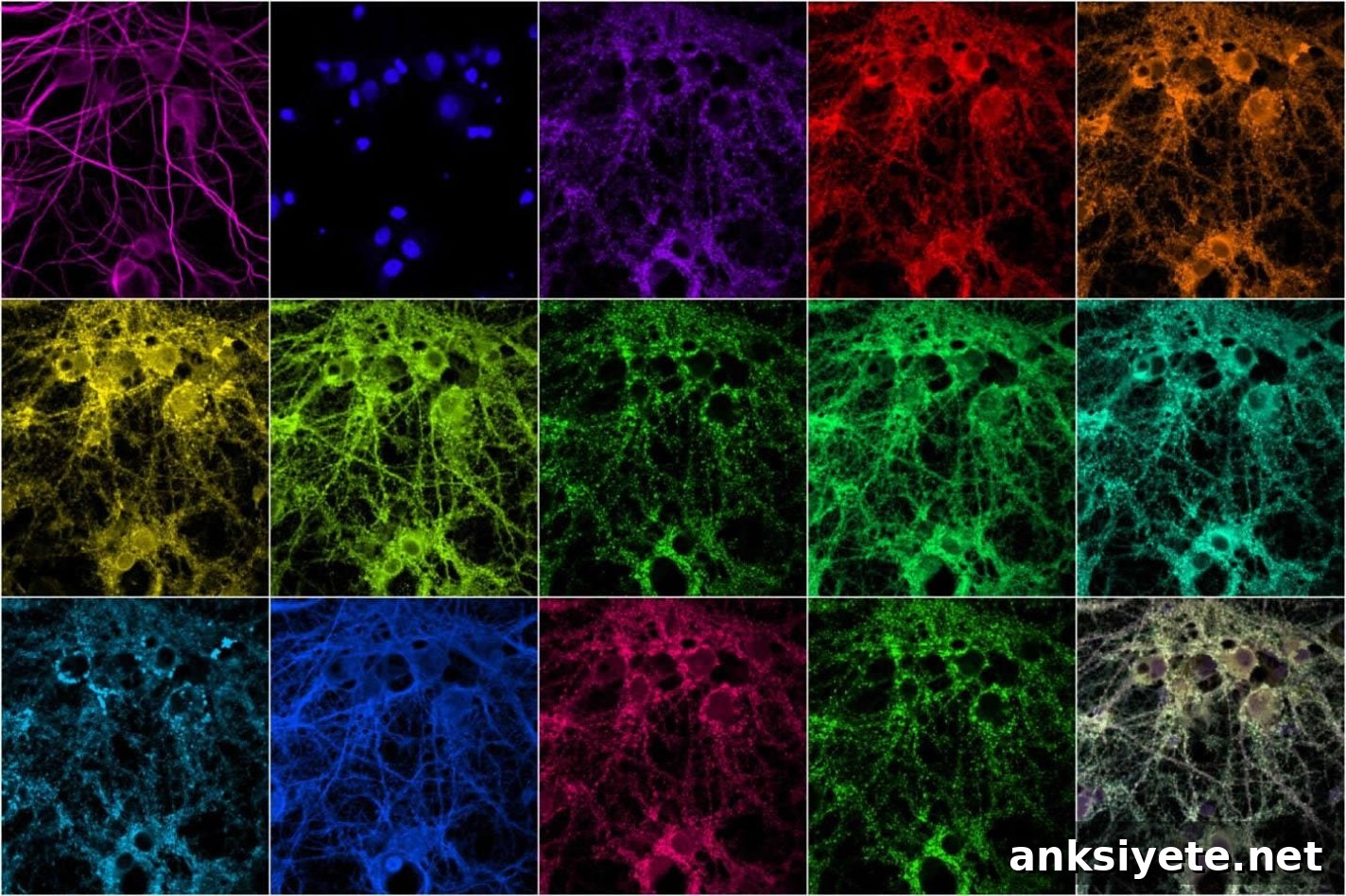
Using diffusible fluorescent nucleic acid probes, the researchers imaged twelve synaptic proteins across thousands of synapses in cultured neuronal samples. The method, which the team calls PRISM, expands the number of targets that can be examined simultaneously compared with conventional immunofluorescence and accelerates data collection versus existing super-resolution techniques.
“Multiplexed imaging matters because synapses and cells are highly variable, even within the same brain,” says Mark Bathe, associate professor of biological engineering at MIT. “Simultaneously visualizing many proteins in a sample is essential to identify synapse subtypes, discover novel synaptic architectures, and determine how genetic changes affect synapse composition.”
The investigators plan to apply this approach to study how loss or modification of genes linked to disease alters synapse structure and protein composition, with the long-term goal of identifying interventions that could reverse pathological changes.
Senior authors on the study include Mark Bathe and Jeff Cottrell, director of translational research at the Stanley Center for Psychiatric Research at the Broad Institute. The work appears in Nature Communications. Lead contributors were Syuan-Ming Guo, Remi Veneziano, Simon Gordonov, and Li Li, together with other collaborators at MIT and the Broad Institute.
Imaging with DNA
Synaptic proteins perform varied roles: they form scaffolds that organize receptors and signaling complexes, assist neurotransmitter release, and support cytoskeletal structure. Traditional fluorescence microscopy typically resolves only three or four protein targets at once, which limits understanding of how multiple components interact within the same synapse.
The team’s method builds on DNA PAINT, an approach pioneered by Ralf Jungmann, in which proteins are labeled with antibodies conjugated to short DNA sequences. Imaging is achieved by adding complementary fluorescent DNA oligonucleotides that transiently bind to those barcodes, producing blinking signals suitable for high-resolution microscopy.
While DNA PAINT provides excellent spatial resolution, imaging many proteins across large samples is slow because each target typically requires lengthy acquisition. To make the method practical for high-throughput studies, the authors optimized the imaging probes by incorporating locked nucleic acids (LNAs) into the fluorescent oligos. LNAs increase binding stability and signal brightness so each target can be imaged far faster than with low-affinity DNA probes, while still permitting reversible binding for multiplexed detection.
With this optimized approach the researchers imaged a dozen synaptic proteins—including scaffold proteins, cytoskeletal markers, and indicators of excitatory or inhibitory synapses, such as the scaffold protein SHANK3, which has been linked to autism and schizophrenia. The enhanced probe design allowed the team to collect multi-color datasets from a single well of neurons in roughly an hour, compared to much longer acquisition times required for equivalent super-resolution experiments.
Analyzing protein intensities across thousands of synapses, the group identified patterns of co-association among proteins and documented the heterogeneity of synapse composition. These quantitative profiles can be used to classify synaptic subtypes and to infer potential functional differences among them.
“Beyond the classic excitatory and inhibitory categories, synapses likely include many subtypes defined by distinct protein combinations, but there is no broad consensus on how to define them,” Bathe notes. “High-throughput multiplexed imaging gives us a data-driven way to examine synapse diversity at scale.”
Understanding disease
The authors demonstrated PRISM’s ability to detect biologically relevant changes by measuring synaptic protein remodeling after treatment with tetrodotoxin (TTX), a compound known to block neuronal activity and trigger compensatory strengthening of synaptic connections. The multiplexed data confirmed coordinated upregulation of specific postsynaptic proteins—findings consistent with earlier studies—but now observed across many protein targets and thousands of synapses in the same samples.
PRISM is now being used to study how knocking out or altering genes associated with neurodevelopmental and psychiatric disorders affects synaptic architecture. Genome sequencing has linked hundreds of genetic variants to conditions such as autism and schizophrenia, but for most variants the mechanisms by which they alter neuronal and synaptic function remain unknown. Multiplexed, high-throughput imaging offers a route to map how specific genetic changes reshape synapse composition and organization.
“Resolving how genetic variation influences neuronal development, synapse formation, and synaptic function is a central challenge for neuroscience and for understanding the origins of many brain disorders,” Bathe says.
Funding: This research was supported by the National Institutes of Health, including the NIH BRAIN Initiative, the National Science Foundation, the Howard Hughes Medical Institute Simons Faculty Scholars Program, Open Philanthropy, the U.S. Army Research Laboratory, the New York Stem Cell Foundation Robertson Award, and the Stanley Center for Psychiatric Research.
Other contributors to the paper include Karen Perez de Arce, Demian Park, Anthony Kulesa, Eike-Christian Wamhoff, Paul Blainey, and Edward Boyden, among others. The study combines methodological advances in nucleic acid-based imaging with large-scale quantitative analysis to enable discovery-driven classification of synapse types and to probe disease-related synaptic changes.
Source:
MIT
Media contact:
Sarah McDonnell – MIT
Image credit:
Syuan-Ming Guo and Li Li.
Original research: Open access. Article title: “Multiplexed and high-throughput neuronal fluorescence imaging with diffusible probes.” Authors: Syuan-Ming Guo, Remi Veneziano, Simon Gordonov, Li Li, Eric Danielson, Karen Perez de Arce, Demian Park, Anthony B. Kulesa, Eike-Christian Wamhoff, Paul C. Blainey, Edward S. Boyden, Jeffrey R. Cottrell & Mark Bathe. Published in Nature Communications.
Abstract
Synapses contain hundreds of distinct proteins whose heterogeneous expression patterns determine synaptic plasticity and signal transmission relevant to a range of diseases. The authors use diffusible nucleic acid imaging probes to profile neuronal synapses by combining multiplexed confocal and super-resolution microscopy. Confocal imaging employs high-affinity locked nucleic acid probes that reversibly bind to antibody- or peptide-conjugated oligonucleotides, enabling rapid, quantitative imaging. Super-resolution PAINT imaging of the same targets uses low-affinity DNA probes to resolve nanometer-scale protein organization across multiple targets. This platform allows quantitative analysis of thousands of synapses in culture to identify putative synaptic subtypes and co-localization patterns from a dozen proteins. Applying the method to neurons subjected to activity blockade reveals coordinated upregulation of postsynaptic proteins such as PSD-95, SHANK3, and Homer-1b/c, and increased correlation between markers in active and synaptic vesicle zones, illustrating the method’s ability to detect coordinated synaptic remodeling.