
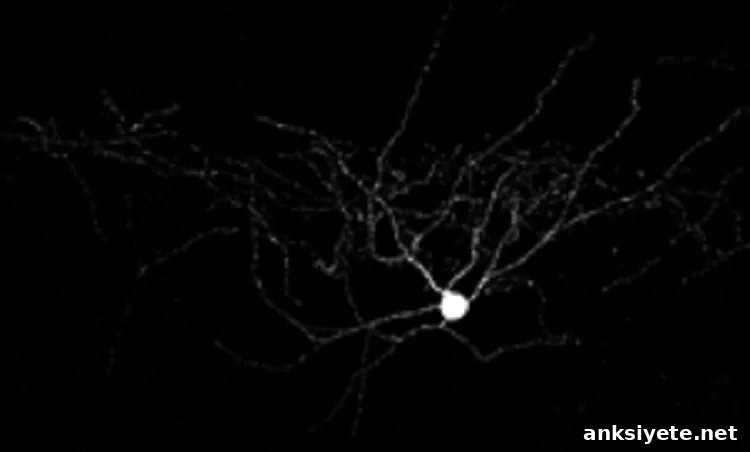
Researchers at the MRC Centre for Developmental Neurobiology (MRC CDN) within the Institute of Psychiatry, Psychology & Neuroscience (IoPPN) at King’s College London have identified a molecular “switch” that adjusts neuronal properties in response to changes in network activity. Published in Science, the study shows that aspects of the brain’s hardware are tuneable and suggests broad implications—from sharpening educational approaches to guiding new therapies for neurological conditions such as epilepsy.
Common metaphors compare the brain to a computer, likening circuits to logic boards and neurons to microprocessors. While useful, this comparison is limited. The authors argue that the brain is a highly dynamic, self-organising system in which both internal states and external experiences continually reshape the functional “hardware” of information processing. These changes operate through biological mechanisms not captured by conventional computer design.
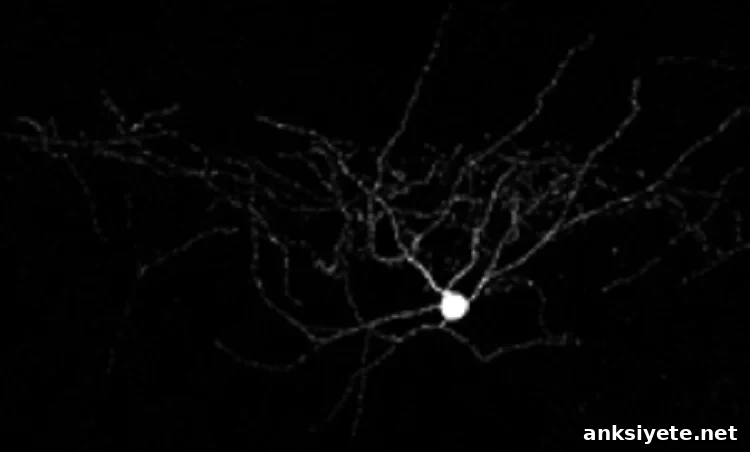
The team, led by Professor Oscar Marín, focused on a class of inhibitory cells in the cerebral cortex known as fast-spiking (FS) interneurons. These cells play a central role in controlling the timing and excitability of cortical networks by regulating the activity of principal pyramidal neurons. By studying what appeared to be two distinct types of FS interneurons, the researchers discovered that they were observing the same neuronal “hardware” operating in two different ground states, and that neurons could switch between these states in response to network activity.
At the centre of this switch is a transcription factor called Er81, a protein that influences gene expression. The researchers show that levels of Er81 in FS interneurons determine a spectrum of functional properties across these cells. Importantly, Er81 expression and the resulting cellular properties are not fixed after development; instead, they remain sensitive to ongoing neural activity. In adult cortex, the relative abundance of FS interneurons with different characteristics is continuously adjusted according to the activity of the network, revealing a level of plasticity in neuronal identity that persists beyond early development.
Nathalie Dehorter, first author on the study, explains that their findings clarify how network activity can dynamically regulate interneuron identity. The research supports the idea that neuronal properties adapt to encode information influenced by both internally generated activity and external experience. In practical terms, this means that the brain’s processing elements are not completely hardwired but can be tuned by experience and network state.
Professor Oscar Marín, the senior author, emphasises the wider significance of the results: the discovery highlights the brain’s considerable plasticity and links these cellular mechanisms to key processes such as learning. Understanding how such plasticity is regulated—and why it declines with age—could shape strategies in education, inform approaches to cognitive health across the lifespan, and aid the development of treatments for disorders where cortical excitability and inhibition are disrupted, including epilepsy.
Funding: The study was supported by grants from the Spanish Ministry of Science and Innovation, the European Research Council and the Wellcome Trust awarded to Oscar Marín. Nathalie Dehorter received support from an EMBO postdoctoral fellowship.
Source: Jack Stonebridge – King’s College London
Image credit: Image adapted from the King’s College London press release
Original research: Dehorter N, Ciceri G, Bartolini G, Lim L, del Pino I, Marín O. “Tuning of Fast-Spiking Interneuron Properties by an Activity-Dependent Transcriptional Switch.” Science. Published online September 11, 2015. doi:10.1126/science.aab3415
Abstract (summary)
The functional output of neural circuits depends on generating and maintaining specific neuron classes. Traditionally, neuronal identity is thought to be set during development and remain stable throughout life. This study provides evidence that network activity continues to modulate the properties of fast-spiking interneurons via the postmitotic regulation of the transcriptional regulator Er81. In adult cortex, varying Er81 protein levels produce a continuum of FS basket cells with distinct physiological properties. The relative proportions of these functional types are adjusted by neuronal activity, indicating that interneuron properties retain a degree of malleability in adulthood.