
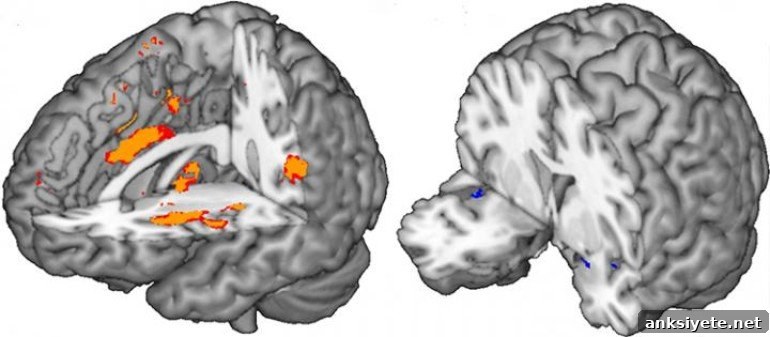
Summary: Observing immoral or unhealthy behaviour evokes brain responses similar to those caused by foul odours. The study also identifies a neural biomarker associated with the feeling of disgust.
Source: University of Geneva
People’s reactions to unhealthy or immoral behaviour recruit basic survival-related emotions. Scientific debate has centered on whether those reactions are primarily linked to disgust or to pain. Using a novel brain-imaging approach and carefully controlled behavioural tests, researchers at the University of Geneva (UNIGE) provide evidence that moral judgments are more closely associated with disgust—and they report a first prototype of a brain biomarker for olfactory disgust.
Published in Science Advances, the study demonstrates that reading about morally troubling situations influences participants’ responses to unpleasant smells in ways that mirror the neural signature of disgust. The work advances our understanding of how deep-seated sensory emotions like disgust shape social evaluation and highlights an imaging-based pattern that predicts olfactory disgust across individuals.
Disgust is a basic emotion closely tied to survival: smells and tastes can signal spoiled food or contamination, and disgust motivates avoidance before harm occurs. Pain, by contrast, signals physical injury and promotes withdrawal and protective behaviour. Psychologists have argued for years that these primitive reactions may be co-opted when we evaluate other people’s behaviour, but prior studies produced mixed results—some emphasizing disgust, others pointing to pain-related processes. The UNIGE team designed an experiment to disentangle these possibilities.
Disgust or pain
“Associations between sensations and moral evaluations run both ways,” explains Professor Corrado Corradi-Dell’Acqua of UNIGE’s Department of Psychology, who led the study. “An upsetting moral story can make a pleasant drink seem off, and conversely a bad smell can bias someone toward harsher moral judgments. Our aim was to test whether moral reactions align more with disgust or with pain by directly comparing the two in the same participants under controlled conditions.”
Previous research sometimes favored pain because moral condemnation often follows from concrete harmful outcomes, which resemble the informational function of pain. Other studies favored disgust because many moral violations feel contaminating or repulsive. To adjudicate between these two views, Corradi-Dell’Acqua’s team combined calibrated sensory stimulation with a moral decision task and advanced magnetic resonance imaging (MRI) analyses capable of distinguishing distributed brain activity patterns associated with each state.
The train dilemma as a paradigm
In the behavioural portion of the experiment, volunteers first experienced controlled unpleasant odours or heat-based sensations calibrated to produce comparable levels of discomfort. The researchers then presented participants with morally provocative scenarios designed to elicit value judgments. One commonly used example was the classic trolley or “train” dilemma—where one must weigh sacrificing a single person to save several others—to evoke strong moral evaluation without introducing real-world consequences.
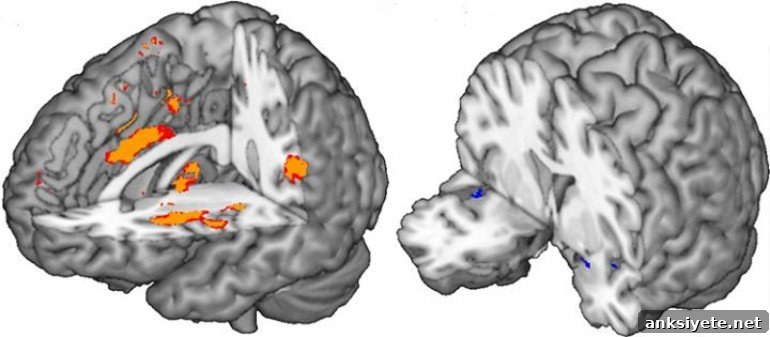
Reading these difficult moral scenarios altered how participants perceived odours: morally salient texts increased reports of disgust to foul smells, while they did not significantly change responses to painful heat. This behavioural shift was supported by physiological data—electrodermal activity (a measure of skin conductance linked to autonomic arousal) tracked changes consistent with increased disgust sensitivity following moral evaluation.
Neural pathways identified
On the neural side, the investigators used MRI not simply to inspect isolated brain regions but to capture whole-brain activity patterns capable of predicting experiential states. “Disgust and pain often engage overlapping neural territories, which makes it hard to tell them apart if you only look at single areas,” Corradi-Dell’Acqua notes. “We applied an analysis that identifies distributed signatures—biomarkers—corresponding to olfactory disgust and to pain, allowing us to dissociate their contributions.”
With this approach, the team showed that the brain-wide signature for olfactory disgust was modulated by participants’ moral judgments: the overall neural response linked to disgust, but not the pattern associated with pain, tracked changes introduced by the moral dilemmas. In other words, moral evaluation selectively engaged the neural systems associated with disgust. The study therefore supports the hypothesis that disgust, more than pain, underlies certain moral reactions.
Beyond settling a theoretical debate, the research produced a practical advance: a prototype biomarker that predicts olfactory disgust from MRI activity. While further validation is required, this biomarker offers a promising tool for future studies probing how sensory emotions shape social cognition and moral behavior.
This work bridges sensory neuroscience and moral psychology, showing how a basic survival emotion—disgust—can extend its influence into the domain of social judgment and decision-making.
Source: University of Geneva
Contact: Corrado Corradi-Dell’Acqua – University of Geneva
Image: The image is credited to UNIGE/Corradi-Dell’Aqua.
Original Research: The study appears in Science Advances.