
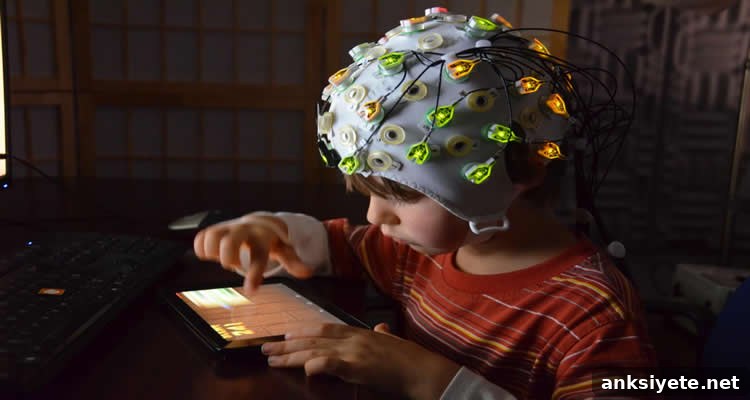
Researchers at the University of Chicago have identified specific brain markers that predict generosity in young children. These neural signatures appear to reflect both rapid social-emotional responses and later moral evaluation processes.
Prosocial behavior takes many forms. While preschoolers often help spontaneously, their sharing of resources tends to be more self-centered. Jean Decety, the Irving B. Harris Professor of Psychology and Psychiatry, together with postdoctoral scholar Jason Cowell from the Child NeuroSuite lab, investigated how young children’s brains evaluate situations that call for sharing. In this study, generosity served as a measurable proxy for early moral behavior. The findings were published in Current Biology.
“We know that generosity generally increases with age in early childhood,” said Decety. Neuroscientists, he added, have not fully clarified the brain mechanisms that drive this developmental change. The study shows that children exhibit two distinct neural response patterns when they view short animations of helping and harming: an early, automatic response and a later, more controlled response. Crucially, it was the later, controlled neural activity that best predicted which children would behave generously.
The research involved 57 children between the ages of three and five. During testing, each child watched brief animated scenarios featuring cartoon characters who either helped or harmed one another while their brain activity was recorded with EEG and their gaze tracked with eye-tracking equipment. After the viewing session, children took part in a simplified version of the “dictator game.” Each child was given ten stickers and told the stickers were theirs to keep. They were then offered the opportunity to share any number of those stickers with an anonymous child who would visit the lab later that day.
To reduce social pressure, each child had two boxes—one for themselves and one for the anonymous peer—and the experimenter turned away while the child decided how many stickers to place in the other box. On average, children shared fewer than two stickers (1.78 out of 10). The study found no significant differences in sharing by gender or across the three- to five-year age range. However, the type of animations the children watched beforehand influenced their likelihood of sharing, indicating that exposure to prosocial or antisocial behavior in the stimuli altered subsequent generosity.
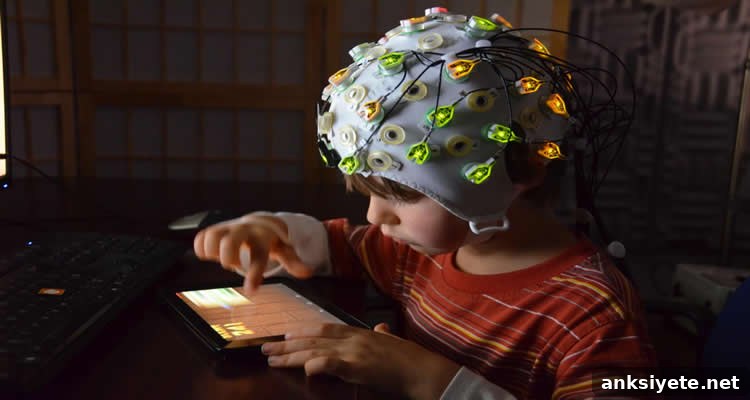
Analysis of the EEG recordings revealed that children first mounted rapid, automatic neural responses to morally relevant scenes. These early signals were followed by slower, controlled processing that appeared to reappraise the same events. The researchers interpret this sequence as an implicit moral evaluation process: quick affective reactions followed by deliberative appraisal that informs decision-making.
“This is the first developmental neuroimaging study to directly connect implicit moral evaluation with real-world prosocial behavior, and to identify the neural markers that correspond to each stage,” Decety said. The results suggest that encouraging children to reflect on others’ moral actions—promoting the controlled, evaluative processing—may help foster sharing and generosity. Importantly, the study indicates that instinctive gut reactions to others’ behavior, while present, were not directly linked to how generous children were in the sticker-sharing task.
These results contribute to theories of moral development by distinguishing automatic affective responses from later cognitive evaluations and by showing which neural processes predict observable moral behavior. The pattern—early automatic activity followed by a later controlled response that forecasts generosity—highlights the role of developing executive and evaluative systems in shaping children’s prosocial choices.
Decety and Cowell are extending this line of research to even younger children, studying infants aged 12 to 24 months to determine when these neural markers of generosity first emerge and how they evolve across early development.
Contact: Jann Ingmire – University of Chicago
Source: University of Chicago press release
Image Source: Jean Decety/University of Chicago, adapted from the press release
Original Research: Abstract for “The Neuroscience of Implicit Moral Evaluation and Its Relation to Generosity in Early Childhood” by Jason M. Cowell and Jean Decety in Current Biology. Published online December 18, 2014. doi:10.1016/j.cub.2014.11.002