
Summary: Researchers evaluate whether a neuron’s identity can be defined solely by the genes it expresses and find that combining transcriptomic data with other cellular measurements gives a more reliable classification.
Source: Marine Biological Laboratory
For decades, neuroscientists have sought a clear and useful way to classify the brain’s many cell types. Reliable categories help researchers map circuits, interpret function, and study how changes in specific cells contribute to behavior and disease. Yet there is ongoing debate about which measurements should determine a cell’s identity.
In a new collaborative study that grew out of work in the Neural Systems & Behavior (NS&B) course at the Marine Biological Laboratory, investigators tested the idea that a neuron’s identity can be defined only by its expressed genes. Published in Proceedings of the National Academy of Sciences, the study argues for a more multimodal approach that integrates gene expression with other cellular features.
Modern RNA sequencing methods provide a powerful way to capture which genes are active in single cells at a given moment, creating a transcriptomic snapshot. However, those snapshots may not fully capture the stable properties of a cell or the functional distinctions researchers use in physiological studies. The new study directly evaluates the strengths and limitations of relying on transcriptomics alone for defining neuronal identity.
NS&B instructors Hans Hofmann, David Schulz, and Eve Marder, together with collaborators, applied two commonly used RNA-based techniques—single-cell RNA sequencing (RNA-seq) and quantitative RT-PCR—to individually identified neurons in two well-characterized crustacean nerve clusters: the stomatogastric and cardiac ganglia of the crab Cancer borealis. These ganglia are ideal for this test because decades of research already link specific neurons to well-defined physiological roles, morphologies, and connectivity patterns.
The team compared cell-type assignments made by unbiased analyses of complete transcriptomes to the established identities derived from long-term physiological, anatomical, and connectivity studies. They found that clustering cells solely by their full transcriptomic profiles often failed to recover those known identities: in some cases the assignments appeared scrambled, and distinct, functionally defined neuron types were not cleanly separated by unsupervised transcriptomic clustering alone.
Importantly, when the researchers narrowed their analysis to carefully chosen sets of genes—those likely to be informative about the neurons’ functional properties—the transcriptomic classifications aligned much better with the neurons’ known identities. In other words, selecting biologically relevant gene markers and integrating RNA data with information about morphology, physiology, and innervation produced a much more accurate and interpretable cell taxonomy than transcriptomics by itself.
“Many studies place heavy emphasis on transcriptomic data without validating gene-expression clusters against morphological, physiological, or connectivity information,” says Hans Hofmann. He emphasizes the need for broader comparative data—across cell types and species—to build a robust and reproducible taxonomy of neural cell types.
David Schulz adds that while RNA sequencing is an extraordinarily powerful tool, its results need contextual validation. “This study serves as an important checkpoint,” he says, “reminding us that when possible we should combine transcriptomic analysis with other data modalities to avoid misleading classifications.”
“Rather than relying entirely on analytics applied blindly to cell type, whenever possible it’s important to consider multiple modalities of information as well.”
Both Hofmann and Schulz note the central challenge: distinguishing which gene-expression signals are meaningful indicators of neuronal identity and which reflect transient states, noise, or experimental variability. Determining that distinction is essential for developing reliable classification systems.
The study also raises a conceptual question about how to define “cell identity.” While drawing firm boundaries between cell types can be useful for experimental design and communication, imposing overly discrete categories may obscure gradual variation and overlap among cells, both within a single animal and across individuals or species.
“As transcriptomic datasets grow and we integrate more kinds of measurements,” Schulz says, “we will increasingly see the limits of forcing cells into rigid categories. A flexible, multimodal framework will better capture the spectrum of neuronal types and their functional roles.”
Source:
Marine Biological Laboratory
Media Contacts:
Gina Hebert – Marine Biological Laboratory
Image Source:
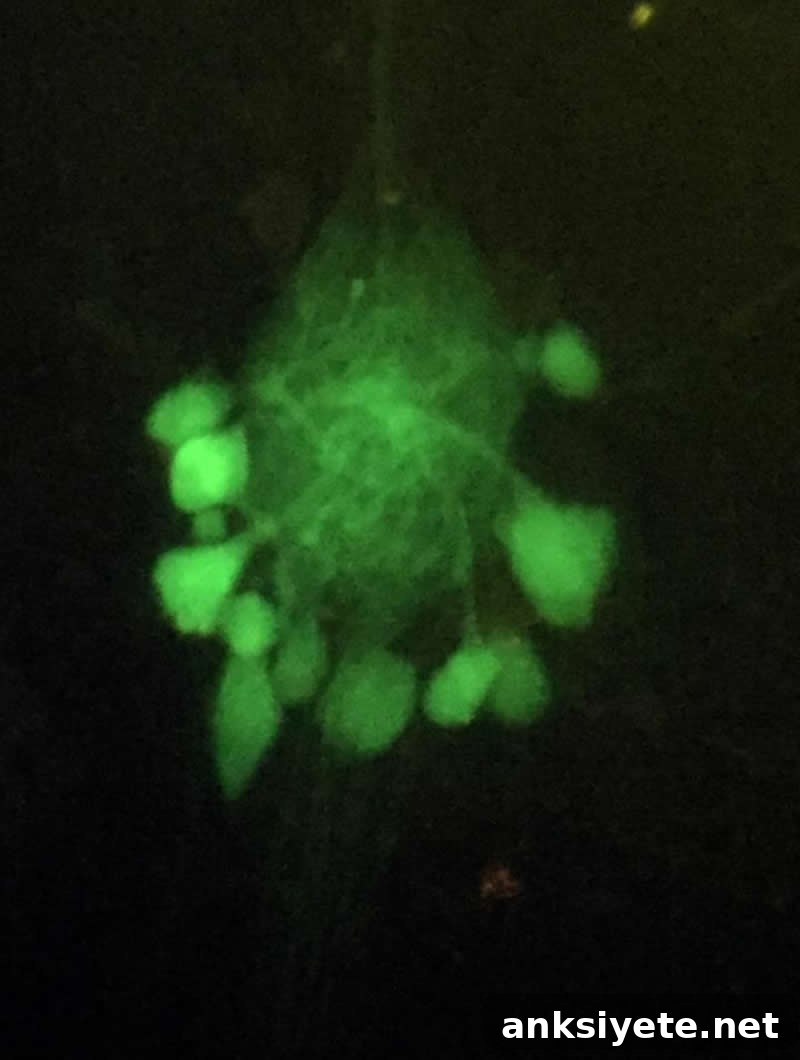
Image credited to Adam Northcutt.
Original Research: Open access
“Molecular profiling of single neurons of known identity in two ganglia from the crab Cancer borealis”. Adam J. Northcutt, Daniel R. Kick, Adriane G. Otopalik, Benjamin M. Goetz, Rayna M. Harris, Joseph M. Santin, Hans A. Hofmann, Eve Marder, and David J. Schulz.
PNAS doi:10.1073/pnas.1911413116.
Abstract
Molecular profiling of single neurons of known identity in two ganglia from the crab Cancer borealis
Identifying cell types is fundamental to understanding neural circuit organization. Advances in transcriptional profiling now allow researchers to classify cells by their gene-expression patterns at high throughput. However, validating these classifications is challenging when ground-truth identities are not known. To evaluate the capabilities and limits of transcriptional profiling as a sole method for cell-type classification, the authors applied two transcriptional profiling approaches—single-cell RNA sequencing and quantitative RT-PCR—to individually identified neurons from two small crustacean networks: the stomatogastric and cardiac ganglia of Cancer borealis. They combined prior knowledge of cell identity with unbiased clustering analyses and supervised machine-learning approaches to test how well functional neuron types could be recovered from expression profiles alone. The results show that expression profiles can identify neuronal types most reliably when combined with multimodal information that allows post hoc grouping and supervised analysis. Relying solely on unsupervised clustering may produce misclassifications and fail to distinguish some cell types. Thus, while transcriptional profiling is a valuable tool for cell identification, the study cautions that transcriptomics alone cannot always unambiguously assign cell identity. Accurate determination of neuronal identity often requires additional modalities such as physiology, morphology, or innervation targets.