
Hippocampal Waves Travel Both Directions, Helping Integrate Memory Signals
Summary: Using a high-density micro-grid, researchers recorded hippocampal activity in people undergoing epilepsy surgery and discovered that low-frequency brain waves propagate bidirectionally across the hippocampus, coordinating inputs from different brain areas to form integrated memories.
Source: UCSF
Researchers at the University of California, San Francisco have revealed a previously unrecognized pattern of neural activity in the hippocampus — the brain’s central memory hub — that helps explain how this structure integrates diverse types of information into cohesive memories.
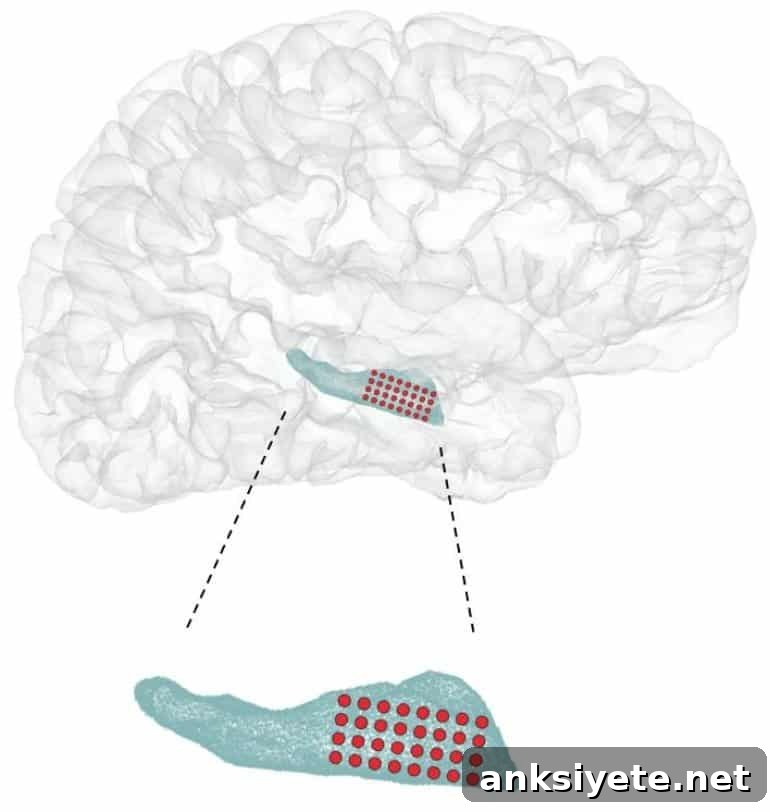
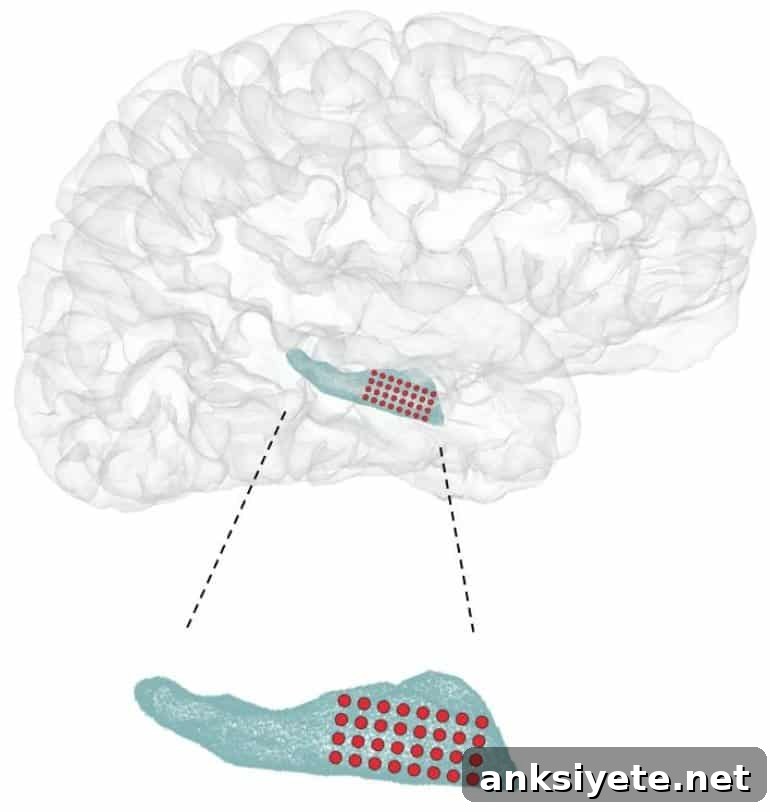
Working with a novel thin-film micro-grid developed at Lawrence Livermore National Laboratory, the UCSF team recorded high-resolution electrical activity directly from the hippocampal surface in patients undergoing surgical treatment for severe epilepsy. The recordings show that low-frequency waves travel not only from the back to the front of the hippocampus, as earlier models suggested, but also travel in the opposite direction, and that these directions can change with cognitive state.
Edward Chang, MD, PhD, chair of the Department of Neurological Surgery and senior author of the study published in Nature Communications, explained that the new high-density electrode technology enabled observation of a novel property of hippocampal dynamics that was previously inaccessible with conventional recording methods. Because the hippocampus is often implicated in epilepsy and is also an early target in Alzheimer’s disease, understanding its internal information flow has important clinical implications.
Previous work had tended to view hippocampal waves as propagating along a single axis, with spatial information encoded toward the posterior end and emotional or associative information toward the anterior end. Jon Kleen, MD, PhD, lead author and assistant professor of neurology in the Weill Institute for Neurosciences, noted that a strictly one-way signal flow is difficult to reconcile with the hippocampus’ ability to bind multiple elements — such as location, objects, and emotions — into a single memory trace.
Custom Micro-Grid Provides a Two-Dimensional View
To capture the hippocampus’ two-dimensional activity patterns, the team collaborated with Razi Haque, Implantable Microsystems Group Lead at LLNL, to produce a flexible electrode array smaller than a dime. The device contains 32 electrodes spaced 2 mm apart on a pliable polymer that conforms to the hippocampal surface. Placed directly on the exposed hippocampus during surgery, the array delivered a detailed map of electrical oscillations across the tissue.
The researchers recorded from six surgical patients while they were at rest and, in two cases, while they were awake and engaging with simple tasks. Using signal-processing methods and machine learning to analyze the data, the team found that oscillations across a range of frequencies (1–15 Hz) propagated across the hippocampal surface and that propagation direction shifted dynamically between two roughly opposite oblique axes relative to the long axis of the structure.
At times, waves of different frequencies were present simultaneously and moved in opposite directions, suggesting that separate information streams could traverse the hippocampus along distinct spatiotemporal routes. Such multiplexed propagation could allow the hippocampus to combine spatial, sensory, and emotional information when forming detailed memories.
Wave Direction Reflects Cognitive State
In the awake patients, Kleen presented simple visual prompts and asked for verbal recall. During moments of recall, the direction of hippocampal wave travel shifted in a consistent pattern: activity flowed from the posterior toward the anterior hippocampus while a word was retrieved, then reversed direction a few seconds later. These observations indicate that propagation direction may serve as a meso-scale biomarker of the cognitive process underway.
The investigators also showed that wave direction could be predicted from the topography of wave amplitude measured across the hippocampal surface, suggesting that spatial patterns of oscillation carry information about the network state and its computational role.
Looking forward, the researchers plan to deploy even higher-density electrode arrays and to examine hippocampal propagation during more complex cognitive tasks. The long-term aim is to translate these mechanistic insights into better treatments: for example, designing deep brain stimulation strategies that restore or modulate physiological wave patterns to prevent seizures or support cognition in disorders that affect the hippocampus.
“By mapping how waves move across the hippocampus and how directionality changes with behavior, we can begin to design targeted stimulation patterns that more closely mimic healthy hippocampal dynamics,” Kleen said. “This approach may improve outcomes for patients with epilepsy and for those with memory impairments.”
Co-authors include Jason Chung and Kristin Sellers, PhD, from UCSF and collaborators from LLNL. Funding for the project came from NINDS grants R25NS070680 and K23NS110920 (J.K.); R01-DC012379; R00-NS065120; and partial support from DARPA. For full author lists and funding details, consult the published paper in Nature Communications titled “Bidirectional propagation of low frequency oscillations over the human hippocampal surface.”
About this neuroscience research news
Source: UCSF
Contact: Robin Marks – UCSF
Image: The image is credited to UCSF
Abstract
Bidirectional propagation of low frequency oscillations over the human hippocampal surface
The hippocampus receives diverse inputs along its longitudinal axis. Theta- and low-frequency oscillations have been thought to travel primarily in one direction, but how such one-way propagation supports flexible cognitive processing remained unclear.
Using conformable thin-film microgrid arrays placed on the human hippocampal surface, the study tracked neural activity two-dimensionally in vivo. Oscillations between 1 and 15 Hz propagated across the tissue and dynamically shifted between two roughly opposite oblique directions. This predominant propagation axis was consistent across participants, hemispheres, and states of consciousness. Directionality changed during a behavioral task and could be predicted from amplitude topography on the hippocampal surface.
These findings suggest that propagation direction represents distinct meso-scale network computations and that the hippocampus operates via versatile spatiotemporal routes to integrate information for memory formation and retrieval.