
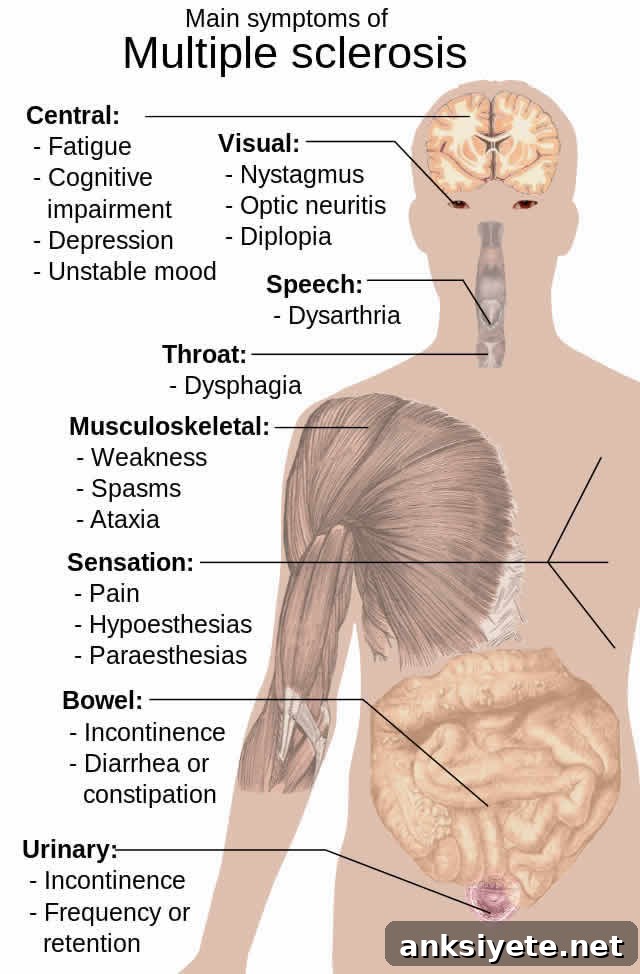
Alemtuzumab May Reverse Some Physical Disability in Relapsing-Remitting Multiple Sclerosis
Summary: New research suggests that alemtuzumab, a drug used to treat multiple sclerosis (MS), can reverse some existing physical disability in people with relapsing-remitting MS when used relatively early in the disease course. The benefits must be weighed against known risks, including rare but serious autoimmune complications.
Source: AAN (American Academy of Neurology)
Background: Alemtuzumab is an immunomodulatory therapy approved for relapsing-remitting multiple sclerosis (RRMS), the form of MS characterized by episodes of neurological worsening followed by periods of improvement. While many MS treatments focus mainly on slowing disease progression and reducing relapse frequency, data on restoring function that has already been lost have been limited. A randomized clinical trial reported evidence that alemtuzumab may lead to measurable improvement in preexisting disability compared with subcutaneous interferon beta-1a.
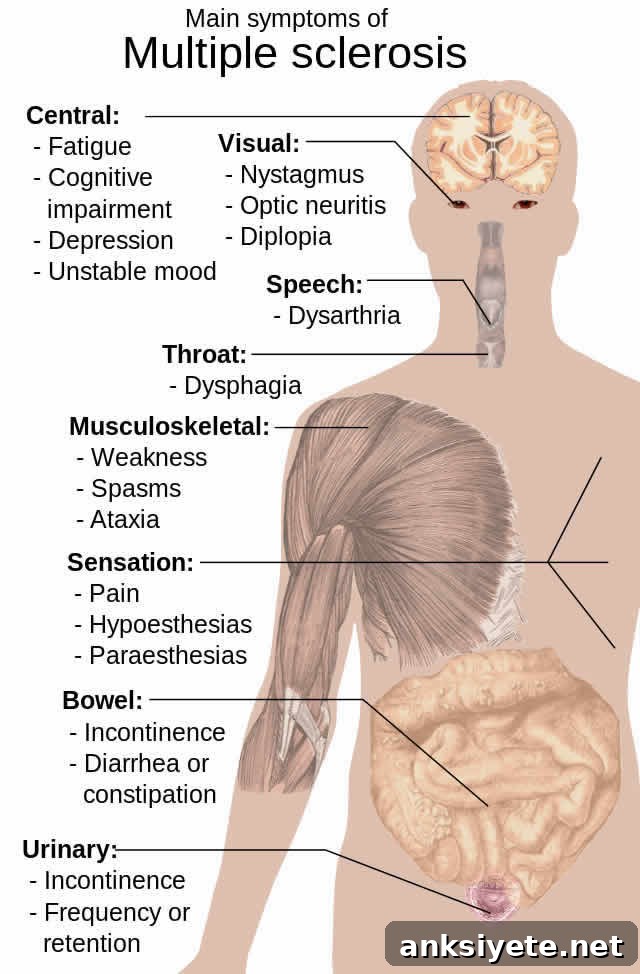
Study Design and Participants
The findings come from the CARE-MS II clinical trial, a two-year, randomized, rater-blinded, active-controlled phase 3 study comparing alemtuzumab (12 mg) with subcutaneous interferon beta-1a (44 µg) in RRMS patients who had experienced an inadequate response to prior disease-modifying therapy (at least one relapse). Researchers measured disability at baseline and then every three months for two years, using established instruments including the Expanded Disability Status Scale (EDSS), the Multiple Sclerosis Functional Composite (MSFC), and measures of visual function.
Key Results
By the end of the two-year study period, nearly 28 percent of participants treated with alemtuzumab showed a clinically meaningful improvement of at least one point on the EDSS (a scale ranging from 0 to 10), compared with approximately 15 percent of those receiving interferon beta-1a. In addition to EDSS results, alemtuzumab-treated patients were more likely to demonstrate improvement on the MSFC, particularly in upper-limb coordination and dexterity, and showed better outcomes on low-contrast letter acuity measures of visual function.
The analysis accounted for recovery following recent relapses, indicating that the documented improvements were not simply the result of spontaneous recovery from recent exacerbations. Overall, patients receiving alemtuzumab were about 2.5 times more likely to improve in cognitive assessments and more than twice as likely to improve in measures of ataxia (loss of coordination) than those receiving interferon.
Interpretation and Mechanisms
Investigators noted that while the trial demonstrates improvement in preexisting disability with alemtuzumab versus interferon beta-1a, the biological mechanism responsible for this effect remains unclear. Potential explanations include remyelination (repair of the myelin sheath around nerve fibers), formation of new neural connections, substantial reduction of inflammatory activity permitting recovery, or other neurorestorative processes. Further research is necessary to determine how alemtuzumab contributes to functional recovery and whether such benefits persist over longer follow-up periods.
Safety Considerations
Alemtuzumab can cause serious side effects, including infusion reactions and immune-mediated disorders that are sometimes severe and rarely fatal. Because of these risks, alemtuzumab is often reserved for patients who have not responded adequately to other MS therapies. Clinicians and patients should weigh the potential for disability improvement against the known safety profile of the drug when considering treatment options.
About this neurology research article
Funding: The study was supported by Sanofi Genzyme and Bayer HealthCare Pharmaceuticals.
Source attribution: Reported by Renee Tessman for the American Academy of Neurology (AAN).
Original research citation: The trial report, titled “Alemtuzumab improves preexisting disability in active relapsing-remitting MS patients,” was published in the journal Neurology (online October 12, 2016) by Gavin Giovannoni and colleagues on behalf of the CARE-MS II Investigators. The article presents detailed methods and results for the randomized, rater-blinded phase 3 comparison between alemtuzumab and interferon beta-1a.
Conclusions
In this randomized trial of patients with relapsing-remitting MS who had an inadequate response to prior therapy, alemtuzumab produced greater improvements across several disability measures than subcutaneous interferon beta-1a, suggesting a capacity to improve preexisting deficits in some patients. These results are encouraging but must be balanced against the drug’s safety profile. Longer-term follow-up and mechanistic studies are needed to confirm durability of benefit and to clarify how alemtuzumab may contribute to recovery of neurological function.