
How SYT1 Mutations Disrupt Neurotransmission and a Possible Treatment Path
Summary: New research explains how mutations in the synaptotagmin-1 (syt1) protein impair neurotransmitter release and cause a rare condition called syt1-associated neurodevelopmental disorder. Mutations in the SYT1 gene reduce the protein’s sensitivity to calcium, and researchers identify a potential drug-based strategy to partially compensate for this defect.
Source: Howard Hughes Medical Institute
Overview
Neurons communicate by converting electrical signals into chemical ones. For nearly three decades, biochemist Edwin Chapman has studied the molecular machinery that makes this conversion possible. His team now reports how specific mutations in synaptotagmin-1 (syt1), a key calcium sensor in nerve terminals, cause a severe and rare neurodevelopmental disorder, and proposes a therapeutic approach to help alleviate symptoms.
Chapman and colleagues published their findings on May 1, 2020, in the journal Neuron. Their work began after Chapman received an email in 2015 from a mother whose two-year-old daughter had significant motor and communicative delays despite intensive therapy. Genetic testing showed a mutation in the SYT1 gene, and subsequent contact with other affected families revealed a small group of patients with similar clinical features.
Syt1-associated neurodevelopmental disorder is extremely rare: to date only a small number of cases have been confirmed. Affected children exhibit a range of symptoms including developmental delays, abnormal eye movements, involuntary movements, and severe agitation that can lead to self-injury. Motivated by the families’ determination to understand the underlying cause, Chapman’s lab set out to define the molecular and cellular consequences of SYT1 mutations.
How syt1 normally works
At a synapse, an arriving electrical impulse opens voltage-gated calcium channels, allowing calcium ions to enter the nerve ending. Synaptotagmin-1 sits on synaptic vesicles and senses this calcium influx. On binding calcium, syt1 inserts into the neuronal membrane and triggers the rapid fusion of neurotransmitter-filled vesicles, releasing chemical signals that carry information to the next neuron.
What the researchers found
Chapman, MD/PhD student Mazdak Bradberry, and collaborators examined the mutant syt1 proteins from three patients. Using cultured neurons, electrophysiology, and biochemical assays, they showed that each mutation impaired neurotransmitter release to varying degrees. Importantly, all mutant forms of syt1 exhibited reduced responsiveness to calcium — they were less able to detect the calcium signal that normally triggers vesicle fusion.
These defects produced dominant-negative effects at synapses, meaning the mutant protein interfered with the function of normal syt1 produced from the unaffected gene copy. Biophysical studies further revealed insights into how the two tandem calcium-sensing C2 domains of syt1 cooperate and how specific mutations disrupt that cooperation, explaining part of the clinical variability seen among patients.
A potential therapeutic strategy
Given that the core problem involved diminished calcium sensitivity, the team pursued the idea of enhancing calcium signaling to compensate for the defective sensor. They tested 4-aminopyridine (4-AP), a potassium channel blocker already approved for treating multiple sclerosis, because it increases neuronal excitability and thereby boosts calcium influx into nerve terminals.
Using an optical assay developed by Loren Looger at HHMI’s Janelia Research Campus — which makes neurotransmitter release visible as fluorescence — the researchers observed dim signals from neurons expressing mutant syt1. When they applied 4-AP in cultured neurons, fluorescence increased, indicating improved neurotransmitter release despite the presence of mutant protein.
Because 4-AP is an FDA-approved drug, clinicians may be able to obtain permission quickly to try it in individual patients. The authors and outside experts caution that 4-AP is unlikely to reverse developmental changes already established in the brain; however, it may reduce problematic symptoms such as severe agitation or self-injurious behaviors, improving quality of life for patients and caregivers.
Bradberry and Chapman have shared their laboratory results with the families and the clinicians caring for the affected children so that informed decisions can be made about possible treatment trials. Both researchers emphasize cautious optimism: a therapy that brings even partial relief would be meaningful for families confronting the daily challenges of this disorder.
About this neuroscience research article
Source:
Howard Hughes Medical Institute
Media Contacts:
Meghan Rosen – Howard Hughes Medical Institute
Image Source:
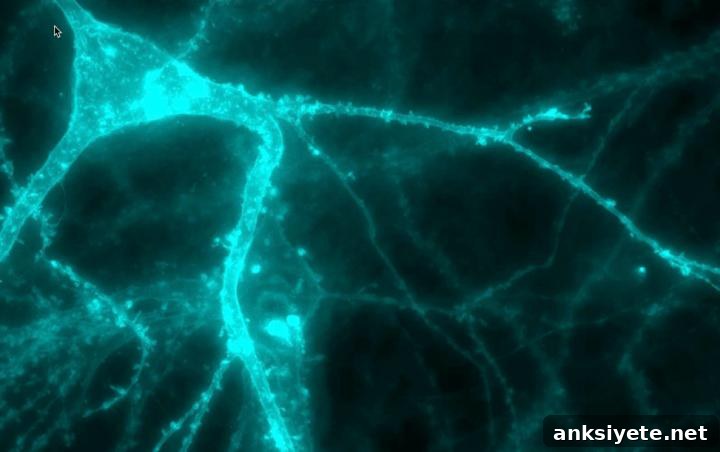
The image is credited to Mazdak Bradberry.
Original Research: Open access
“Molecular basis for synaptotagmin-1-associated neurodevelopmental disorder.” by Mazdak M. Bradberry et al., Neuron, doi: 10.1016/j.neuron.2020.04.003
Abstract
Molecular basis for synaptotagmin-1-associated neurodevelopmental disorder
Highlights
• Graded, dominant-negative effects of disease-associated syt1 mutations
• Clinical, physiological, and biochemical evidence linking genotype to phenotype
• Functional specialization and positive allostery between syt1’s C2 domains
• Rescue of mutant phenotypes in cultured neurons by a clinically approved drug
Summary
Synaptotagmin-1 (syt1) synchronizes neurotransmitter release with calcium influx during neuronal firing. Heterozygous missense mutations in SYT1 have been linked to a severe but variable developmental syndrome. Through clinical characterization and mechanistic studies of three patient-derived mutations, the researchers demonstrate impaired synaptic transmission caused by dominant-negative mutant syt1 proteins. Biophysical experiments reveal how the tandem calcium-sensing domains function cooperatively and how mutations perturb that mechanism. Importantly, a clinically approved potassium channel antagonist can restore neurotransmitter release in cultured neurons expressing mutant syt1, suggesting a possible therapeutic route to mitigate symptoms in affected patients.
Feel Free To Share This Genetics and Neurology News.