
Summary: Ketamine and exposure to 60-hertz flickering light show promise as a potentially new, non-invasive approach to restore youthful plasticity in the adult brain.
Source: IST Austria
Do you remember the scent of flowers in your grandmother’s garden or the melody your grandfather used to whistle? Some childhood memories and learned skills remain deeply ingrained because the brain passes through critical periods of heightened adaptability. A key structure that locks in these long-term connections is the perineuronal net.
The perineuronal net is an extracellular matrix that wraps around certain neurons, stabilizing synaptic connections and limiting the formation of new ones. Removing or loosening this net could theoretically restore a more flexible, youthful state in the adult brain. Neuroscientist Sandra Siegert and her group at IST Austria report two promising, minimally invasive methods that reduce perineuronal nets and re-open plasticity.
Ketamine and 60-Hz Flicker as Tools to Reopen Plasticity
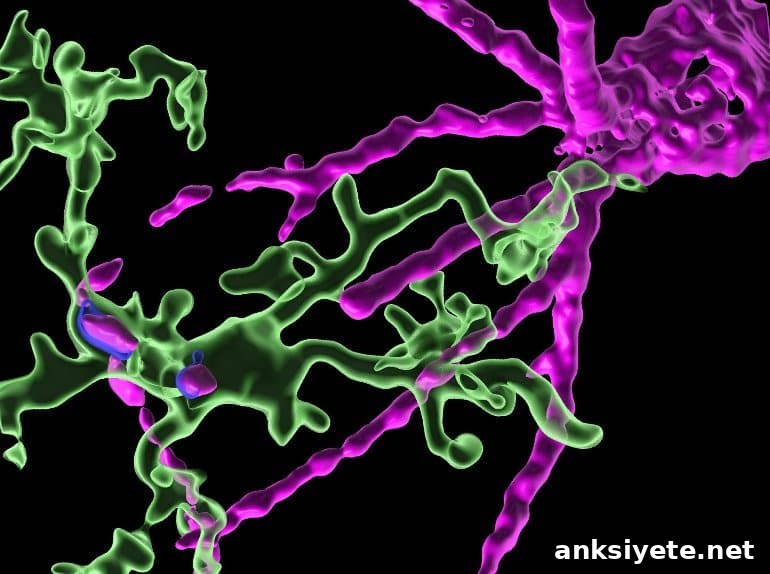
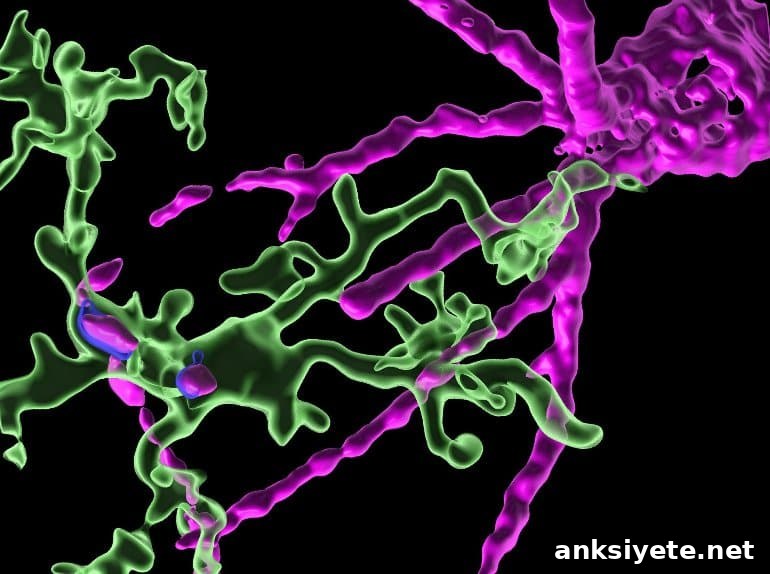
The story began when researchers observed that microglia—the brain’s resident immune cells—became highly reactive in mice after repeated ketamine anesthesia. Microglia are known to prune synapses and clear debris, and in disease states they can consume entire neurons. But in this case, despite a marked microglial response, researchers did not see synapse loss or cell death. Instead, the microglia selectively removed the perineuronal net that normally shields and stabilizes certain connections.
“The extent of perineuronal net removal after repeated ketamine was striking,” says Alessandro Venturino, lead author and member of the Siegert lab. After three ketamine treatments the nets were significantly reduced, an effect that persisted for about a week before the nets reassembled.
When the team discussed these findings with collaborator Mark Bear at MIT, they explored whether sensory stimulation could produce a similar outcome. Neuronal activity organizes into rhythmic patterns—brainwaves—that can be influenced by sensory input such as light. Prior work showed that 40-hertz light flicker mobilizes microglia to clear amyloid plaques in models of Alzheimer’s, but it did not remove the perineuronal net.
Surprisingly, exposure to light flickering at 60 hertz reproduced the ketamine effect: microglia engaged with parvalbumin-expressing interneurons and promoted disassembly of the perineuronal net. This frequency-specific response suggests that microglia may tune their activity to particular brain rhythms, and that different frequencies can trigger distinct microglial behaviors.
“The interaction between specific brainwave frequencies and microglial action is fascinating and opens new ways to think about how rhythmic sensory input could modulate brain structure,” Venturino notes.
Potential Applications and Important Caveats
Existing methods to remove perineuronal nets tend to be long-lasting and invasive. In contrast, repeated ketamine exposure and 60-hertz light entrainment are relatively noninvasive and transient, making them attractive candidates for therapeutic development. By temporarily reducing the perineuronal net, neurons regain sensitivity to new input and can form new synapses—a window of renewed plasticity.
But the researchers emphasize caution. “This is not a shortcut to making someone ‘smarter’ by taking ketamine,” Venturino warns. Reopening plasticity could be beneficial—potentially enabling therapies that overwrite traumatic memories or improve recovery from sensory deficits—but the same window could also permit harmful experiences to become entrenched. “We must be careful: in a sensitive period, negative experiences could have strong effects,” Siegert adds. The team also cautions against unsupervised use of flickering lights, which may carry risks for some individuals.
Possible clinical targets include amblyopia (lazy eye), where correcting visual input during a renewed plastic period might restore function in adults, and other conditions where limited plasticity prevents recovery. The molecular mechanisms linking ketamine, specific brain rhythms, microglial activation, and perineuronal net remodeling remain to be fully defined, and the researchers plan to investigate these pathways further.
In summary, transient disruption of perineuronal nets—either by repeated ketamine anesthesia or by 60-hertz light entrainment—can reinstate juvenile-like plasticity in the adult brain through microglia-mediated remodeling. These findings identify new, frequency-dependent ways to engage microglia and suggest potential, carefully controlled therapeutic avenues to promote neural rejuvenation.
About this neuroscience research news
Source: IST Austria
Contact: Patrick Müller – IST Austria
Image: The image is in the public domain
Original Research: Open access. “Microglia enable mature perineuronal nets disassembly upon anesthetic ketamine exposure or 60-Hz light entrainment in the healthy brain” by Alessandro Venturino et al., Cell Reports. DOI: 10.1016/j.celrep.2021.109313
Abstract
Microglia enable mature perineuronal nets disassembly upon anesthetic ketamine exposure or 60-Hz light entrainment in the healthy brain
Highlights
- •Repeated ketamine anesthesia induces perineuronal net reduction
- •PNN reduction restores juvenile-like ocular dominance plasticity
- •Microglia contact parvalbumin neurons and remodel PNN
- •60-Hz light stimulation reproduces ketamine-induced PNN reduction
Summary
Perineuronal nets (PNNs), components of the extracellular matrix, preferentially surround parvalbumin-positive interneurons and restrict critical-period plasticity in the adult cortex. Traditional strategies to remove PNNs are often invasive and can cause neuropsychiatric side effects.
In this study, repeated anesthetic ketamine was used as a minimally disruptive method and found to strongly reduce PNN coverage in the healthy adult brain, promoting juvenile-like plasticity. Microglia play a central role: they engage with parvalbumin-positive neurons within their cortical layer and drive PNN remodeling.
The authors also demonstrate that external 60-Hz light-flicker entrainment recapitulates microglia-mediated PNN removal, while 40 Hz—previously shown to clear amyloid plaques—does not induce PNN loss. This frequency specificity suggests microglia can respond differently to distinct rhythmic inputs. Thus, 60-Hz light entrainment offers an alternative, transient approach to modulate PNNs and re-open plasticity in the adult brain.