
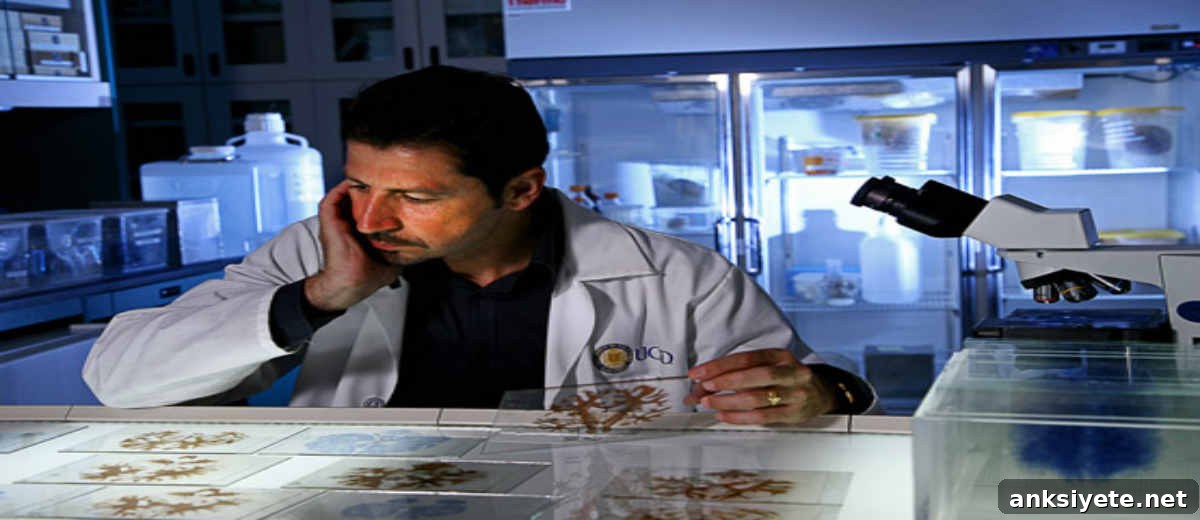
3D model of a famous amnesiac’s brain illuminates human memory
Henry G. Molaison, widely known in neuroscience literature as H.M., is one of the most influential patients in the study of human memory. A new, fully digitized, three-dimensional microscopic model of his brain — reconstructed from thousands of histological sections — provides unprecedented anatomical detail that helps clarify the neurological basis of the case that shaped modern memory research.
The digital reconstruction and quantitative 3D measurements focus particularly on the medial temporal lobe (MTL) and hippocampus, regions long implicated in memory formation. These data and analyses are described in a paper published in Nature Communications, detailing how postmortem histology combined with digital reconstruction can reveal anatomical features beyond what was visible with the MRI technology available during H.M.’s lifetime.
H.M. became a central figure in cognitive neuroscience after he underwent bilateral medial temporal lobe surgery in 1953 to treat severe epilepsy. The operation, which included removal of hippocampal tissue, left him with a profound and selective anterograde amnesia: his ability to form new declarative long-term memories was severely impaired, while his intelligence, language, perception and personality were largely preserved. His unique profile and decades of testing made H.M. the first clear human case demonstrating the hippocampus’s essential role in forming new memories.
In December 2009, researchers led by Jacopo Annese at the University of California, San Diego, dissected H.M.’s brain into 2,401 thin, serial tissue slices. Each slice was imaged and digitized, producing a continuous archive of high-resolution histological images. Those images were used to build a comprehensive 3D microscopic model of the whole brain that allows virtual re-examination of the original surgical lesion and of adjacent brain structures at cellular resolution.
The high sampling density and image quality of this histology-based reconstruction provide anatomical clarity that surpasses the MRI scans obtained while H.M. was alive. With the full 3D model, researchers can perform virtual dissections to reassess the extent and geometry of the lesion, measure the remaining medial temporal lobe structures, and examine subtle pathological changes that may have affected function.
One notable finding from the study was the identification of a small, well-defined lesion in the left orbitofrontal cortex that had not been reported previously. Based on the lesion’s geometry and on surgical notes describing the lobectomy performed in 1953, the authors conclude that this additional injury was likely the result of the original operation. Detecting such a lesion underscores the value of histology-based 3D reconstructions for revealing details missed by earlier imaging and pathology methods.
These new anatomical data offer important context for interpreting decades of behavioral and cognitive testing on H.M. By precisely mapping the extent of hippocampal and medial temporal lobe damage and documenting other cortical effects, the reconstruction helps modern researchers refine models of memory systems and the specific functions of hippocampal subregions.
To support collaborative research and to preserve the anatomical record, the team created an online atlas of H.M.’s brain. The atlas includes structural delineations and digitized stained slides that can be viewed at cellular-level resolution, enabling investigators worldwide to examine the same histological material used in the reconstruction and analyses.
Funding for the project came from a mix of public and private sources, including grants from the National Science Foundation and support from foundations and private contributors who helped underwrite the dissection and digitization efforts. During the study, the lead investigator received support from federal research grants in related areas of neuroscience and imaging.
Notes about the H.M. project and research resources
Information about the H.M. project, the brain reconstruction and the associated brain observatory materials are archived for public and scientific use. The original research article provides full methodological detail on histological sectioning, image acquisition, digital reconstruction and the anatomical analyses that informed the study’s conclusions.
Contact: Scott LaFee – UCSD
Source: UCSD press release
Image source: Adapted from the UCSD press release.
Original research: “Postmortem examination of patient H.M.’s brain based on histological sectioning and digital 3D reconstruction” by Jacopo Annese and colleagues, published in Nature Communications. DOI: 10.1038/ncomms4122
#neuroscience, #memory, #openaccess, #openscience