
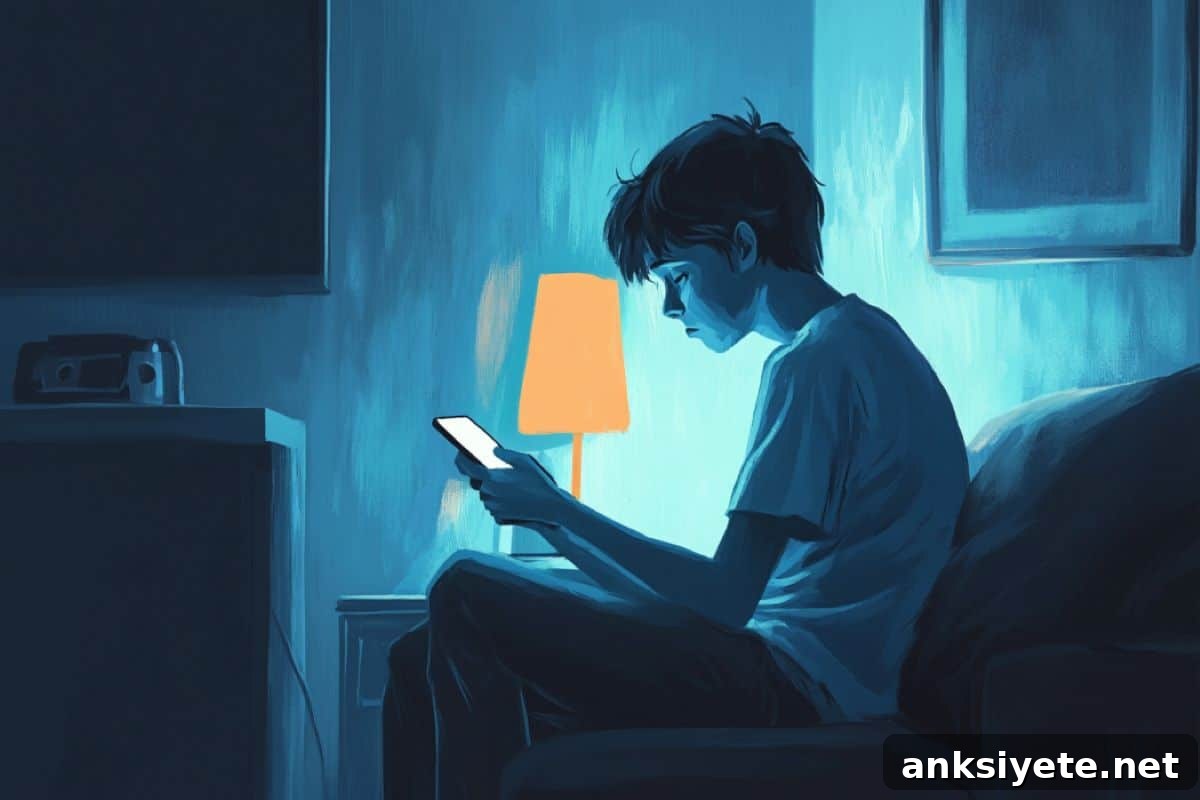
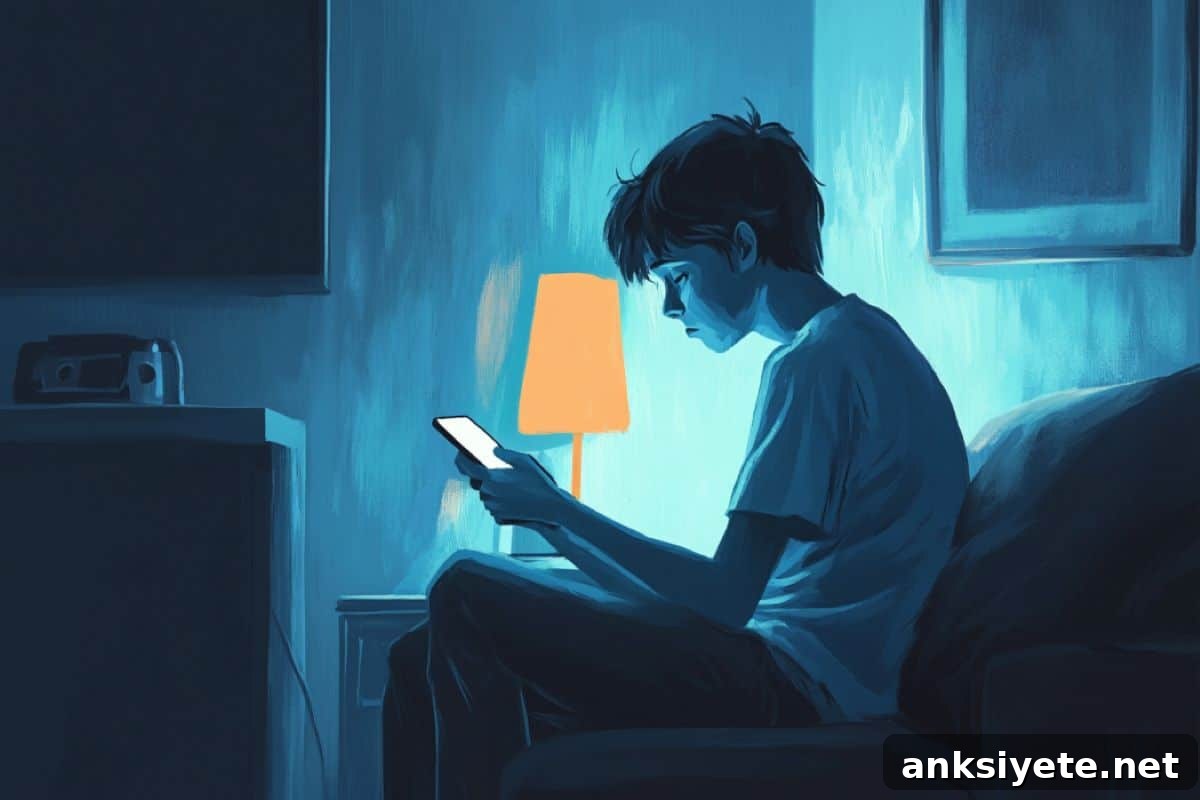
Summary: A new experimental study reports that short periods of physical isolation increase adolescents’ sensitivity to potential threats, even when they remain connected online. Teens who spent several hours alone showed stronger physiological stress responses and greater anxiety reactions to learned threat cues, whether or not they had access to smartphones and social media.
This sustained alertness to perceived danger may help explain rising rates of anxiety among young people worldwide. The results indicate that virtual contact does not fully substitute for in-person social interaction during adolescence, a developmental stage with heightened social needs.
Key facts:
- Brief isolation increased threat responses in adolescents, even when they could interact digitally.
- On average, physiological threat responses were about 70% higher after isolation than at baseline.
- Heightened threat sensitivity following isolation may increase vulnerability to anxiety-related disorders.
Source: University of Cambridge
New research shows that people in their late teens become more sensitive to potential threats after only a few hours alone in a room — and that increased sensitivity persists even when they have been using their phones to stay connected.
Researchers at the University of Cambridge ran a controlled cognitive neuroscience experiment involving 40 adolescents aged 16–19. Each participant completed tests at baseline and after two separate isolation sessions: one in complete solitude and one where they had access to smartphones, Wi‑Fi, music and reading material. The study measured both self-reported feelings and physiological signals of stress.
The investigators used a standard Pavlovian threat-learning task. During baseline testing, participants viewed simple shapes on a screen while one specific shape was repeatedly paired with a loud, unpleasant noise. Over time the shape became a learned cue for threat. Electrodes on participants’ fingers recorded electrodermal activity, a physiological index of stress, while they rated how anxious and unpleasant each cue felt.
After each isolation session the same threat-learning task was repeated. Self-reported loneliness rose following both types of isolation, and it was somewhat lower when participants had access to digital social interaction. Crucially, however, participants reported that the learned threat cue felt more anxiety-provoking and unpleasant after both isolation conditions. Electrodermal measures confirmed elevated physiological responses: averaged across the study, threat-related responses were approximately 70% higher after isolation than at baseline, regardless of digital connectivity.
The authors interpret these results as evidence that even short bouts of physical isolation can increase “threat vigilance” in adolescents. That heightened vigilance may help explain why loneliness and social isolation are associated with greater risk for anxiety disorders, phobias, obsessive-compulsive disorder and trauma-related conditions. The study’s within-participant design strengthens the conclusion that isolation itself, rather than stable individual differences, contributed to the change in threat responding.
Lead author Emily Towner, from Cambridge’s Department of Psychology, said the findings suggest online interactions do not fully restore the psychological and physiological effects of being physically alone. “We detected signs of heightened threat vigilance after a few hours of isolation, even when the adolescents had been connected through smartphones and social media,” she said. “This alertness to perceived threats may underlie the excessive worry and inability to feel safe that characterizes anxiety.”
Co-senior author Dr. Livia Tomova, a lecturer in Psychology who conducted the work while at Cambridge, noted the broader context: reports of loneliness among adolescents have risen in many countries. She emphasized that the need for social interaction is especially strong during adolescence and that virtual contact may not fully satisfy those needs for some psychological processes.
The study recruited 40 young people from the Cambridge area (18 males and 22 females), screened to ensure generally good social connections and no history of mental health disorders. Each participant completed an initial baseline assessment, then two roughly four-hour isolation sessions conducted about a month apart on average. In the full isolation session participants had only a few puzzles and no connection to the outside world; in the digital-access session they were allowed smartphones, Wi‑Fi and leisure materials. Across both sessions participants were required to stay awake.
Although virtual interactions reduced self-reported loneliness compared with complete isolation, they did not prevent the increase in physiological and subjective threat responses. The authors conclude that acute isolation can intensify threat learning and vigilance, with implications for adolescent mental health and the development of anxiety-related problems.
About this psychology and neurodevelopment research news
Author: Emily Towner
Source: University of Cambridge
Contact: Emily Towner – University of Cambridge
Image: The image is credited to Neuroscience News
Original research: Open access. “Increased threat learning after social isolation in human adolescents” by Emily Towner et al., published in Royal Society Open Science.
Abstract
Increased threat learning after social isolation in human adolescents
Animal research has long shown that social isolation alters threat responding and threat learning during development. This human study used a within-participant experimental design to test how acute social isolation affects threat learning in adolescents aged 16–19. Each participant completed a baseline assessment and two isolation sessions: one with complete solitude and one permitting virtual social interactions, counterbalanced across participants.
Following both isolation conditions, participants reported increased state loneliness and exhibited stronger learned threat responses. They rated the learned threat cue as more anxiety-inducing and unpleasant, and electrodermal activity during threat extinction was elevated compared with baseline. The pattern of results suggests that acute isolation influences threat learning through increased state loneliness. Because threat learning is central to anxiety, phobias, obsessive-compulsive disorder and post-traumatic stress, these findings indicate that isolation and loneliness in adolescence may raise vulnerability to the emergence of threat-related disorders.