
When people weigh multiple options to find the best reward, some base their choices on how uncertain each outcome is. A new study finds that those who follow this uncertainty-driven strategy uniquely recruit the right rostrolateral prefrontal cortex to calculate relative uncertainty, while people who use other strategies do not.
Most everyday choices involve uncertainty. Some people stick with familiar options and maintain a rewarding status quo—ordering the usual dish at a restaurant, for example. Others evaluate options more systematically or pick at random. A third group, often called “explorers,” deliberately seek out uncertain options to learn whether those choices might yield better rewards. Rather than avoiding ambiguity, explorers use uncertainty as a cue to sample alternatives and update their expectations.
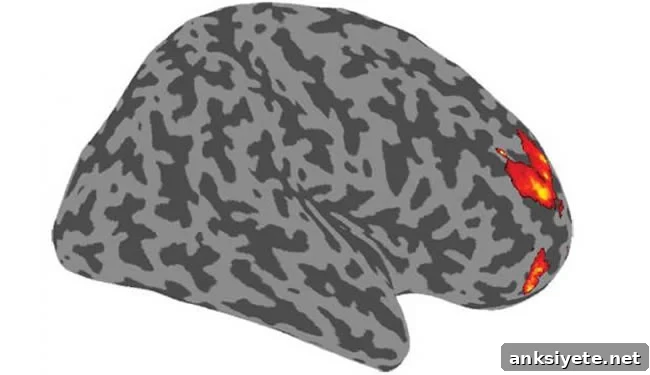
The Brown University study, published in Neuron, reveals a neural mechanism that supports this exploratory approach. Researchers found that explorers, unlike nonexplorers, show increased activation in a specific part of the prefrontal cortex—the right rostrolateral prefrontal cortex (RLPFC)—as the relative uncertainty between options grows. This pattern suggests that the RLPFC computes or represents relative uncertainty and uses that information to guide decisions to explore.
Co-author David Badre, assistant professor of cognitive, linguistic, and psychological sciences at Brown, said the finding addresses a long-standing question about the functional organization of the frontal lobes. “There has been debate about whether the frontal cortex is specialized for distinct cognitive operations or more undifferentiated in its control functions,” Badre noted. The current evidence supports a degree of specialization: the RLPFC appears especially involved in comparing uncertainty across choices, a higher-order operation important for decision-making.
Stop the clock
To identify explorer behavior, the research team brought 15 volunteers into an MRI scanner and had them play a decision-making game. Participants tried to stop a moving clock hand to win points. In some rounds, quick responses were more rewarding; in others, slow responses paid off. Critically, participants did not know in advance which timing strategy would succeed in a given round, and the possible rewards varied considerably. To maximize their points, players had to track the expected value of fast and slow responses and decide whether to exploit the option they currently believed best or to explore the less certain alternative.
As subjects played, the MRI measured blood flow as a proxy for neural activation while the software recorded their response times. The researchers applied mathematical models to the behavioral data to determine whether each participant adjusted response times according to relative uncertainty or followed a different updating rule. Across dozens of rounds, a clear pattern emerged: roughly half of the participants behaved like explorers. Their choice of response time correlated with the option that carried the highest outcome uncertainty, indicating an effort to resolve and learn from ambiguity.
When the team examined the brain images, they found that activation in the right rostrolateral prefrontal cortex rose as the relative uncertainty between the two timing options increased. This relationship was markedly stronger in the explorers than in the nonexplorers. In other words, the RLPFC tracked the comparative uncertainty of available choices and appeared to influence whether a person adopted an exploration strategy.
The finding builds on prior work linking the RLPFC to relative comparisons and decision processes, and it offers a neural account of why some individuals deliberately sample uncertain alternatives. The pattern also dovetails with earlier genetic findings: Michael Frank, co-author and associate professor of cognitive, linguistic, and psychological sciences, previously reported that explorers were more likely to carry a variant of the COMT gene, which influences dopamine signaling in the prefrontal cortex. Together, the neural and genetic observations suggest a pathway by which individual differences in brain chemistry and function could shape decision styles.
From cortex to choice
Why some people prefer an uncertainty-focused exploration strategy while others avoid it remains an open question. Frank proposes a nuanced hypothesis: both explorers and nonexplorers may dislike uncertainty, but they differ in when and how their aversion appears. Some people may be discomforted by ambiguity at the moment of a single decision and therefore avoid uncertain choices immediately. Others may be more concerned about ambiguity in their long-term strategy and choose to confront uncertainty early to reduce it later. By sampling uncertain options, explorers aim to shrink unknowns and improve future decisions.
Although this study does not offer immediate clinical applications, Badre emphasized its potential relevance for conditions that affect frontal lobe function. “Many neurological and psychiatric disorders impair frontal-lobe circuits, undermining daily decision-making and independence,” he said. Greater precision in identifying which frontal regions support specific cognitive operations—such as uncertainty comparison—could improve diagnosis and guide targeted interventions or cognitive training strategies.
Notes about this brain research article
Authors include David Badre and Michael J. Frank of the Brown Institute for Brain Science, along with Bradley Doll and Nicole Long. The research received support from the National Institute of Neurological Disorders and Stroke and the National Institute of Mental Health. The study appears as “Rostrolateral Prefrontal Cortex and Individual Differences in Uncertainty-Driven Exploration” in Neuron.
Contact: David Orenstein – Brown University
Source: Brown University press release
Image credit: Badre-Frank Lab – Brown University