
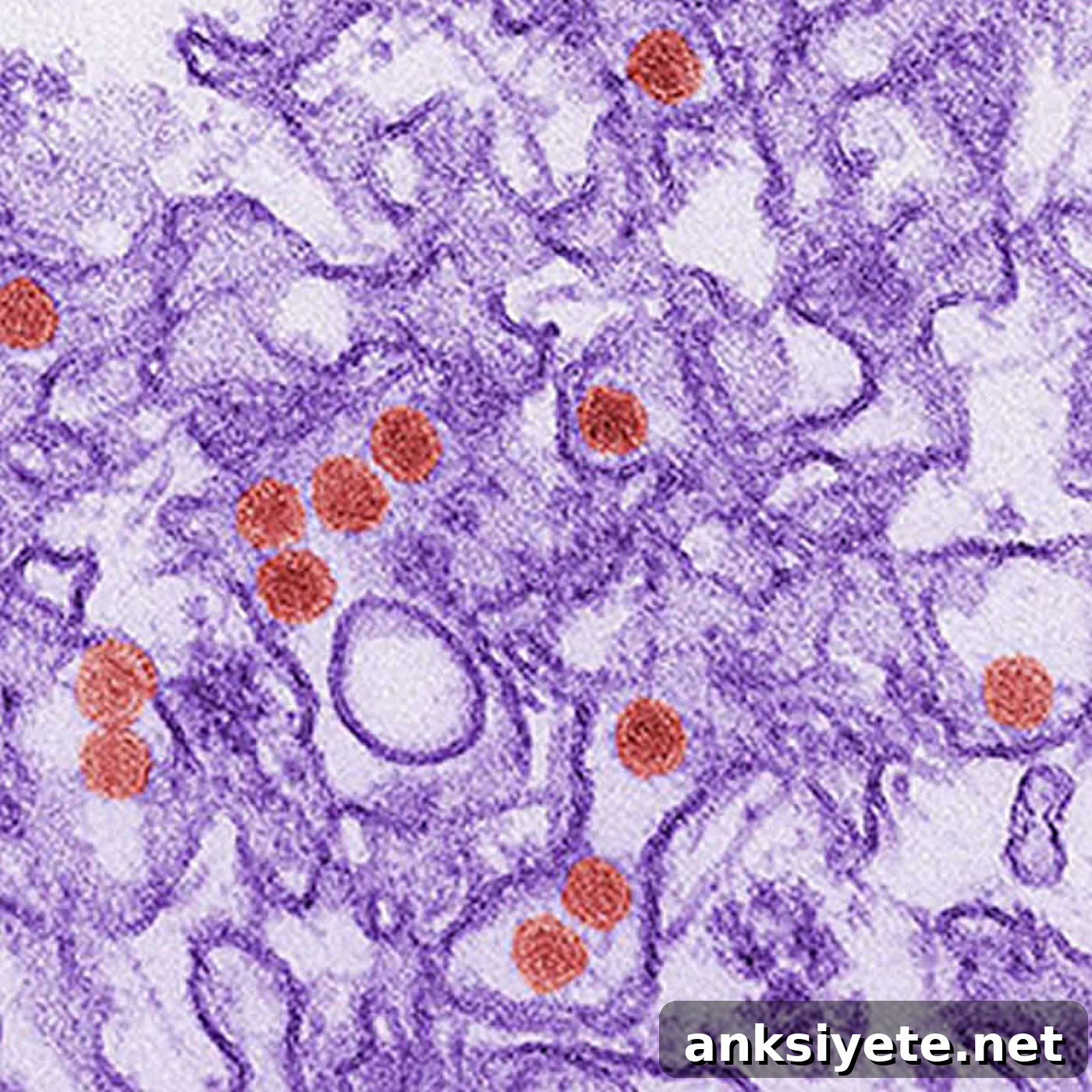
Summary: Researchers at the National Institutes of Health have created a mouse model to study sexual transmission of Zika virus from males to females and vertical transmission from pregnant females to their fetuses, and are using it to explore how the virus crosses the placenta and to test ways to block transmission.
Source: NIH/NIAID.
Study examines sexual and vertical transmission of Zika virus using a new mouse model
Scientists at the NIH’s National Institute of Allergy and Infectious Diseases (NIAID) have developed a mouse model specifically designed to investigate two important routes of Zika virus transmission: male-to-female sexual transmission and mother-to-fetus vertical transmission. The model enables detailed study of when and how Zika spreads, how it crosses the placenta, and provides a controlled platform for testing interventions aimed at preventing transmission.
Creating a useful mouse model for Zika research required overcoming a biological challenge: mice naturally mount a stronger interferon-mediated antiviral response than humans, which normally prevents sustained Zika infection. To mimic conditions that allow prolonged infection, researchers suppressed type I interferon signaling in mice that also lack functional T and B cells. These specially treated, immune-deficient mice—referred to as anti-interferon Rag (AIR) mice—developed persistent Zika infection in the testes, a pattern similar to what has been observed in men infected with Zika. The prolonged presence of virus in the male reproductive tract made it possible to observe and study sexual transmission from infected males to uninfected females occurring at high frequency.
Using the AIR mouse model, investigators documented sexual transmission of Zika virus from infected males to naive females with an incidence exceeding 50 percent. Early after exposure, virus was detectable in the female reproductive tract, and in instances where mating resulted in pregnancy, viral RNA was also found in the uterus and placental tissues. These findings establish the AIR mouse as a practical model for studying sexual transmission dynamics, timing of transmission, and viral tissue distribution during and after sexual exposure.
In addition to sexual transmission, the research team demonstrated vertical transmission of Zika virus from pregnant AIR females to their fetuses. Notably, infection of offspring was inconsistent within litters: some fetuses or pups from the same dam showed detectable virus in brain tissue and in non-neural tissues such as lymph nodes, while others did not. This stochastic pattern suggests that the placenta functions as a critical barrier that can limit viral access to the fetus, and that breakdown of the placental barrier is not the sole determinant of fetal infection. Detecting virus in multiple fetal tissues emphasizes that Zika infection during pregnancy can affect diverse fetal organs, a finding that may help explain the range of congenital effects seen in humans.
Although most Zika virus infections in adults cause little or no illness, maternal infection during pregnancy has been linked to serious birth defects and developmental problems in human infants. With no licensed vaccines or specific antiviral treatments currently approved for Zika, models such as the AIR mouse provide an essential research tool for evaluating candidate vaccines, therapeutics, and strategies to interrupt both sexual and vertical transmission.
Researchers showed Zika virus can be transmitted vertically from pregnant AIR mice to some fetuses. Image for illustrative purposes.
Funding: This study was supported by the National Institutes of Health/National Institute of Allergy and Infectious Diseases.
Source: Ken A. Pekoc – NIH/NIAID. Image source credited as illustrative.
Original research: The study underlying this report is an open-access article describing sexual and vertical transmission of Zika virus in anti-interferon receptor-treated Rag1-deficient mice, published in Scientific Reports (published online August 3, 2017).
Sexual and vertical transmission of Zika virus in anti-interferon receptor-treated Rag1-deficient mice
Zika virus (ZIKV) is most commonly transmitted to humans by Aedes aegypti mosquitoes, but non-vector transmission—particularly male-to-female sexual transmission and mother-to-offspring vertical transmission—has been documented. To investigate both sexual transmission (STx) and vertical transmission (VTx), researchers treated Rag1−/− mice with an antibody that blocks the type I interferon receptor (anti-IFNAR1) to generate AIR mice with suppressed innate antiviral signaling and absent adaptive immunity. These conditions produced prolonged infection without immediate clinical disease. Sexual transmission from infected AIR males to Ifnar1−/− female partners occurred in over half of observed pairings, with early detection of virus in the vaginal tract and, in pregnancies that resulted, in uterine and placental tissues. Peripheral ZIKV infection of pregnant AIR females led to detectable virus in the brains and/or lymph nodes of some fetuses or pups. Vertical transmission was variable within litters—some offspring were infected while others from the same dam were not—suggesting that the placenta is a key barrier and that transmission does not always correlate with clear placental breakdown. The AIR mouse model offers a platform to study the biological barriers and immune responses that influence sexual and vertical transmission of ZIKV and to test interventions that might prevent spread to partners and to developing fetuses.
If you found these research findings useful, you may share this summary with acknowledgement of NIH/NIAID as the source.