
Summary: The balance between GABA and glutamate influences long-term strategic choices and short-term, value-based decisions in distinct ways.
Source: HHU
Researchers from Heinrich Heine University Düsseldorf (HHU) and Otto von Guericke University Magdeburg examined how neurochemical balances shape different forms of decision-making. Published in Nature Communications, their study shows that variations in the ratio of two neurotransmitters—GABA and glutamate—have dissociable effects on short-term value-guided choices and long-term patch-leaving decisions.
A multidisciplinary team including psychologists and physicists led by Luca Franziska Kaiser and Prof. Dr. Gerhard Jocham (HHU, Biological Psychology of Decision Making) together with Dr. Theo Gruendler and colleagues in Magdeburg investigated how concentrations of the inhibitory neurotransmitter GABA and the excitatory neurotransmitter glutamate relate to distinct decision processes. Their central question was whether the cortical excitation-inhibition (E/I) balance—indexed by the ratio of glutamate to GABA—predicts how people make either immediate reward-maximizing choices or longer-term strategic choices that trade off current costs versus future gains.
The team tested two decision types. First, value-guided or reward-based decisions require choosing the better of two currently available options to maximize immediate reward. For example: “Which café should I stop at on my way to work based on price, quality and convenience?” Prior work links this kind of decision to neural activity in the ventromedial prefrontal cortex (vmPFC).
Second, patch-leaving decisions are longer-term and strategic. They involve weighing the cost of leaving a current resource or situation against the expected benefits of an alternative. A real-world example is deciding whether to relocate cities for a job: higher salary and career opportunities must be balanced against relocation costs, stress, housing prices and social disruption. Patch-leaving behavior has been associated in prior studies with the dorsal anterior cingulate cortex (dACC).
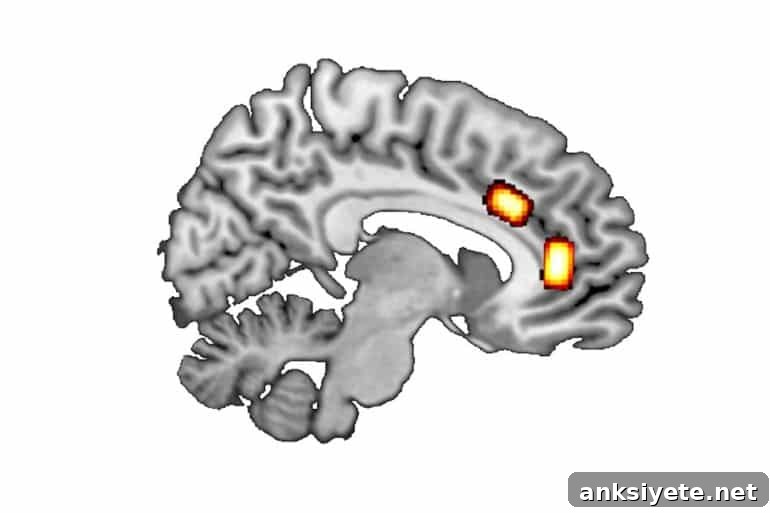
To probe underlying neurochemistry, the researchers measured GABA and glutamate concentrations in specific cortical regions using magnetic resonance spectroscopy (MRS). They focused on the dACC and vmPFC and computed an E/I balance for each participant. Those neurochemical measurements were then correlated with individual behavioural patterns observed in the two decision tasks.
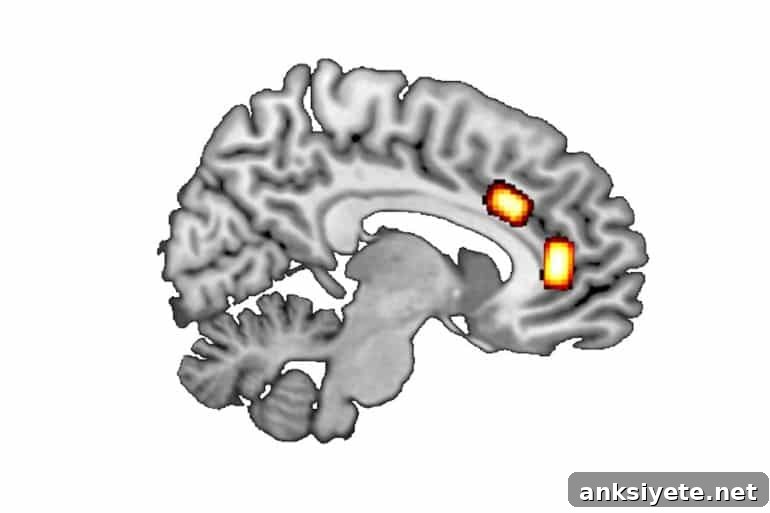
Findings revealed a clear dissociation. In the patch-leaving context, participants with relatively higher GABA compared with glutamate in dACC tended to leave a depleting resource sooner—suggesting they required a smaller expected advantage to abandon the current option. Conversely, individuals with a higher relative level of glutamate in dACC (that is, a higher excitation-to-inhibition ratio) needed a larger expected benefit to justify leaving their status quo.
For short-term, value-guided decisions, neurochemical balance in vmPFC was most relevant. Participants with higher GABA relative to glutamate in vmPFC made more accurate choices: they more reliably selected the option with higher immediate value. This pattern aligns with theoretical accounts that mutual inhibition and balanced excitatory-inhibitory interactions in vmPFC contribute to reliably discriminating between competing value signals.
Kaiser summarizes: “Our data link individual decision strategies to the cortical excitation-inhibition balance in different brain regions. dACC E/I balance relates to how readily someone will leave a current resource for a prospective alternative, while vmPFC E/I balance predicts accuracy in short-term value comparisons.”
Significance
These results provide neurochemical evidence for a functional division of labour between dACC and vmPFC in human decision-making. By demonstrating that GABA and glutamate levels predict distinct behavioural tendencies—strategic patch-leaving versus immediate value-guided choice—the study strengthens mechanistic accounts of how excitation-inhibition balance supports specific cognitive operations. The findings also suggest that individual differences in neurotransmitter balance may help explain variability in everyday decisions that range from choosing what to buy today to deciding whether to change one’s life circumstances.
About this decision making and neuroscience research news
Source: HHU
Contact: Arne Claussen – HHU
Image: Credit to HHU / Luca Franziska Kaiser
Original Research: Open access.
“Dissociable roles of cortical excitation-inhibition balance during patch-leaving versus value-guided decisions” by Luca F. Kaiser, Theo O. J. Gruendler, Oliver Speck, Lennart Luettgau & Gerhard Jocham. Nature Communications
Abstract
Dissociable roles of cortical excitation-inhibition balance during patch-leaving versus value-guided decisions
In a changing environment, deciding when to leave a currently exploited resource requires balancing the cost of moving against the expected gain from an alternative. Patch-leaving decisions therefore contrast with value-guided choices, which typically aim to maximize reward by selecting the best current option. Neural activity linked to patch-leaving has been observed in dorsal anterior cingulate cortex (dACC), while competitive interactions in ventromedial prefrontal cortex (vmPFC) are thought to underlie value-guided choice. Using measurements of cortical GABA and glutamate to index excitation-inhibition balance, this study shows that E/I balance in dACC relates to patch-leaving behaviour, whereas E/I balance in vmPFC relates to value-guided choice. The results support mechanistic models of value-guided decision-making and provide evidence for a role of dACC E/I balance in strategic patch-leaving decisions.