
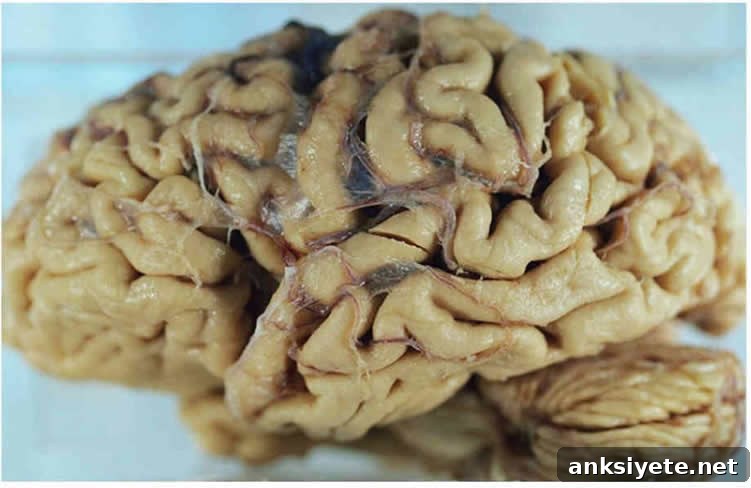
Summary: A new study indicates that listening to people over 60 who report memory lapses may help clinicians identify early signs of mild cognitive impairment and dementia.
Source: UT Dallas
Researchers at the Center for Vital Longevity (CVL) at The University of Texas at Dallas report that subjective complaints about memory — a person’s own sense that their memory is worsening — may provide an early signal of mild cognitive decline and a higher risk of Alzheimer’s disease, particularly in adults over age 60.
Subjective memory refers to an individual’s personal judgment about their memory ability and any perceived changes over time. These self-reports are not standardized test results but reflect a person’s lived experience of forgetting, misplacing items, or having trouble recalling names and associations. Although such complaints can sometimes be dismissed as normal age-related worry, this new study explored whether those subjective concerns actually track measurable changes in memory.
The findings, published in Psychology and Aging, come from Dr. Karen Rodrigue’s laboratory at CVL and are based on nearly 200 healthy adults aged 20 to 94. Previous research on subjective memory complaints has been mixed: some studies link them to mood problems like anxiety or depression rather than true cognitive decline. To reduce that confound, the current study screened out participants with depression and also measured other established risk factors for Alzheimer’s disease — namely the presence of the ApoE4 gene variant and elevated beta-amyloid in the brain — to determine whether subjective memory complaints were independently associated with objective memory performance.
The researchers concentrated on associative memory, the ability to remember connections between items such as name-face pairs or word pairs. Associative memory is especially vulnerable to age-related changes and is a common source of concern among older adults. Participants completed an instrument assessing subjective memory, a mood/depression screening, two associative memory tests (a word-pair test and a face-name test), and genetic testing for APOE ε4. A subset of participants over 50 also received PET scans to measure beta-amyloid burden.
Overall, subjective memory complaints were predictive of participants’ performance on the laboratory associative memory tests, even after accounting for age, sex, mood, and APOE ε4 status. The relationship was strongest in individuals older than 60 and was most pronounced among those who carried the APOE ε4 gene variant, suggesting that people who notice declines in their memory may, in some cases, be sensing early cognitive changes linked to Alzheimer’s risk.
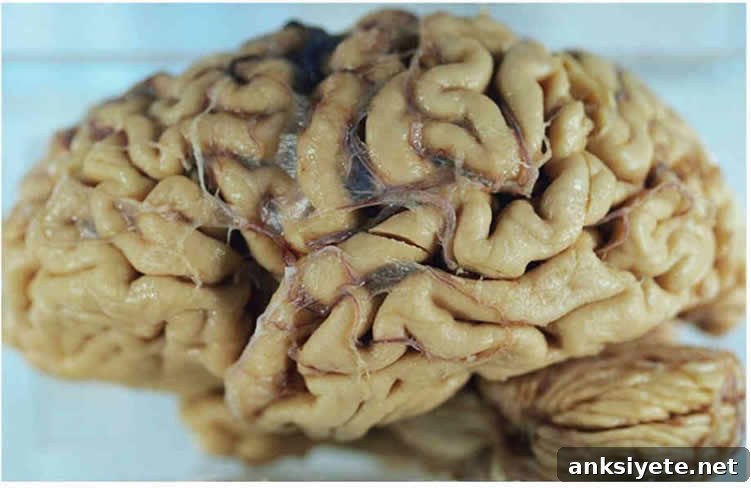
The analysis also uncovered a sex-specific pattern: men with higher levels of beta-amyloid reported more subjective memory complaints than men with lower amyloid burden. This finding had not been consistently reported in past studies and emerged here because the researchers simultaneously considered mood, genetic risk, and amyloid levels.
Lead author Marci Horn, a doctoral student in psychological sciences, emphasized that subjective memory can be meaningful even in people who otherwise perform within normal limits on cognitive tests. “Our findings show that subjective memory can be a reliable indicator of memory performance, even in cognitively healthy adults,” Horn said. “Those who report memory problems may also have biological or genetic risk factors associated with increased risk of Alzheimer’s disease.”
Senior author Karen Rodrigue, an assistant professor in the School of Behavioral and Brain Sciences, noted that subjective awareness of memory changes might serve as an early warning sign: “Awareness of memory changes appears to be a reliable indicator of current memory ability and may foreshadow future decline, particularly among individuals with known Alzheimer’s risk factors such as ApoE4 genotype and elevated beta-amyloid. We are continuing to follow these participants over time to evaluate whether subjective complaints predict later cognitive decline.”
Funding: The study team included Dr. Kristen Kennedy, assistant professor in the School of Behavioral and Brain Sciences. The research was supported in part by grants from the National Institutes of Health.
Published in: Psychology and Aging
Affiliation: Center for Vital Longevity, The University of Texas at Dallas
Abstract (revised summary)
Decline in associative memory is a frequent complaint among older adults and is detectable across normal aging and the early stages of Alzheimer’s disease. Subjective memory complaints have the potential to mark these changes, but prior studies yielded inconsistent results, possibly because of confounding factors such as mood, APOE ε4 genotype, and beta-amyloid accumulation. This study assessed the relationship between subjective memory and associative memory ability in 195 healthy adults (79 men) aged 20–94. Participants completed subjective memory questionnaires, mood and depression scales, two associative memory tests (word-pair and name-face), and APOE genotyping; PET-amyloid imaging was available for a subset over age 50 (N = 74). Subjective memory predicted performance on both associative memory tests even after adjusting for age, sex, mood, and APOE ε4 status. For the name-face task, subjective memory concerns were linked to performance primarily in participants over age 60, with the APOE ε4 group showing the strongest association. Men with higher beta-amyloid deposition reported more memory complaints. These results indicate that subjective memory reports reliably track objective associative memory performance among cognitively healthy adults and may reflect elevated risk for Alzheimer’s disease.