
Summary: Blocking VCAM1 increased neurogenesis and reduced microglial reactivity in the hippocampus of older mice.
Source: Stanford
Overview: Researchers at Stanford University School of Medicine report that disabling a single molecule on brain blood vessels improved memory and cellular function in aged mice. Published online May 13 in Nature Medicine, the study found that blocking vascular cell adhesion molecule 1 (VCAM1) on cerebral endothelial cells restored hippocampal neurogenesis, dampened microglial inflammation, and improved performance in memory tasks.
Although mice are not humans, they share key features of brain aging with people, including declines in memory and reduced capacity for generating new neurons in the hippocampus. In this study, old mice treated to block VCAM1 performed like young adults in behavioral tests such as the Barnes maze, indicating substantial improvement in spatial learning and memory.
VCAM1 is displayed on the surface of a subset of endothelial cells that line blood vessels throughout the body. Its principal role is to bind circulating immune cells, facilitating their interaction with the vessel wall and, under certain conditions, allowing immune cells to cross the blood-brain barrier. The Stanford team found that elevated VCAM1 on brain endothelial cells in aged animals contributes to harmful signaling that affects neighboring brain tissue.
Blocking VCAM1 did not require penetrating deep into the brain. Instead, the intervention targeted the blood-vessel surface at the blood-brain barrier, a strategically accessible site that regulates the exchange of cells and molecules between blood and brain. By preventing the VCAM1-mediated tethering and activation of immune cells at the vessel wall, the researchers reduced inflammatory signaling that appears to impair neural precursor activity.
Different way of reaching the brain
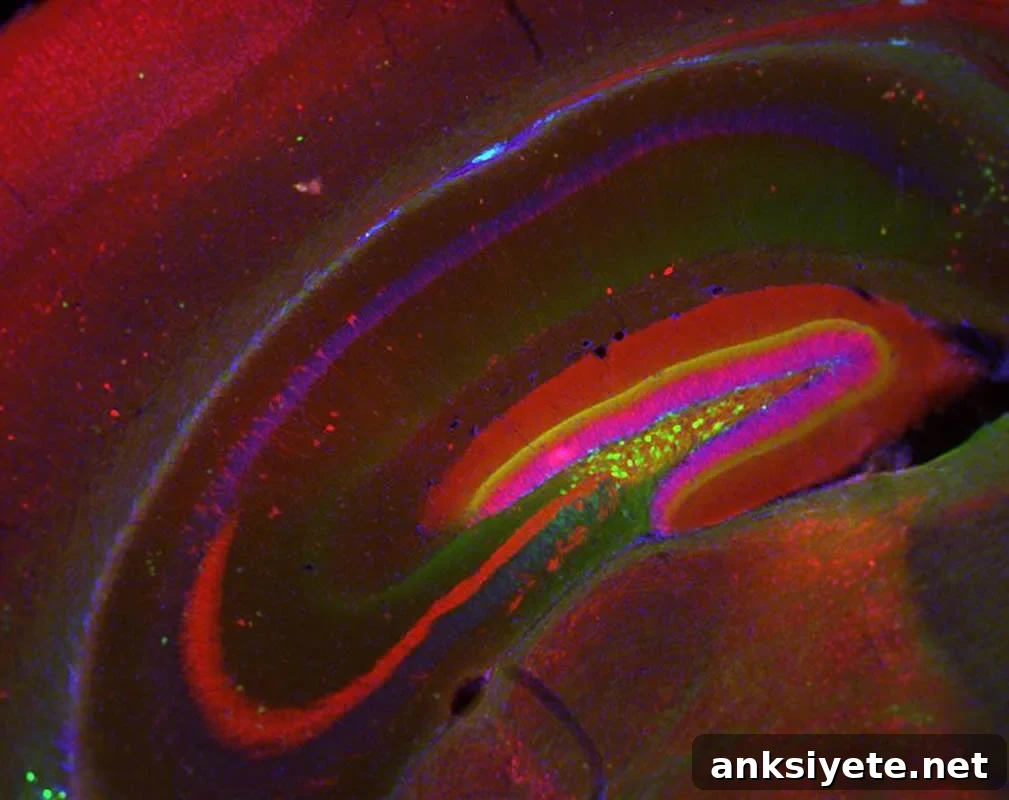
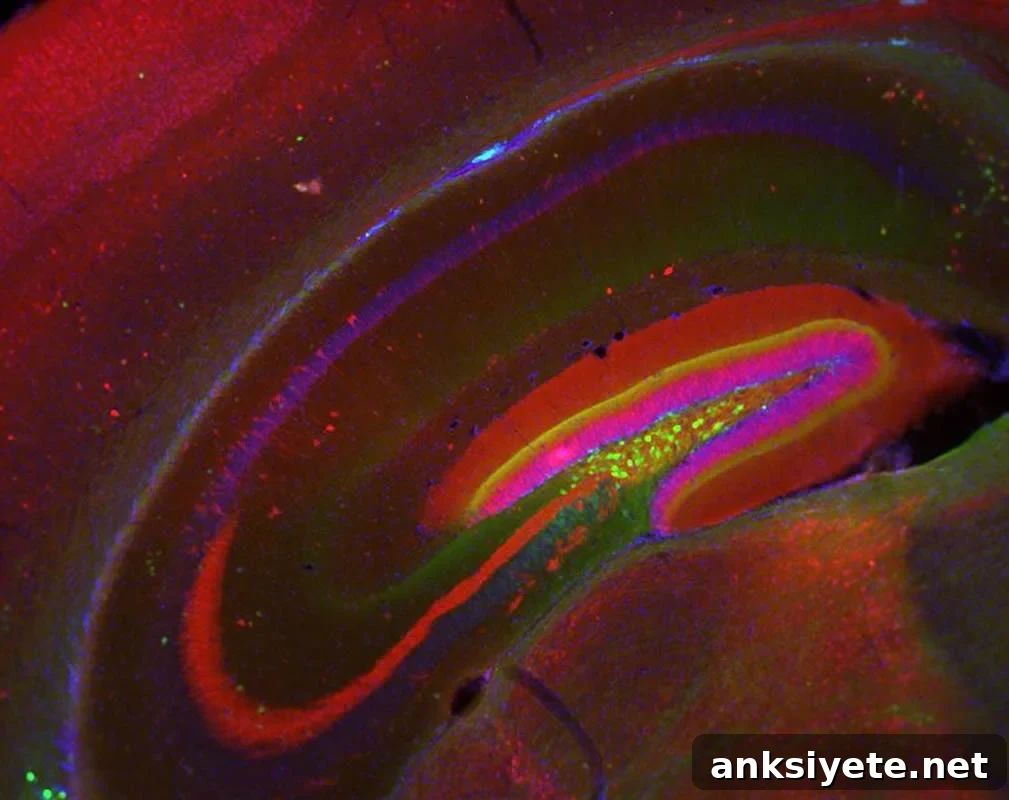
The investigators concentrated on the hippocampus, a brain structure essential for learning and memory and one of the few brain regions where adult neurogenesis occurs. New neurons generated in the hippocampus are important for forming new memories, and their decline with age correlates with memory loss.
Previous work from the same lab showed that factors in aged blood can accelerate cognitive decline and that young blood can rejuvenate older brains. Rather than search only for harmful circulating molecules, this study asked whether blood-borne signals might instead act through the brain’s endothelial cells. Those cells form the blood-brain barrier and can relay signals from the circulation to the brain.
Screening age-related circulating factors tied to vascular function, the team identified VCAM1 as a prominent candidate. A soluble form of VCAM1 circulates in plasma and serves as an indicator of the total VCAM1 present on blood-vessel surfaces. Clinical studies have previously associated high circulating VCAM1 with inflammatory conditions and several diseases, including heart disease and neurodegenerative disorders.
Identifying the source of dysfunction
In aged mouse hippocampi, endothelial VCAM1 expression increased and was accompanied by signs of inflammation. Injecting young mice with plasma from older animals reproduced that endothelial VCAM1 increase and induced reduced neurogenesis and heightened microglial reactivity. Removing VCAM1 from old plasma before transfer did not prevent these adverse effects, indicating that circulating VCAM1 itself is not the primary harmful agent; rather, VCAM1 on brain endothelial cells mediates the response to other age-related blood factors.
Genetic deletion of VCAM1 specifically in brain endothelial cells prevented age-related declines in neurogenesis and the inflammatory activation of microglia when mice reached old age. The same protective effect was achieved by treating aged mice with a monoclonal antibody that blocks VCAM1: three weeks of antibody treatment increased hippocampal neurogenesis, reduced microglial reactivity, and reversed cognitive deficits.
Behavioral testing confirmed the physiological improvements. Older mice treated with the VCAM1-blocking antibody performed as well as young adult mice on the Barnes maze, a spatial memory task in which animals learn and remember the location of an escape hole. Treated aged mice located the escape hole as quickly as their younger counterparts.
“Blocking VCAM1 in the brain wound up making these mice smarter,” said Tony Wyss-Coray, PhD, the study’s senior author. “In all the time I’ve been working on this, I’ve never seen such performance before.”
Wyss-Coray is professor of neurology and neurological sciences and co-director of the Stanford Alzheimer’s Disease Research Center. The study’s lead author is Hanadie Yousef, PhD. The research team included multiple investigators and trainees from Stanford as well as collaborators from German institutions.
Implications for therapy
These findings position brain endothelial VCAM1 at the blood-brain barrier as a potential therapeutic target to counteract age-related neurodegeneration. Because the intervention acts at the vessel surface, drugs that do not readily cross the blood-brain barrier might nevertheless affect brain aging by modulating endothelial signaling. The results open a pathway toward treatments that could slow or reverse cognitive decline by blocking harmful blood-to-brain communication mediated by VCAM1.
Funding and publication
The work was supported by multiple funding sources, including grants from the National Institutes of Health, the Department of Veterans Affairs, private foundations, and Stanford research institutes. The full study, “Aged blood impairs hippocampal neural precursor activity and activates microglia via brain endothelial cell VCAM1,” appears in Nature Medicine (doi: 10.1038/s41591-019-0440-4).
Original research title: Aged blood impairs hippocampal neural precursor activity and activates microglia via brain endothelial cell VCAM1
Abstract (concise): An aged circulatory environment activates microglia, reduces neural precursor cell activity, and impairs cognition in mice. Brain endothelial cells in the aged hippocampus exhibit higher VCAM1 expression. Elevated soluble VCAM1 in aged plasma correlates with increased endothelial VCAM1 in hippocampi. Targeting VCAM1 in brain endothelium—either genetically or with an antibody—counteracts the harmful effects of aged plasma on young brains and reverses aging features, including microglial reactivity and cognitive deficits, in aged mice. These results suggest brain endothelial VCAM1 as a candidate target to treat age-related neurodegeneration.