
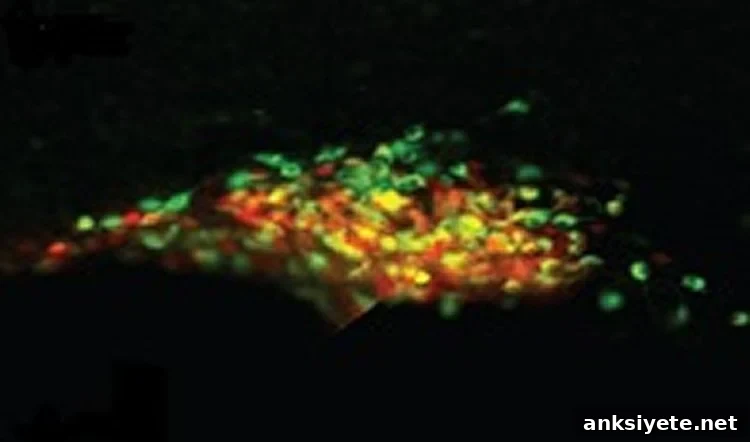
Summary: New findings reveal how specific brain circuits anticipate and regulate food and water intake.
Source: BIDMC.
Neuroscientists at Beth Israel Deaconess Medical Center (BIDMC) used advanced recording techniques to map how the brain prepares for and responds to drinking and eating. In a study published online in Neuron, the team tracked activity in neurons that release the hormone vasopressin and showed that a subset of these cells adjusts its firing within seconds when water or food is presented. These rapid, anticipatory responses act “top down” to prepare the body for incoming fluids or nutrients, rather than relying solely on body signals that follow ingestion.
“When animals detect food or water, their nervous system begins preparing the body within seconds,” said Mark Andermann, PhD, Assistant Professor of Medicine in the Division of Endocrinology, Diabetes and Metabolism at BIDMC and co-corresponding author on the study. “Disruptions in this anticipatory, top-down control could contribute to overeating or overdrinking and related health problems.”
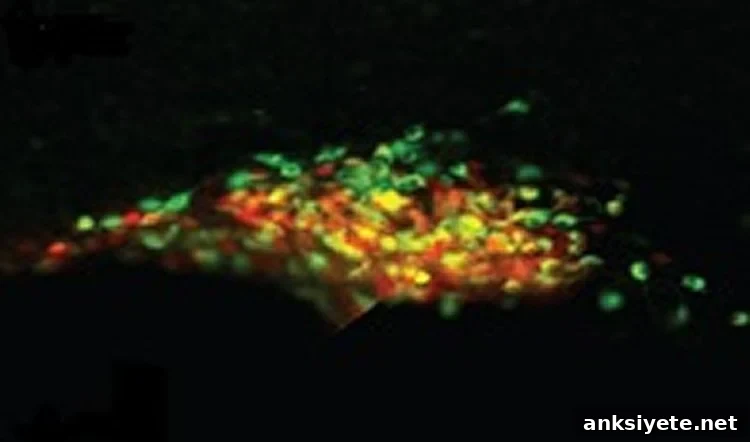
Co-corresponding author Bradford B. Lowell, MD, PhD, Professor of Medicine in the same division at BIDMC, emphasized the physiological importance of vasopressin. Vasopressin helps maintain the balance of water and salt in the body by controlling how the kidneys retain or excrete water. Rapid, anticipatory changes in vasopressin neuron activity can prevent abrupt shifts in extracellular water concentration that would otherwise threaten cellular and systemic stability.
Using genetically targeted recordings of vasopressin-secreting neurons that project to the posterior pituitary, the researchers observed distinct, fast responses to cues for water versus food. In water-restricted mice, presenting water caused vasopressin neuron activity to fall within seconds—often before the animals began to drink. By contrast, presenting food increased these neurons’ activity, but this rise occurred only after feeding began. The opposing timing for drinking and feeding implies separate upstream circuits and mechanisms for anticipating osmotic challenges versus caloric intake.
“We and others have recently uncovered similarly fast, anticipatory signals in neurons that regulate hunger,” said Lowell. “The existence of rapid top-down regulation across multiple homeostatic systems suggests a general principle: the brain uses sensory cues about food and water availability to quickly adjust physiological set points before internal feedback arrives.”
Andermann added that the study’s approach—monitoring and manipulating defined neuron populations in behaving animals—now makes it possible to trace the upstream networks that send anticipatory signals to vasopressin neurons. “By identifying and testing those upstream nodes, we hope to determine whether enhancing this form of top-down control could help limit meal size or fluid intake without reducing baseline appetite or the enjoyment of eating,” he said.
Study coauthors include Yael Mandelblat-Cerf, PhD; Angela Kim (undergraduate); Christian R. Burgess, PhD; Siva Subramanian (undergraduate); Bakhos A. Tannous, PhD; Bradford B. Lowell, MD, PhD; and Mark L. Andermann, PhD, all affiliated with the Division of Endocrinology, Diabetes and Metabolism at BIDMC, with Tannous additionally affiliated with the Department of Neurology at Massachusetts General Hospital.
Funding: The work received support from a Charles A. King Trust Postdoctoral Fellowship; a Davis Family Foundation Postdoctoral Fellowship; multiple National Institutes of Health grants (including R01 DK075632, R01 DK096010, R01 DK089044, P30 DK046200, P30 DK05752, NIH R01 DK109930, DP2 DK105570); the Pew Scholars Program in the Biomedical Sciences; and the Klarman and Smith family foundations.
Source: Jacqueline Mitchell – BIDMC
Image Source: Image adapted from the BIDMC press release.
Original Research: Abstract for “Bidirectional Anticipation of Future Osmotic Challenges by Vasopressin Neurons” by Yael Mandelblat-Cerf et al., published online December 15, 2016. DOI: 10.1016/j.neuron.2016.11.021
BIDMC. “Neurons Anticipate Body’s Response to Food and Water.” NeuroscienceNews. December 17, 2016.
Abstract
Bidirectional Anticipation of Future Osmotic Challenges by Vasopressin Neurons
Highlights
• Direct recordings from vasopressin neuroendocrine motor neurons (VPpp) in behaving mice.
• Feeding increases VPpp neuron activity within seconds, but only after feeding begins.
• Drinking and cues that predict water availability reduce VPpp neuron activity within seconds, often before drinking starts.
• Drinking-related reductions in VPpp activity reach a new steady state prior to measurable changes in systemic blood osmolality.
Summary
Water and food ingestion create rapid hypo- and hyperosmotic challenges that the body must counteract to maintain fluid balance. Posterior pituitary-projecting vasopressin-secreting neurons (VPpp neurons) adjust vasopressin release to influence renal water excretion and stabilize osmolarity. Although vasopressin levels fall within minutes after drinking—before blood osmolality changes—the precise timing and neural dynamics were unclear. By recording electrical spiking and calcium signals from genetically defined VPpp neurons, the authors found that in elevated osmolarity states, the mere presentation of water or water-predicting cues rapidly suppressed VPpp activity within seconds and frequently before consumption began. In contrast, food presentation following food restriction produced a rapid increase in VPpp activity that emerged only after feeding started. These opposite, rapid responses indicate distinct anticipatory neural pathways for preparing the body for future osmotic challenges associated with drinking versus eating.
“Bidirectional Anticipation of Future Osmotic Challenges by Vasopressin Neurons” by Yael Mandelblat-Cerf, Angela Kim, Christian R. Burgess, Siva Subramanian, Bakhos A. Tannous, Bradford B. Lowell, and Mark L. Andermann. Published online December 15, 2016. DOI: 10.1016/j.neuron.2016.11.021