
Summary: Light-sensitive cells in the fetal retina form an interconnected network, increasing retinal sensitivity to light during development more than previously recognized.
Source: UC Berkeley
By the second trimester, well before a newborn can form visual images, the developing eye can detect light.
Researchers once believed these early light-sensitive retinal cells acted as simple on-off switches, mainly responsible for setting daily rhythms like the 24-hour circadian cycle. New work from the University of California, Berkeley reveals that these cells are more complex: they communicate with one another through electrical connections, creating a network that boosts light sensitivity and may influence behavior and brain development in unanticipated ways.
In the immature eye, roughly 3% of retinal ganglion cells—the neurons that transmit visual information from the retina to the brain—are intrinsically photosensitive retinal ganglion cells (ipRGCs). To date, scientists have identified multiple subtypes of ipRGCs, each projecting to distinct brain regions. Some connect to the suprachiasmatic nucleus to help entrain the internal clock. Others regulate pupil constriction in response to bright light. Unexpectedly, certain ipRGCs send signals to brain areas involved in mood and emotion regulation, such as the perihabenula and the amygdala.
Recent studies in mice and non-human primates indicate that, during development, many of these ganglion cells are electrically coupled to one another via gap junctions. This coupling suggests that immature retinas are far more sophisticated at processing ambient light than previously assumed.
“Given the diversity of these ganglion cells and their projections to many brain regions, it raises the possibility that they shape how retinal circuits connect to the brain,” said Marla Feller, a UC Berkeley professor of molecular and cell biology and senior author of the study. “Their influence may extend beyond visual circuits to non-visual behaviors—such as circadian rhythm entrainment, pupillary reflexes, light-triggered migraines, or why light therapy can alleviate depression.”
Parallel systems in developing retina
IpRGCs were discovered about a decade ago, surprising many researchers who had long focused on spontaneous retinal activity—so-called retinal waves—as the primary driver of early visual system wiring. Feller, who previously demonstrated the importance of retinal waves for establishing accurate connections between the eye and the brain, became interested in how ipRGCs interact with these developmental processes.
“We used to think that mouse pups and human fetuses at these ages were functionally blind,” Feller said. “We assumed that ganglion cells existed and reached the brain, but they weren’t strongly connected to the rest of the retina. Finding that ipRGCs are electrically coupled to one another was unexpected and important.”
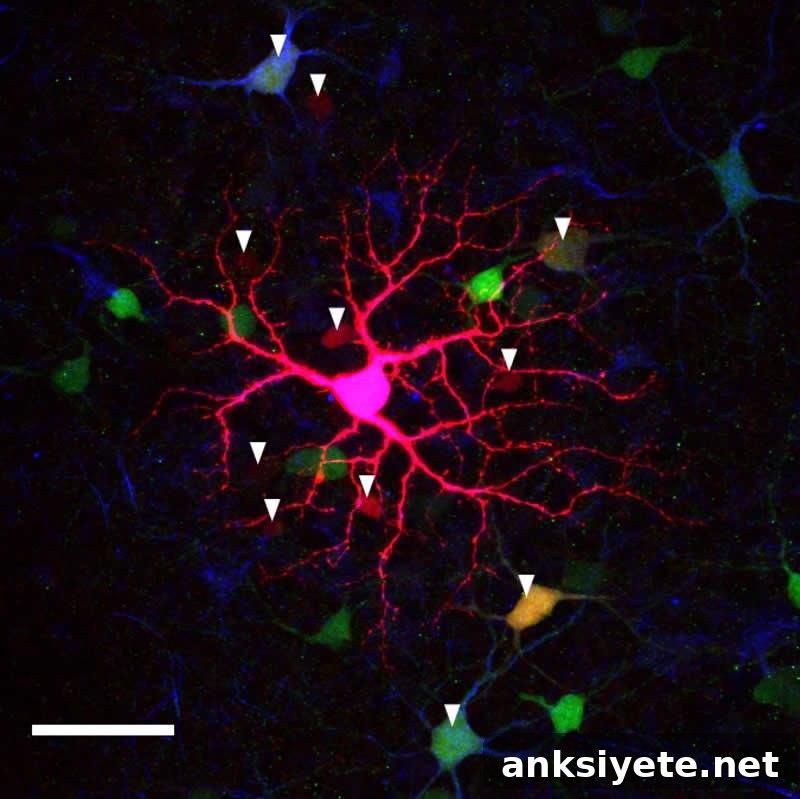
Graduate student Franklin Caval-Holme combined two-photon calcium imaging, whole-cell electrophysiology, pharmacology, and anatomical mapping to analyze ipRGCs in newborn mouse retina. Their work identified six functional groups of light-responsive cells composed of mixed ipRGC subtypes and non-ipRGC retinal cells. Importantly, many of these cells are linked via gap junctions, forming a network that not only detects ambient light but can encode light intensity across a vast range—nearly a billionfold difference.
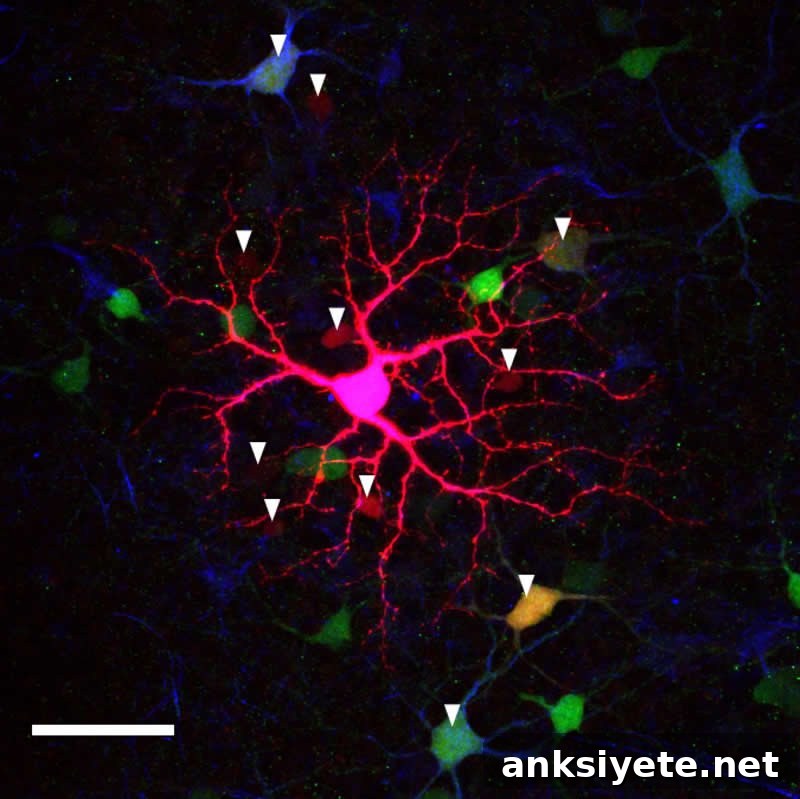
Gap junction coupling proved critical to light sensitivity for several ipRGC subtypes but not all, suggesting that distinct subtypes may differentially contribute to specific non-image-forming behaviors. For example, light aversion—an avoidance behavior that mouse pups exhibit early in life—appears to be intensity-dependent. The researchers propose that ipRGC network interactions could underlie such responses, although the precise subtypes driving particular behaviors remain to be identified.
The team also found that the coupling between cells can adjust in ways that tune the network’s response to different light intensities, a feature likely important during development. Previously, ipRGCs were mainly linked to binary light responses—light present or absent—that influenced retinal blood vessel growth and circadian entrainment. The new findings indicate that the neonatal retina encodes a range of light intensities, conveying far more nuanced information than previously appreciated.
Highlights
• Six functional groups of light-responsive cells correspond to mixed ipRGC subtypes
• Gap junctions transmit slow photocurrents and spikelets
• Blocking gap junctions reduces light sensitivity in most functional groups
• Increased gap junction coupling enhances light sensitivity across groups
Summary of findings
Before conventional photoreceptors mature, ambient illumination is detected by ipRGCs and helps drive physiological processes such as light aversion, pupillary reflexes, and circadian photoentrainment. Using clustering of two-photon calcium imaging data combined with anatomical inspection, the researchers modeled neonatal retinal activity as six functional groups composed of mixed cell types. Imaging, whole-cell recordings, pharmacology, and anatomy together show that both intrinsic light responses in individual ipRGCs and gap junction coupling among them work in concert to encode ambient light intensity in the developing retina.
Funding: This research was supported by the National Institutes of Health (NIH F31EY028022-03, RO1EY019498, RO1EY013528, P30EY003176).
Source:
UC Berkeley
Media Contacts:
Robert Sanders – UC Berkeley
Image Source:
The image is credited to Franklin Caval-Holme, UC Berkeley.
Original Research: Open access
“Gap Junction Coupling Shapes the Encoding of Light in the Developing Retina.” Franklin Caval-Holme, Marla B. Feller. Current Biology. DOI: 10.1016/j.cub.2019.10.025.
Abstract
Gap Junction Coupling Shapes the Encoding of Light in the Developing Retina
Detection of ambient illumination in the developing retina prior to maturation of conventional photoreceptors is mediated by intrinsically photosensitive retinal ganglion cells (ipRGCs) and is critical for driving several physiological processes, including light aversion, pupillary reflexes, and circadian photoentrainment. The strategies by which ipRGCs encode variations in ambient light intensity at these early ages were unknown. By clustering two-photon calcium responses and examining anatomy, the researchers showed the neonatal retinal population can be described as six functional groups composed of mixtures of ipRGC subtypes and non-ipRGC cell types. Combining imaging, whole-cell recording, pharmacology, and anatomy revealed that functional mixing is mediated in part by gap junction coupling. Together, these data indicate that both cell-autonomous light responses and gap junction coupling among ipRGCs contribute to robust encoding of light intensity in the developing retina.