
Summary: By fitting musicians with motion-capture markers and applying mathematical analyses, researchers reveal how performers communicate non-verbally to shape shared emotional expression during ensemble playing.
Source: McMaster University.
Researchers at McMaster University have developed a new method to quantify how musicians intuitively coordinate with one another during performance, silently anticipating how each will express the music.
The study, published in the journal Scientific Reports, offers fresh insight into the subtle, non-verbal communication that allows ensemble musicians to synchronize timing, dynamics, and emotional intent so that the group performs as a unified musical entity.
“Successfully performing music as a group is a complex coordination task,” says Laurel Trainor, senior author of the study and director of the LIVELab at McMaster University, where the research took place.
“Expressive ensemble performance requires predicting what your fellow musicians will do next so you can plan your own motor actions to match the intended emotional content. Waiting to react after hearing a change is too late,” she explains.
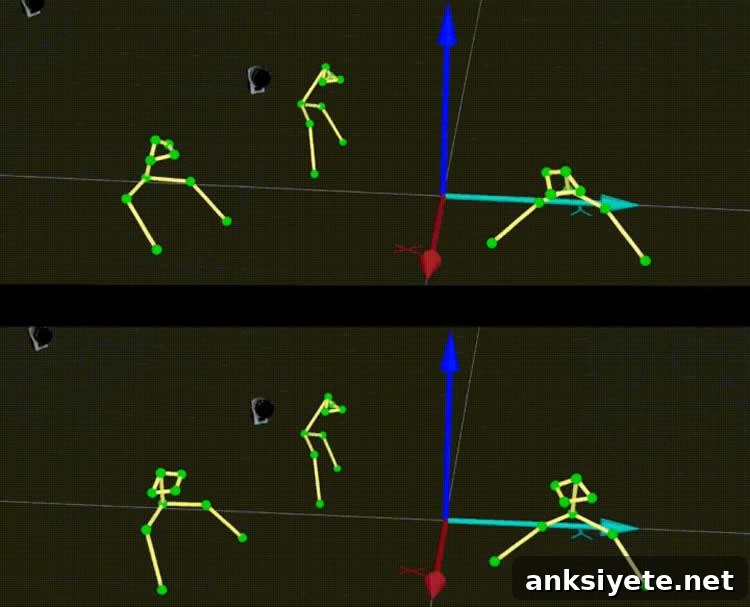
For this investigation, the researchers worked with the Gryphon Trio, a professional chamber ensemble. Each musician wore motion-capture markers while performing short musical excerpts that conveyed either happy or sad affect. Each excerpt was played in two conditions: with expressive interpretation, and with minimized expressive features (i.e., no emotional expression).
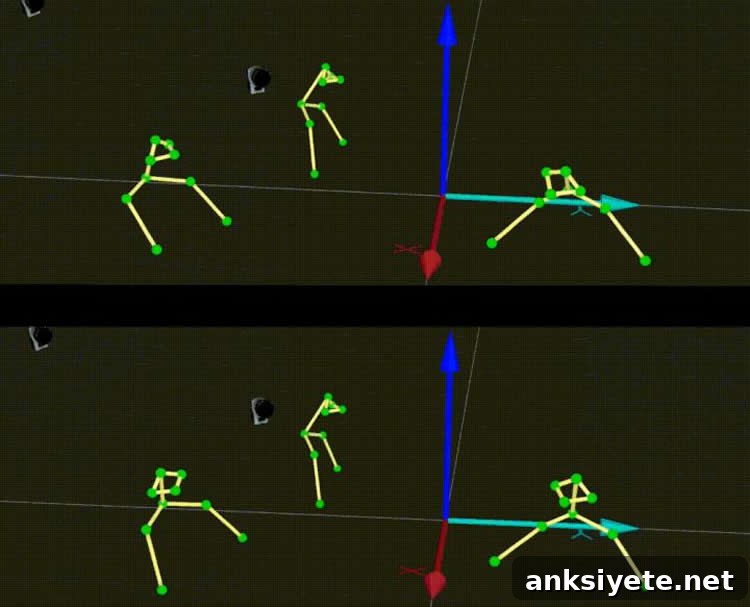
The team applied mathematical analysis to the time series of each performer’s body sway to measure directed influence between musicians. Specifically, they used Granger causality as a means of quantifying how much one performer’s movements statistically predicted another’s over time, capturing the information flow within the ensemble’s bodily coordination.
Across both emotional conditions—joyful and sad—the degree to which one musician’s movements predicted the others was greater when the trio performed with expression than when they played without emotion. In other words, expressive performance increased the predictive coupling of body sway across the ensemble.
“Our results demonstrate that detailed analysis of movement can reveal how emotional communication is shared in an ensemble,” says Andrew Chang, lead author on the study. “Achieving a unified emotional expression as a group demands substantial non-verbal communication.”
Beyond music performance, the researchers propose that this motion-analysis approach could be applied to other contexts where non-verbal coordination and shared emotional states matter, such as interactions involving non-verbal patients and their caregivers. The team is also exploring applications in social and relationship research; preliminary work indicates that patterns of coordinated body sway can help predict interpersonal interest during early romantic encounters.
Source: Michelle Donovan – McMaster University
Publisher: Organized by NeuroscienceNews.com
Image credit: LIVELab, McMaster University
Original research: “Body sway reflects joint emotional expression in music ensemble performance” by Andrew Chang, Haley E. Kragness, Steven R. Livingstone, Dan J. Bosnyak & Laurel J. Trainor. Published in Scientific Reports, January 18, 2019.
DOI: 10.1038/s41598-018-36358-4
MLA: McMaster University. “How Musicians Communicate Non-Verbally During Performance.” NeuroscienceNews, 18 January 2019.
APA: McMaster University (2019, January 18). How Musicians Communicate Non-Verbally During Performance. NeuroscienceNews.
Chicago: McMaster University. “How Musicians Communicate Non-Verbally During Performance.” NeuroscienceNews. January 18, 2019.
Abstract
Body sway reflects joint emotional expression in music ensemble performance
Joint action is fundamental to many human activities, requiring individuals to coordinate their behavior to achieve shared goals. Prior research has largely emphasized sensorimotor precision in event-by-event coordination (for example, synchronized tapping), but this approach can overlook higher-order aspects of joint action such as the expression and sharing of emotion. To measure joint emotional expression, the authors used motion-capture technology to record the body sway of each musician in a piano-violin-cello trio while they performed short excerpts with and without emotional expression. They applied Granger causality to the body-sway time series to assess directed information flow among performers. The analyses revealed that overall Granger-coupling of body sway within the ensemble was greater during expressive performance than during non-expressive performance. Furthermore, the strength of Granger-coupling correlated with ratings of emotional intensity provided both by ensemble members and by independent musician judges who listened to the audio alone. These findings indicate that Granger-coupling of co-performers’ body sway reflects shared emotional expression in ensemble music, offering a new quantitative approach to studying emotional coordination in joint action.