
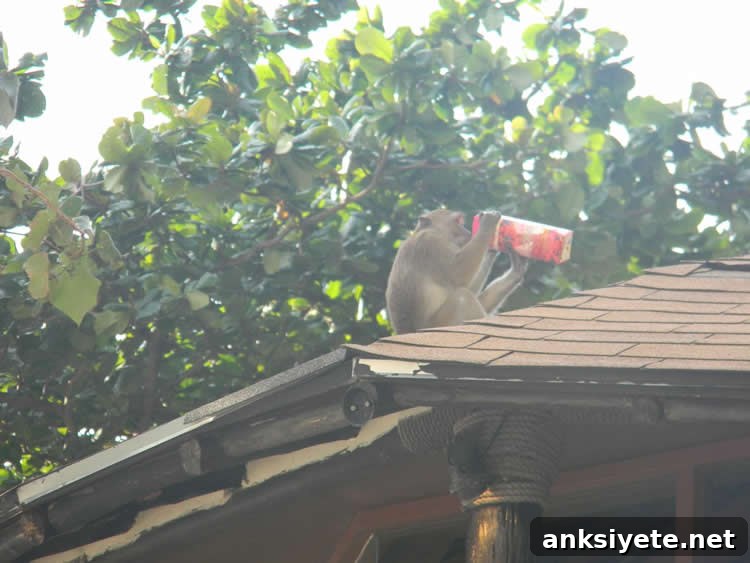
Summary: Researchers explored how animal cognition contributes to different forms of human–wildlife conflict and found that some species become bolder and take more risks as they habituate to urban environments.
Source: University of Wyoming
Have you ever watched a raccoon rifling through backyard trash, seen a rat dart across a subway platform, or had to shoo birds away from your picnic? What enables these animals to thrive in suburban and urban settings, and how do those same abilities create conflicts with people?
A new paper published in the journal Animal Behaviour by Lisa P. Barrett, Lauren A. Stanton and Sarah Benson-Amram from the University of Wyoming’s Animal Behavior and Cognition Lab investigates these questions. The study reviews how cognitive traits—such as learning, memory, problem-solving and behavioral flexibility—help certain species exploit human environments, and how those traits can also intensify human–wildlife conflict.
The authors consider whether animals with stronger cognitive skills are more likely to adapt to cities and towns and whether that adaptation increases encounters with people. For instance, crows use memory to track predictable food sources such as trash collection schedules. That memory helps them access food efficiently, but it can also lead to behaviors that humans find problematic, such as scattering garbage in streets, gathering in large numbers on buildings, or feeding in agricultural fields.
Barrett and colleagues catalog several types of conflict in which animal cognition may play a role: killing or injuring livestock, stealing food, damaging property, vehicle collisions, disease transmission and, in rare cases, harming people. They analyze specific cognitive abilities that can enable animals to exploit new opportunities in human-dominated landscapes, including innovation, neophilia (attraction to novelty), boldness, categorization, social learning, and behavioral flexibility.
“Animals that invent new ways to solve problems can start an ongoing arms race with humans,” Stanton explains. “Both sides must continually adapt to outsmart the other.” The paper gives concrete examples: elephants sometimes tear or move trees to short-circuit or disable fences; raccoons and kea parrots learn to open bins designed to be animal-proof. When animals learn to ignore or circumvent deterrents like loud noises, flashing lights or other human-made barriers, those deterrents lose effectiveness over time.
On the other hand, some species change their behavior to reduce contact with people. Benson-Amram notes that coyotes often shift to increased nocturnal activity or alter their movement patterns to avoid major roads and human activity centers. Such behavioral adjustments—also driven by cognition—can lower direct conflict even as the species persists near urban areas.
The paper also highlights how individual personality traits influence which animals succeed in human-altered landscapes. Bolder animals are more likely to approach people and vehicles in search of food, while individuals that are neophilic—attracted to novel objects and situations—may be more inclined to inspect houses, cars, and human infrastructure. As wildlife species such as raccoons, foxes and coyotes become more common in cities, repeated exposure to humans can lead to habituation, increasing boldness and reducing natural fear.
With growing human populations and ongoing development into previously wild areas, the frequency of encounters between people and animals is likely to increase. Effective mitigation depends on understanding the cognitive and behavioral mechanisms that drive wildlife into conflict with humans. The authors emphasize the need for conflict-reduction strategies that consider animal learning and flexibility—for example, rotating deterrents, designing truly animal-resistant waste containers, and accounting for animals’ capacity to socially learn new behaviors.
Benson-Amram hopes the review will encourage homeowners, urban planners, wildlife managers and researchers to consider animal cognition when designing coexistence strategies. “As humans expand into natural habitats, we need more research on the cognitive abilities of diverse species so we can develop interventions that work over the long term,” she says.
Funding: This research was supported by the National Science Foundation and the Wyoming NASA Space Grant Consortium.
Source: Sarah Benson-Amram, University of Wyoming
Publisher: NeuroscienceNews.com (organized coverage)
Image credit: Lisa Barrett
Original research: Barrett, L. P., Stanton, L. A., & Benson-Amram, S. (2018). Title: “The cognition of ‘nuisance’ species.” Animal Behaviour. doi: 10.1016/j.anbehav.2018.05.005
The cognition of ‘nuisance’ species
Recent work in animal cognition has examined how animals respond to novel or changing environments. While many species decline under anthropogenic pressure, some thrive in human-altered habitats by exploiting new resources and opportunities created by disturbance. Those same advantages, however, can create conflict with people, and individuals that are especially adept at innovation or behavioral flexibility may paradoxically face higher risks. This review synthesizes what is known about cognition in species often labeled as “nuisance” or “problem” animals to illuminate coexistence challenges in disturbed landscapes. It focuses on cognitive traits likely to be important for success in human environments—neophilia, boldness, categorization, innovation, memory, learning, social learning and behavioral flexibility—and examines how these traits can increase interactions and conflict with humans. The review also highlights examples of species that alter their behavior to avoid conflict and discusses how cognitive insights could inform mitigation strategies. Finally, it calls for empirical work on the cognition of a broader range of species to reveal mechanisms of adaptation and reduce human–wildlife conflict.