
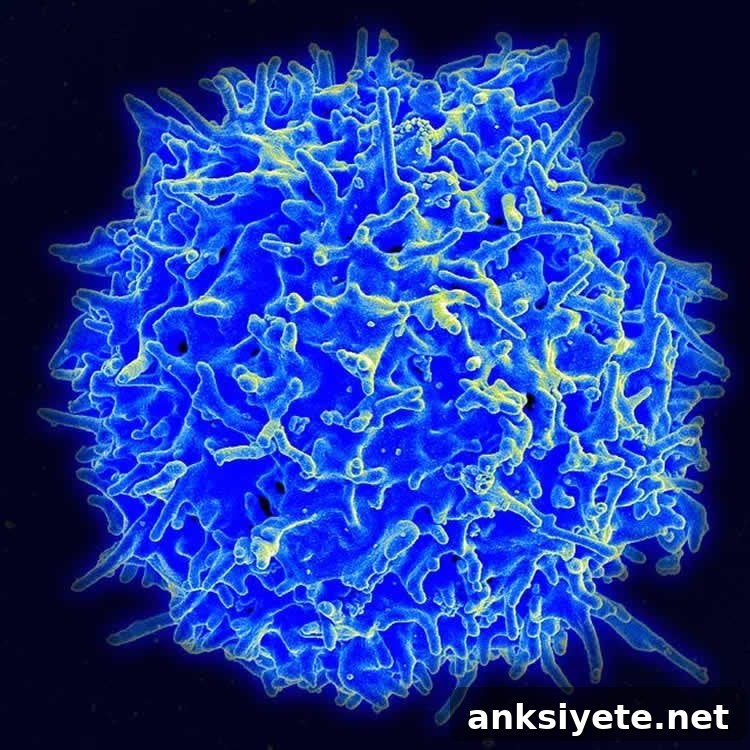
Summary: A new Nature Immunology study from RIKEN shows that when T cells are chronically activated they reshape the body’s metabolism, reducing key amino acids in the blood and altering brain chemistry and behavior.
Source: RIKEN.
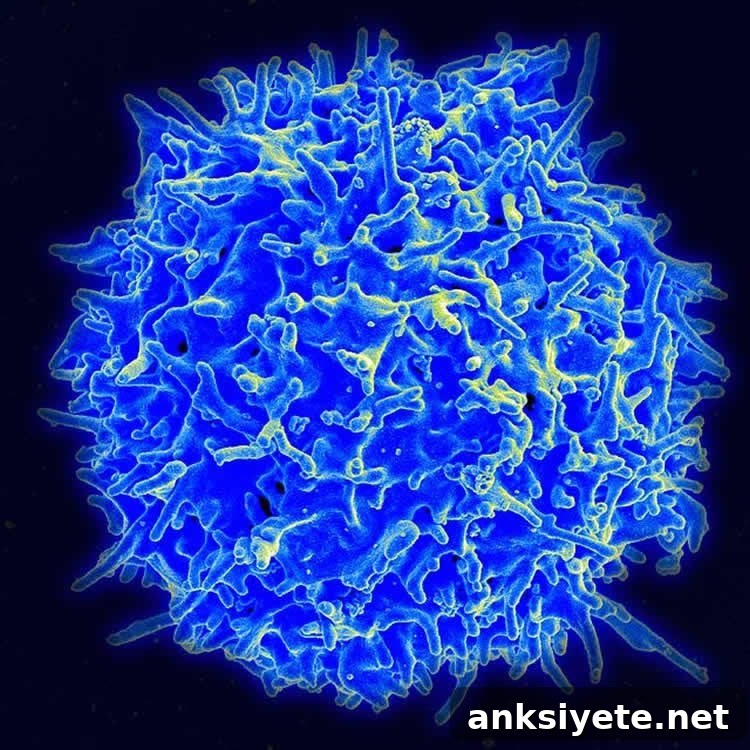
Researchers at the RIKEN Center for Integrative Medical Sciences in Japan, together with collaborators, report that persistent activation of T cells — the immune cells that protect the body from infections and cancer — drives a systemic metabolic shift that reaches the brain and changes behavior.
Previous work has established that individual T cells alter their internal metabolism after activation to meet increased energy and biosynthetic demands. What remained unclear was whether sustained, large-scale activation of T cells could produce broader metabolic consequences throughout the body. To address this question, the team studied mice lacking the PD-1 receptor, an important inhibitory surface protein that normally helps restrain T cell activity. In the absence of PD-1, T cells stay persistently active, a situation reminiscent of certain autoimmune conditions in humans.
Blood tests in these PD-1–deficient mice revealed a marked depletion of several amino acids — the building blocks of proteins — while the same amino acids were elevated inside the T cells themselves. Using advanced metabolite imaging and tracking techniques, the researchers localized this metabolic shift to activated T cells accumulating amino acids within lymph nodes, establishing a direct link between heightened immune cell activity and reduced circulating amino acid levels.
The investigators then examined whether changes in circulating amino acids produced physiological effects beyond the immune system. They focused on two essential amino acids, tryptophan and tyrosine, which serve as precursors for the neurotransmitters serotonin and dopamine. Reduced levels of tryptophan and tyrosine in the blood translated to reduced availability in the brain, which in turn lowered serotonin and dopamine synthesis. Because serotonin and dopamine regulate mood, motivation and fear responses, the biochemical changes had measurable behavioral consequences: PD-1–deficient mice displayed increased anxiety-like behavior and exaggerated fear reactions.
Importantly, the study showed that these behavioral abnormalities could be at least partially reversed by dietary supplementation with an essential amino acid, indicating that the neurological effects were functionally connected to the immune-driven depletion of specific metabolites. This dietary rescue supports the idea that systemic immune activation can indirectly influence brain chemistry and behavior by altering nutrient availability.
The work draws on techniques and expertise across immunology, metabolomics and neuroscience, combining quantitative metabolite profiling with in vivo imaging and behavioral testing. “Together these data indicate that excessive activation of T cells causes a systemic metabolomic shift with consequences that extend beyond the immune system,” said Michio Miyajima, one of the co-first authors.
Sidonia Fagarasan, leader of the research group, highlighted the broader implications: “We were fascinated to see that the immune system can influence many aspects of physiology beyond infection control. Future work should determine whether the anxiety and fear responses triggered by T cell activation are unintended side effects or whether they confer an evolutionary advantage. It will also be important to explore potential behavioral effects in the context of PD-1 blockade, a strategy currently under investigation for cancer therapy.”
Funding: This research received support from the Japan Agency for Medical Research and Development (including Core Research for Evolutional Science and Technology grants), the Cell Science Foundation and other national funding sources. The study was led by RIKEN in collaboration with Keio University, Kyoto University and additional institutions.
Source: Jens Wilkinson – RIKEN
Publisher: Organized by NeuroscienceNews.com.
Image Source: NeuroscienceNews.com image is in the public domain.
Original Research: Published in Nature Immunology under the title “Metabolic shift induced by systemic activation of T cells in PD-1-deficient mice perturbs brain monoamines and emotional behavior” (Miyajima et al.).
RIKEN. “Activation of Immune T Cells Leads to Behavioral Changes.” NeuroscienceNews, 23 October 2017.
Abstract
Metabolic shift induced by systemic activation of T cells in PD-1-deficient mice perturbs brain monoamines and emotional behavior
Persistent T cell activation in PD-1–deficient mice produces a distinct metabolic signature in serum characterized by depletion of amino acids. This depletion results from accumulation of amino acids inside activated T cells within lymph nodes. The systemic reduction of tryptophan and tyrosine leads to decreased brain serotonin and dopamine, producing behavioral changes dominated by anxiety-like behavior and heightened fear responses. These results demonstrate that excessive T cell activation causes a systemic metabolomic shift with physiological consequences that extend beyond immunity.