
Summary: Long-term patterns of physical activity at specific intensities are linked to different types of memory and to distinct aspects of mental health.
Source: Dartmouth College
Exercise benefits both cognition and mental well-being, but not all exercise affects the brain in the same way. A new Dartmouth study shows that the intensity and pattern of activity over many months are associated with distinct memory domains and mental health outcomes, suggesting that exercise effects are more nuanced than broad statements like “exercise improves memory.”
Published in Scientific Reports, the study examines how habitual activity—measured continuously through consumer fitness trackers—relates to task-specific memory performance and self-reported mental health across a year.
“Memory and mental health shape nearly every part of daily life,” says lead author Jeremy Manning, an assistant professor of psychological and brain sciences at Dartmouth. “Our goal was to map how different intensities of sustained physical activity correspond with different cognitive skills and mental health profiles.”
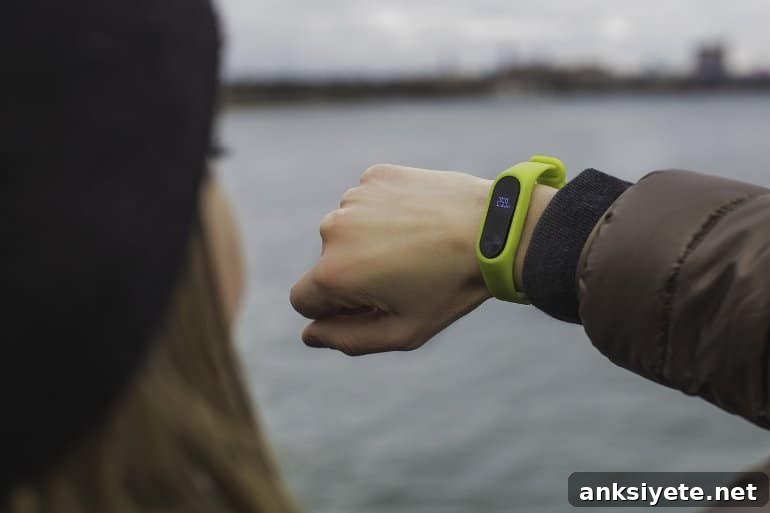
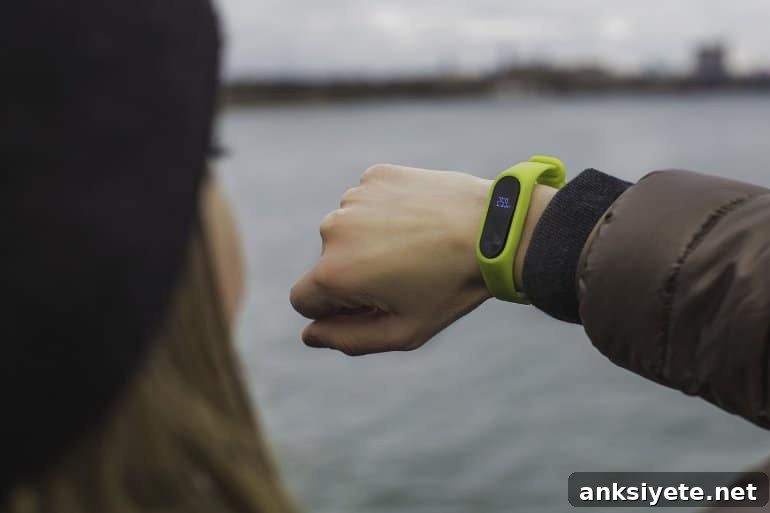
The team recruited 113 people who use Fitbit devices. Participants completed a battery of memory tests, answered mental health questionnaires, and agreed to share their aggregated fitness data from the prior 12 months. Rather than finding a single global benefit of activity, researchers observed task-specific associations tied to exercise intensity.
Activity data included daily step counts, average heart rate, and the amount of time spent in Fitbit-defined heart rate zones (rest, out-of-range, fat burn, cardio, peak) over a full calendar year. The cohort was recruited online using Amazon’s Mechanical Turk.
Four different types of memory tasks probed distinct cognitive functions on different timescales. Two task sets measured episodic memory—the kind used to recall personal events and experiences. Another set targeted spatial memory, which supports recalling locations and navigation. The final set assessed associative memory, which links concepts, names, or related items.
Overall, participants who were more active across the year tended to perform better on memory tasks, but the pattern depended on exercise intensity. Those who regularly exercised at moderate intensities showed superior performance on episodic memory tests. In contrast, participants who frequently trained at high intensities performed better on spatial memory tasks. People who were largely sedentary performed worse on spatial memory measures.
The study also revealed links between mental health symptoms and task performance. Participants who self-reported anxiety or depression tended to score higher on spatial and associative memory tasks, while those who reported bipolar disorder tended to perform better on episodic memory tasks. Conversely, higher reported stress was associated with lower performance on associative memory measures.
Rather than offering simple cause-and-effect claims, the authors emphasize that different exercise profiles and mental health states relate selectively to different cognitive abilities. “You can’t reduce these findings to slogans like ‘walking improves your memory’ or ‘stress always harms memory,’” Manning says. “Specific kinds of activity and specific mental health conditions appear to interact with distinct aspects of memory.”
All anonymized data and analysis code from the study have been made publicly available for researchers who want to explore the dataset further via the project’s GitHub repository.
The researchers suggest practical applications could follow with more work: targeted exercise programs might be designed to support particular cognitive goals or to complement mental health interventions. For example, particular regimens may help students preparing for exams or individuals seeking to reduce depressive symptoms by emphasizing the types of activity most closely associated with the relevant cognitive or mood outcomes.
About this neuroscience research news
Author: Amy Olson
Source: Dartmouth College
Contact: Amy Olson – Dartmouth College
Image: The image is in the public domain
Original Research: Open access.
“Fitness tracking reveals task-specific associations between memory, mental health, and physical activity” by Jeremy Manning et al., Scientific Reports
Abstract
Fitness tracking reveals task-specific associations between memory, mental health, and physical activity
Physical activity produces a range of benefits for both body and mind, and distinct exercise types and intensities influence physiology in different ways. We tested the hypothesis that mental and cognitive benefits of physical activity are likewise differentiated by intensity and habitual patterns.
Aggregating roughly a century’s worth of anonymized fitness data from wearable trackers, we paired those data with self-reported mental health measures and a battery of memory tasks assessing episodic, spatial, and associative memory across short and long timescales. Participants with similar fitness profiles tended to exhibit similar patterns of mental health and task performance, and these relationships were task-specific: different activity intensities and patterns related to particular memory domains and symptom profiles.
These results lay groundwork for designing low-cost, data-driven interventions that leverage wearable fitness tracking to target particular elements of cognitive performance and mental health through tailored physical activity programs.