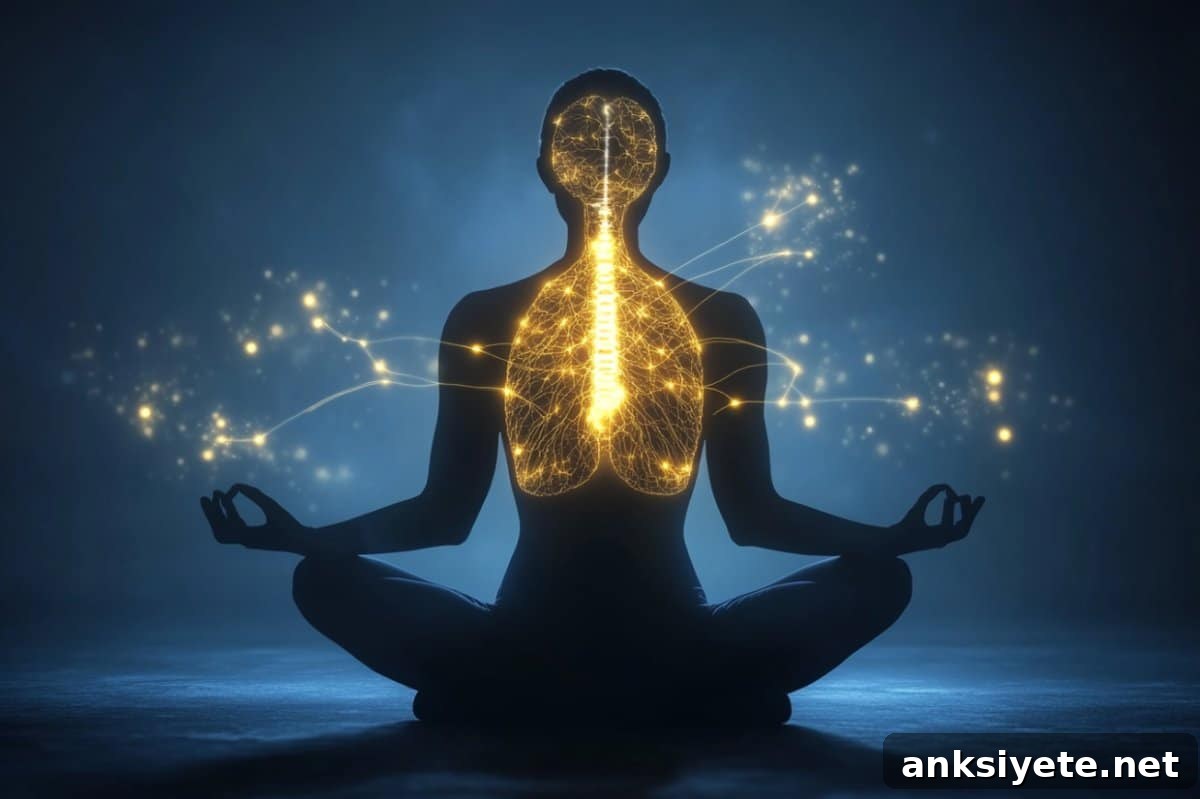
Summary: Breathwork—the deliberate practice of changing one’s breathing pattern—has measurable effects on the brain and body. Research shows that slow, controlled breathing reduces anxiety, calms brain activity, and can ease symptoms of depression.
Deliberate deep breathing engages neural circuits that regulate emotion, producing a reliable calming response. This response is rooted in physiology rather than expectation: animal experiments demonstrate that sustained slow breathing reduces fear behavior in mice, indicating the effect is not purely placebo. Simple routines such as box breathing or the 4-7-8 method can produce noticeable benefits in as little as five minutes, while more intense breathwork practices can produce stronger or altered states. For most people, however, basic slow-breathing exercises are a powerful, accessible tool for managing stress and improving mental well-being.
Key Facts:
- Neurobiological Basis: Breathwork sends calming signals across multiple brain circuits, influencing emotional regulation.
- Evidence from Animals: Mice trained to breathe more slowly showed reduced fear responses, supporting a biological mechanism.
- Simple Practices Work: Techniques such as box breathing and 4-7-8 breathing can lower stress quickly and are easy to learn.
Source: UCLA
Breathwork—intentionally changing breathing patterns to improve physical, mental or emotional well-being—may sound New Age to some, but the science behind the practice is robust, according to Jack Feldman, PhD, professor of neurobiology at the David Geffen School of Medicine at UCLA.
Dr. Feldman joined Tyrone Lindqvist, lead singer of the Australian electronic group Rufus Du Sol, on the “Sing for Science” podcast to discuss how breathing influences the brain. Lindqvist described how breathwork has become part of the band’s pre-performance ritual and inspired their album “Inhale/Exhale.”
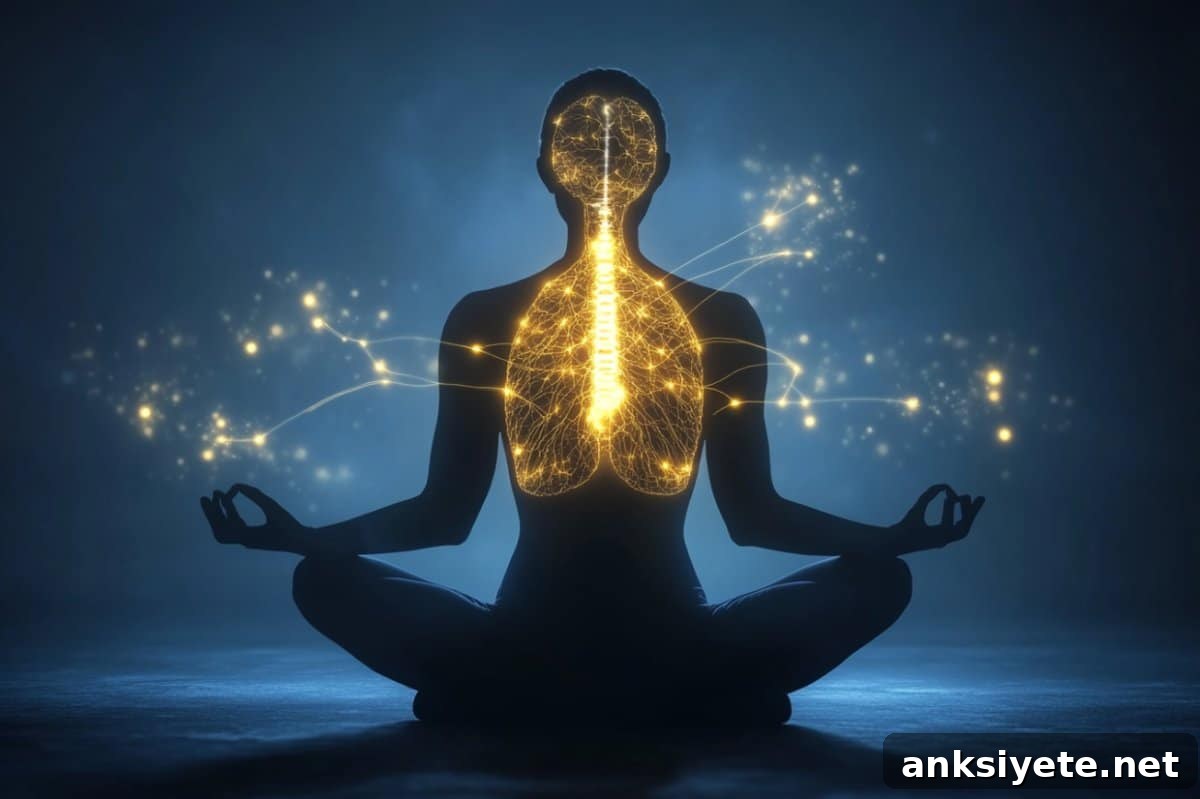
Dr. Feldman has studied breathing and the brain for over four decades. In 1986 he identified and named the preBötzinger Complex, a region in the brainstem that generates and controls the rhythm of breathing. More recent work from his lab and collaborators has explored how different breathing rhythms influence emotional state, showing that slower breathing patterns correlate with reduced anxiety and calmer mental states.
“We think the ability to breathe slowly benefited early mammals’ survival,” Dr. Feldman explains. Sighing and other mammalian breathing responses likely evolved as natural coping mechanisms that modern breathwork practices intentionally harness.
How breathwork affects the brain
Research shows that signals related to breathing are widespread across the brain. Voluntary changes to breath rate and depth modulate those signals, producing downstream effects on neural circuits that regulate mood and arousal. Breath patterns also intersect with pathways implicated in depression and anxiety, and regular breathwork practice has been associated with therapeutic gains for these conditions.
You don’t need a deep understanding of neuroscience to benefit. Practical, easy-to-learn techniques like box breathing and 4-7-8 breathing are effective starting points. Box breathing consists of inhaling for four counts, holding for four, exhaling for four, and holding for four. The 4-7-8 method involves inhaling for four counts, holding for seven, and exhaling slowly for eight. Military and elite performance groups, including Navy SEALs, have adopted such methods to restore calm during high-stress situations.
Evidence beyond placebo
To address whether breathwork’s benefits stem from expectation, Dr. Feldman’s team experimentally slowed the breathing rate of mice for 30 minutes daily over four weeks. After the intervention, the mice displayed significantly less fearful behavior compared with controls. These findings suggest a biological mechanism underlies breathwork’s effects rather than solely a placebo response.
Dr. Feldman hopes these results will persuade skeptics who view breathwork as purely anecdotal that intentional breathing produces reproducible physiological changes.
Different methods and cautions
Breathwork practices vary in intensity. Lindqvist experimented with the Wim Hof Method—rapid deep breaths followed by long breath holds—which can produce feelings of intense presence and energetic shifts but may also cause lightheadedness, tingling, or even fainting. Holotropic Breathwork and other fast-breathing practices are reported to induce altered or “psychedelic” states for some individuals. These effects are likely linked to changes in carbon dioxide levels, which alter blood pH and can significantly affect neuronal function and bodily sensations.
For most people seeking stress reduction, basic slow-breathing exercises are sufficient and safer. Dr. Feldman advises beginners to start gently: short daily sessions of simple techniques, practiced consistently, can be restorative and deliver measurable mental-health benefits.
If you’re new to breathwork, aim for a few minutes of slowed, intentional breathing each day. Many people find this simple habit reduces tension, improves focus, and supports better emotional balance.
About this breathwork and neuroscience research news
Author: Will Houston
Source: UCLA
Contact: Will Houston – UCLA
Image: The image is credited to Neuroscience News