
UCLA Scientists Develop a 3-D Model of the Human Airway
Imagine doctors consulting a virtual model that predicts how effective a surgical procedure will be before a scalpel ever touches a patient. That vision is moving closer to reality thanks to a computational airway model developed at the University of California, Los Angeles. The work aims to improve diagnosis, treatment planning and device testing for people who suffer from obstructive sleep apnea.
Jeff Eldredge, a professor at UCLA’s Henry Samueli School of Engineering and Applied Sciences, leads the project. Eldredge, whose background is in mechanical and aerospace engineering, has collaborated with experts in high-performance computing and medicine to build a simulator that captures how air flows and how airway tissues move and deform during breathing. The computational tools were developed with support from the UCLA Institute for Digital Research and Education.
Previously, Eldredge and colleagues created detailed simulations of fluid-structure interactions in other medical contexts, including a project that reproduced the dynamics of a leg injury caused by flying shrapnel. That earlier work, produced in partnership with the Center for Advanced Surgical and Interventional Technology at the David Geffen School of Medicine, used CT scans to generate realistic virtual patients and helped train combat medics in realistic scenarios.
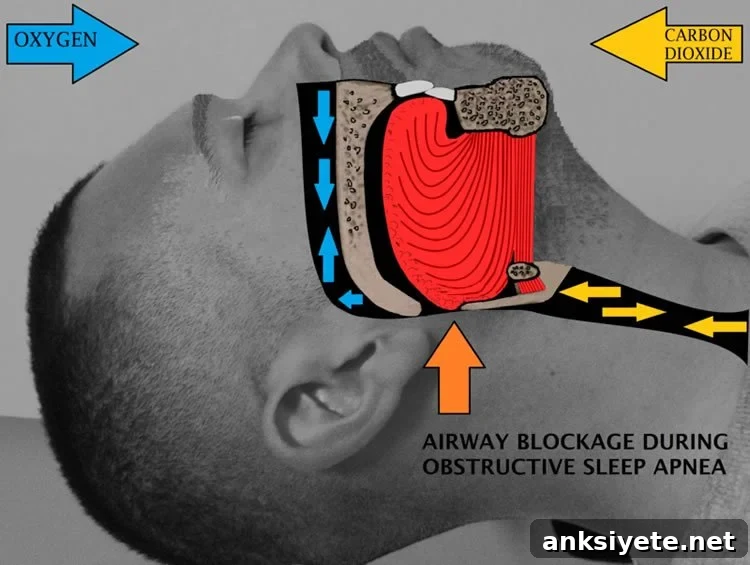
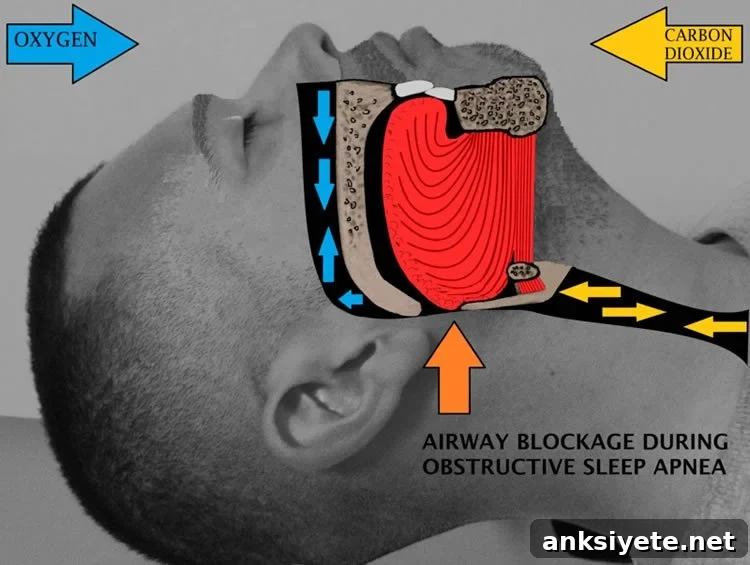
The current focus is on sleep apnea, a condition in which the upper airway collapses or becomes partially obstructed during sleep. Repeated airway blockage can contribute to high blood pressure, stroke and heart failure. Standard approaches to evaluating treatments can be time-consuming and uncomfortable: for example, testing an oral mandibular advancement device typically requires patients to wear the device for extended periods at home to evaluate its effect.
The UCLA School of Dentistry approached Eldredge to explore whether simulation could reduce that trial-and-error phase. Working with Dr. Sanjay Mallya, associate professor of dentistry, and Dr. Susan White, then a UCLA medical resident, the team created a computational tool that models air-tissue interactions in the upper airway. A key component is a high-performance airflow simulation code developed primarily at the Institute for Digital Research and Education.
The simulator begins by mapping a patient’s airway geometry using dental cone-beam CT scans. From that geometry, researchers generate three-dimensional models of the upper airway and simulate airflow through them. Crucially, the model does not treat the airway as a rigid tube; it represents tissue elasticity so that the simulation captures how soft tissues deform and can collapse under different conditions. That simultaneous modeling of fluid dynamics and tissue mechanics is what sets this approach apart from many prior efforts.
By altering the model’s geometry—such as adjusting jaw position, soft tissue contours, or simulated surgical modifications—clinicians can explore how those changes would affect airflow and airway patency. Eldredge describes the approach as a way to test hypotheses without putting patients through invasive or lengthy trials: “You don’t want to ever have to rely on actually going in and cutting a patient to see if it gives you answers or not,” he said.
The team regards progress as a sequence of incremental advances. Early models focus on rigid-to-elastic transitions and validating tissue behavior against real patient data. Over time, researchers hope the simulations will evolve into reliable predictive tools that help personalize treatment choices, inform device design, and assist surgical planning.
Looking further ahead, one long-term goal is to integrate the upper airway simulations with broader lung models to form a comprehensive representation of respiratory mechanics. Such an integrated tool could support a range of clinical and research applications, from optimizing oral appliance design to improving preoperative planning for complex airway surgeries.
Source: Nico Viele – UCLA
Image Source: The image is credited to Drcamachoent and is licensed CC BY SA 4.0.