
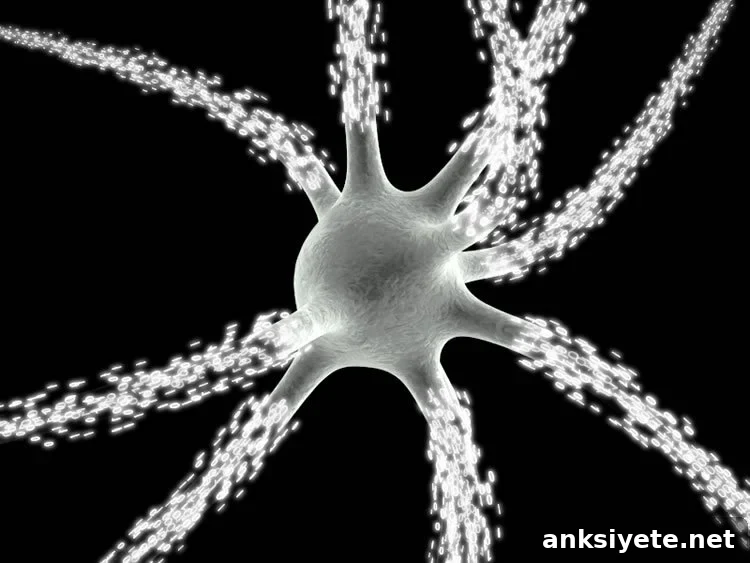
Advances in neural recording now allow scientists to monitor the activity of hundreds of neurons at once, and continuing technological progress promises to increase that number dramatically. But collecting large-scale neural data alone does not automatically reveal how the brain produces behavior, cognition, or perception.
In a recent review published in Nature Neuroscience, Byron M. Yu of Carnegie Mellon University and John P. Cunningham of Columbia University outline the scientific motivations for analyzing populations of neurons together and review a class of machine learning methods—dimensionality reduction—that are particularly well suited for interpreting large-scale neural recordings.
Dimensionality reduction has already yielded new insights into several core problems in neuroscience. When applied to population activity, these algorithms have helped researchers understand how the brain discriminates among odors, how neural systems make decisions under uncertainty, and how patterns of activity reflect planning or imagining movement even when no overt motion occurs. Yu and Cunningham argue that treating dimensionality reduction as a standard analytical tool will make it easier to compare neural activity across experiments, brain regions, individuals, and health states, helping to accelerate the translation of neural recordings into treatments and interventions for brain injury and disease.
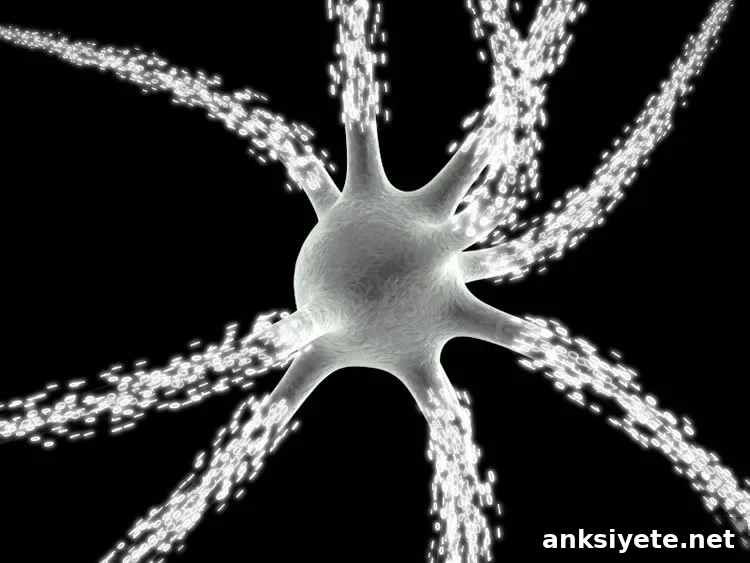
The central idea behind dimensionality reduction is straightforward and powerful: rather than analyze each recorded neuron independently, these methods summarize the coordinated activity of many neurons using a much smaller set of hidden or latent variables. Those latent variables capture the shared structure in population activity and often correspond to meaningful cognitive or motor processes—mental states, decision variables, sensory representations, or planning signals—that would be difficult to detect by inspecting single neurons in isolation.
Traditional neuroscience analyses have focused on single neurons or pairs of neurons, searching for tuning properties or response features that explain behavior. While that approach remains valuable, it struggles to capture the full richness of large neural populations, because individual neurons frequently exhibit heterogeneous response patterns that do not convey the system-level computations on their own. Dimensionality reduction embraces single-neuron heterogeneity by modeling the interactions and correlations across many neurons and by extracting a compact description of the population-level dynamics.
From an applied perspective, dimensionality reduction and related machine learning tools are essential for making sense of the “neural Big Data” that modern recording technologies produce. The combination of high-density electrode arrays, optical imaging methods, and large-scale initiatives such as the federal BRAIN Initiative is creating datasets of unprecedented size and complexity. Without appropriate statistical and computational tools, these datasets can be overwhelming; with dimensionality reduction, researchers can visualize neural trajectories, compare activity patterns across conditions, and identify signatures that distinguish healthy neural circuits from pathological ones.
Using these techniques, neuroscientists can trace how latent variables evolve over time as an animal perceives, decides, or prepares an action. For example, a low-dimensional trajectory traced through latent space can reveal the temporal progression of an internal decision variable during a choice task, or the structure of planned movement before muscle activity begins. Such population-level descriptions make it possible to compare experiments across labs and species, to evaluate how disorders alter neural dynamics, and to guide the design of targeted therapies and brain–computer interfaces.
“One of the major goals of science is to explain complex phenomena in simple terms,” Cunningham notes. Dimensionality reduction provides a principled way to discover that simplicity in large neural circuits by reducing complex, high-dimensional recordings to comprehensible, low-dimensional descriptions. Yu emphasizes that these methods are not a black box: careful application and interpretation of dimensionality reduction can reveal mechanistic hypotheses about how neural populations implement computation.
The Center for the Neural Basis of Cognition (CNBC), a collaboration between Carnegie Mellon University and the University of Pittsburgh, supports research into the neural mechanisms underlying human cognition. The center continues to advance interdisciplinary work at the intersection of neuroscience, computation, and behavior and is marking two decades of research and training.
Funding for the reviewed work and related research includes the Grossman Center for the Statistics of Mind, the Simons Foundation, the Gatsby Charitable Foundation, and the National Institute of Child Health and Human Development (part of the U.S. National Institutes of Health). The review article is authored by John P. Cunningham and Byron M. Yu and appears as “Dimensionality reduction for large-scale neural recordings” in Nature Neuroscience. Published online August 24, 2014. DOI: 10.1038/nn.3776.
Contact: Shilo Rea – Carnegie Mellon University
Source: Carnegie Mellon University press release
Image credit: Nicolas P. Rougier (image licensed under GNU General Public License)