
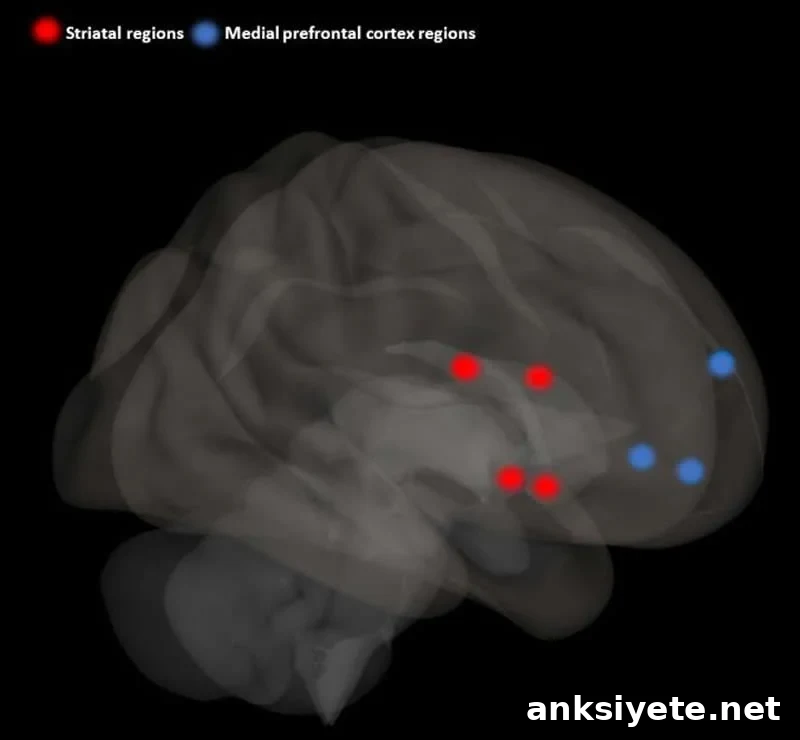
Summary: Methylphenidate appears to increase norepinephrine activity in the medial prefrontal cortex, which then influences dopamine neuron firing in the striatum at the moment a reward is delivered. This insight clarifies how common ADHD medications alter brain reward processing and may guide development of more targeted treatments.
Source: OIST
Attention-deficit hyperactivity disorder (ADHD) is a neurodevelopmental condition marked by inattention, hyperactivity and impulsivity. Methylphenidate, a stimulant medication, is commonly prescribed to reduce these symptoms, but the exact neural mechanisms behind its therapeutic effects remain incompletely understood.
Researchers at the Okinawa Institute of Science and Technology Graduate University (OIST) examined how methylphenidate changes activity in key brain regions involved in reward processing. Their findings shed light on how the medication affects communication between the prefrontal cortex and the ventral striatum, a core component of the brain’s reward circuitry where dopamine is heavily involved.
Previous studies have suggested that people with ADHD show altered responses when anticipating and receiving rewards. One proposed pattern is reduced dopamine release when a reward is anticipated and increased dopamine firing when the reward is actually delivered. This imbalance may help explain difficulties many people with ADHD experience with tasks that lack immediate reward.
“In practice, children or young adults with ADHD may struggle to persist with tasks that don’t provide immediate positive feedback. Schoolwork, which often leads to long-term benefits rather than instant rewards, can be particularly challenging. Instead, attention is drawn to novel or immediately interesting stimuli, such as a classmate speaking or outside noise,” said Dr. Emi Furukawa, the study’s first author and a researcher in OIST’s Human Developmental Neurobiology Unit.
Because methylphenidate is thought to improve attention in ADHD by modifying dopamine availability, Furukawa and colleagues specifically investigated the drug’s effects on the ventral striatum and on its communication with the medial prefrontal cortex (mPFC), a brain region central to decision-making and top-down control.
The study, published in the journal Neuropharmacology, was conducted in collaboration with the D’Or Institute for Research and Education (IDOR) in Rio de Janeiro, Brazil. The collaboration combined multidisciplinary expertise and access to functional magnetic resonance imaging (fMRI) facilities to measure brain responses while participants performed a reward-based task.
Delving into the brain
Using fMRI, the team scanned young adults with ADHD and a control group while participants played a slot-machine style computer game. Individuals with ADHD were scanned twice: once after taking methylphenidate and once after taking a placebo. During the game, two Japanese characters served as cues: one cue reliably predicted monetary wins and the other did not. Participants learned that one symbol signaled likely reward (a reward-predicting cue) while the other signaled non-reward.
On placebo, participants with ADHD showed similar ventral striatum activity in response to both reward-predicting and non-reward cues, indicating reduced discrimination between cues. After taking methylphenidate, their ventral striatum activity increased selectively for the reward-predicting cue, demonstrating improved neural discrimination of cues that signal reward.
The researchers also examined how striatal activity related to activity in the medial prefrontal cortex. When participants with ADHD were on placebo, striatal activity correlated strongly with mPFC activity at the exact moment of reward delivery. This heightened correlation may reflect increased sensitivity to immediate external rewards in ADHD. In contrast, when those same participants took methylphenidate, the striatum–mPFC correlation at reward delivery decreased to levels similar to those seen in individuals without ADHD.
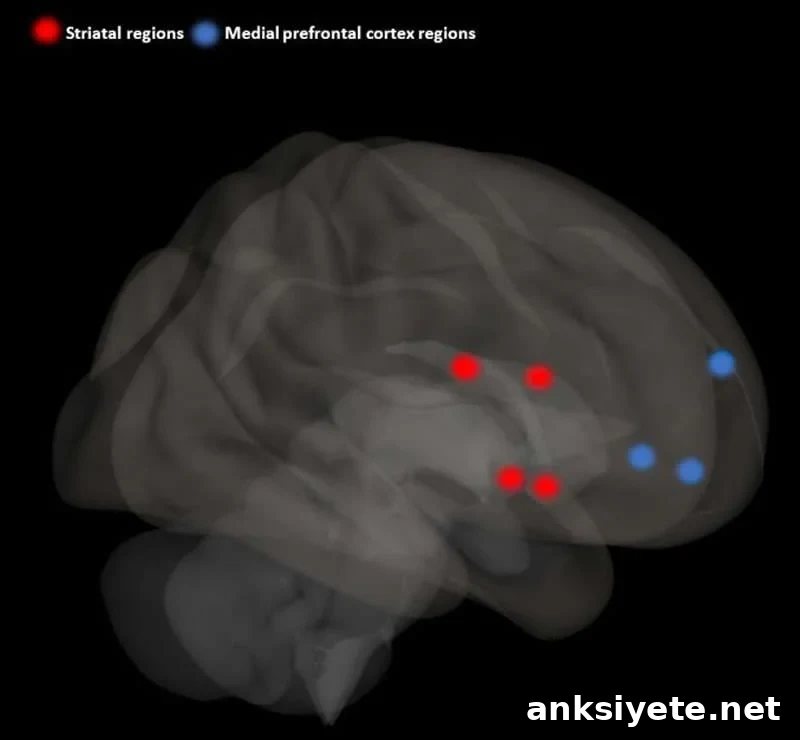
These results implicate another neurotransmitter, norepinephrine, in methylphenidate’s effects. Norepinephrine-releasing neurons are prominent in the prefrontal cortex, and the researchers propose that methylphenidate may raise norepinephrine levels there. Increased norepinephrine in the mPFC could then regulate dopamine neuron firing in the striatum at moments of reward delivery, thereby modifying how rewards are processed.
“It’s becoming clear to us that the mechanism by which methylphenidate modulates the reward response is very complex,” said Furukawa.
Tailoring New Therapies for ADHD
Although the neural interactions are complex, the study’s findings offer actionable clues for future research and treatment development. Understanding the specific pathways and neurochemical interactions by which methylphenidate alters reward processing could enable development of medications that preserve therapeutic benefits while reducing side effects.
“Methylphenidate is effective for many people but can cause side effects that make some patients or caregivers hesitant to use it,” Furukawa noted. “If we can identify which components of the drug’s action produce clinical benefit, it may be possible to design more targeted therapies.”
Beyond pharmacology, this research may also inform behavioral strategies. Recognizing that people with ADHD respond differently to reward anticipation versus reward receipt suggests practical approaches: teachers and caregivers could emphasize frequent, immediate positive feedback and reduce distracting stimuli to help sustain attention and motivation.
Source:
OIST
Media Contacts:
Tomomi Okubo – OIST
Image Source:
Image credited to OIST.
Original Research: Open access
“Methylphenidate modifies reward cue responses in adults with ADHD: An fMRI study” Emi Furukawa et al., Neuropharmacology. DOI: 10.1016/j.neuropharm.2019.107833.
Abstract
Methylphenidate modifies reward cue responses in adults with ADHD: An fMRI study
ADHD has been associated with reduced neural sensitivity to reward-predicting cues. Methylphenidate is widely used to manage symptoms, but its effects on reward sensitivity are not well defined. This study used fMRI to measure striatal responses to reward-predicting cues in adults with ADHD on and off methylphenidate and in a control group using a classical conditioning task. Greater differences in ventral striatum activation to reward versus non-reward cues were observed when ADHD participants were on methylphenidate compared with placebo. Exploratory analysis showed methylphenidate reduced the BOLD time-series correlation between the dorsal striatum and dorsal medial prefrontal cortex at reward outcome. These results suggest methylphenidate’s therapeutic effects may be mediated in part by altering reward processing in individuals with ADHD.