
Johns Hopkins researchers say they may have uncovered why people with restless legs syndrome (RLS) often continue to suffer sleepless nights even after medication has successfully eased the intense nighttime urge to move their legs.
For years, neurologists have linked RLS to disruptions in the brain’s use of dopamine, a neurotransmitter that helps neurons communicate and supports smooth, voluntary movement. Similar dopamine-related disruptions are central to Parkinson’s disease, which also features involuntary movements. Medications that raise dopamine levels are commonly prescribed for RLS, but clinical studies show these drugs do not reliably restore normal sleep. An estimated 5 percent of the U.S. population is affected by RLS.
In a new study led by Richard P. Allen, Ph.D., associate professor of neurology at Johns Hopkins University School of Medicine, researchers used MRI scans to measure levels of glutamate — a neurotransmitter associated with brain arousal — and found it elevated in people with RLS. Higher glutamate levels in the brain correlated with poorer sleep in the RLS group.
The study appears in the May issue of the journal Neurology. Allen explains, “These findings may explain why eliminating the urge to move the legs does not necessarily improve sleep. We may have focused too narrowly on dopamine; glutamate-driven arousal may also be an important part of RLS.”
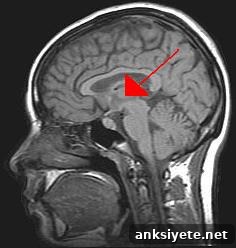
The research team focused on the thalamus, the brain region that helps regulate consciousness, sleep, and alertness. They compared MRI results from 28 people diagnosed with RLS to 20 control subjects without the condition. The RLS participants experienced symptoms nearly every night for at least six months and averaged about 20 involuntary leg movements per night.
All participants underwent two-day sleep studies to quantify actual rest. Among those with RLS, higher glutamate concentrations in the thalamus corresponded to shorter sleep duration. This link was not present in the control group.
Previous research has shown that although many people with RLS sleep less than 5.5 hours per night, they often do not report excessive daytime sleepiness. Allen suggests this may be tied to elevated glutamate producing a state of hyperarousal that persists both day and night, masking feelings of sleepiness even when total sleep time is reduced.
If these results are confirmed in larger trials, they could reshape RLS treatment. Dopamine-targeting drugs can relieve leg movements but often lose effectiveness over time, requiring increasing doses that can worsen symptoms. The mechanism by which dopamine-enhancing drugs reduce leg movements is still not fully understood. Allen notes that some medications already available, such as the anticonvulsant gabapentin enacarbil, can lower glutamate activity in the brain, but they have not been widely adopted as first-line therapy for RLS.
RLS commonly disrupts sleep because symptoms are triggered or worsen when a person lies down and tries to relax. Most patients report difficulty both falling asleep and staying asleep; temporary relief usually comes only from getting up and moving around. Sensations vary widely, from mildly annoying to intensely uncomfortable or painful.
“This is exciting because it introduces a new dimension to how we understand arousal and sleep biology,” Allen says. He adds that a clearer picture of glutamate’s role may have implications beyond RLS, potentially informing the biology of some forms of insomnia.
Notes about this neurobiology and RLS research
The study received partial funding from the National Institutes of Health’s National Institute of Neurological Disorders and Stroke (R01 NS075184 and NS044862), the National Institute on Aging (P10-AG21190), and the National Center for Research Resources (M01RR02719).
Allen has received honoraria for advisory work from Impax, Pfizer, and UCB and has received honoraria, consultancy fees, and research support from UCB, GSK, Pfizer, and Pharmacosmos.
Other Johns Hopkins researchers who contributed to the study include Peter B. Barker, D.Phil.; Alena Horská, Ph.D.; and Christopher J. Earley, M.D., Ph.D.
Contact: Stephanie Desmon and Helen Jones – Johns Hopkins Medicine
Source: Johns Hopkins Medicine press release
Image Source: The brain scan image is credited to NASA and is available in the public domain.
Original Research: Abstract for “Thalamic glutamate/glutamine in restless legs syndrome” by Richard P. Allen, PhD; Peter B. Barker, DPhil; Alena Horská, PhD; and Christopher J. Earley, MD, PhD, published online May 6, 2013 in Neurology (doi: 10.1212/WNL.0b013e318294b3f6).