
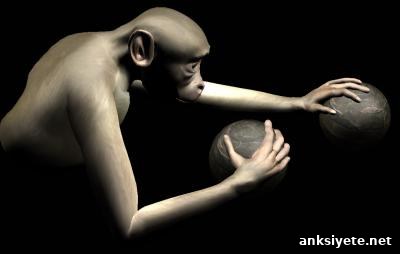
In a Duke-led study, monkeys learned to control two virtual arms simultaneously using only brain activity.
The results, published November 6, 2013 in Science Translational Medicine, mark an important step toward brain-controlled prosthetics capable of coordinating bilateral limb movements for people with severe paralysis.
To enable the animals to manipulate two virtual arms, the research team recorded activity from nearly 500 neurons across multiple cortical regions in both hemispheres — the largest multi-region, bilateral neuronal sample reported to date for this type of experiment.
Millions of people worldwide live with sensory and motor impairments caused by spinal cord injuries and other conditions. Restoring voluntary movement and sensation for these individuals is a major goal of neuroengineering, and brain-machine interfaces (BMIs) are one of the most promising approaches. Early BMI work at Duke University’s Center for Neuroengineering demonstrated control of single prosthetic limbs; the current study extends that approach to coordinated, two-arm control.
“Many everyday tasks require coordinated use of both hands — from typing to opening a container,” said senior author Miguel Nicolelis, M.D., Ph.D., professor of neurobiology at Duke University School of Medicine. “For BMIs to be clinically transformative for severely paralyzed patients, they will need to restore coordinated, multi-limb function.”
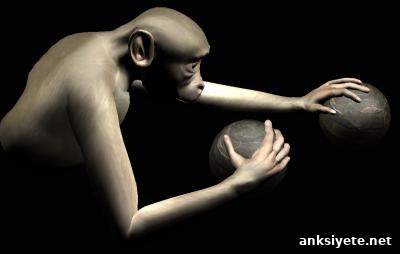
The researchers investigated whether large-scale cortical recordings could supply enough information for a BMI to decode and drive bimanual movements. Monkeys were trained in a virtual environment where they saw realistic avatar arms on a screen and were asked to place each virtual hand on specified targets as part of a bimanual motor task. Initially, the animals used joysticks to manipulate the avatar arms, then were gradually transitioned to controlling both virtual arms solely through neural activity, without moving their own limbs.
As the monkeys became more skilled at operating the two-arm avatar, the team observed extensive cortical plasticity. Neural patterns across multiple brain areas changed as animals learned to control the avatar, suggesting that the brain incorporated the virtual limbs into its body representation. The authors note that this incorporation of the avatar into the animals’ internal body image had been reported previously by the same group.
Importantly, cortical activity during coordinated two-arm actions displayed unique patterns that differed from the activity observed when each arm moved separately. In other words, simply adding the neural signals associated with independent right- and left-arm movements did not reproduce the patterns seen during simultaneous bimanual behavior. This indicates that bimanual control reflects emergent, non-linear interactions across large neuronal populations rather than a straightforward sum of independent limb commands.
From a BMI design perspective, these findings imply that decoding complex, coordinated movements will require sampling large neuronal ensembles distributed across both hemispheres and multiple cortical areas. Small samples of neurons are unlikely to capture the rich, population-level dynamics necessary to predict or drive coordinated bilateral motor behavior.
“When we examined individual neurons and whole cortical populations, we found that the responses during bimanual tasks could not be predicted by simply summing the neuronal activity for each arm acting alone,” Nicolelis explained. “This points to an emergent brain property — a non-linear integration — when both hands are engaged together.”
Nicolelis and collaborators are applying these insights to the Walk Again Project, an international initiative aimed at creating brain-controlled neuroprosthetic devices. The project is developing a brain-controlled exoskeleton and related technologies to restore mobility and intends to demonstrate these systems in public events as development progresses.
Notes about this neuroprosthetics research
Other contributors to the study include Peter J. Ifft (Department of Biomedical Engineering and Center for Neuroengineering, Duke University), Solaiman Shokur (Center for Neuroengineering, Duke University; École Polytechnique Fédérale de Lausanne), Zheng Li, and Mikhail A. Lebedev (Center for Neuroengineering and Department of Neurobiology, Duke University School of Medicine).
The research received support from the National Institutes of Health (grants DP1MH099903 and R01NS073952).
Contact: Rachel Harrison — Duke University Medical Center
Source: Duke University Medical Center press release
Image source: Duke Center for Neuroengineering; image adapted from the Duke press release.
Original research: Ifft, P. J.; Shokur, S.; Li, Z.; Lebedev, M. A.; Nicolelis, M. A. L. “A Brain-Machine Interface Enables Bimanual Arm Movements in Monkeys.” Science Translational Medicine. Published online November 6, 2013; DOI reference provided in the original publication.
Keywords: neuroprosthetics, brain-machine interface (BMI), bimanual control, neuroplasticity, bilateral motor control, paralysis, neuroengineering