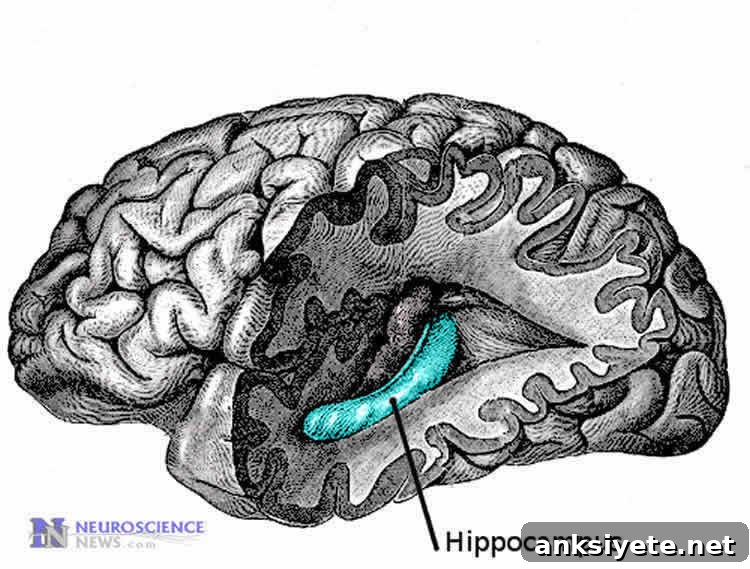
Discovery may advance understanding of memory formation and offer new avenues for treating epilepsy.
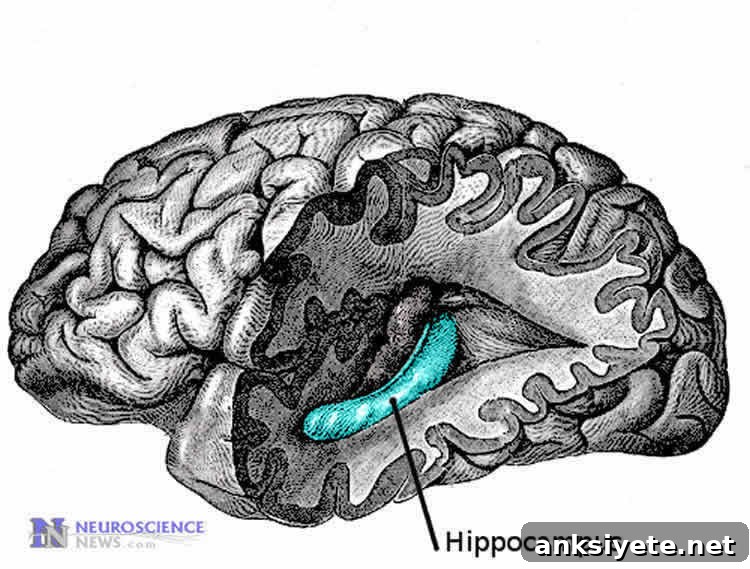
Researchers at Case Western Reserve University report that brain waves traveling through the hippocampus originate from a previously unrecognized type of moving source. This finding could improve our understanding of how memories form and suggest new strategies for addressing seizure disorders such as epilepsy.
The team identified a traveling spike generator that appears to move across the hippocampus—a brain region central to memory—sometimes reversing direction while producing waves of neural activity. Notably, the generator itself does not emit a continuous electrical signal detectable at the source.
“In epilepsy we have often assumed that the seizure focus is a fixed location, and in severe cases that area is removed surgically,” said Dominique Durand, Elmer Lincoln Lindseth Professor in Biomedical Engineering at Case School of Engineering and lead author of the study. “If seizure sources can move, as our data indicate, that complicates diagnosis and treatment.”
The findings, published in the Journal of Neuroscience, build on Durand’s earlier work identifying waves that propagate through the tissue by a mild electric field rather than solely through synaptic transmission, diffusion, or gap junctions.
The propagation speeds measured in this study closely match those observed in epileptic discharges as well as in physiological sleep-related and theta waves, which are implicated in memory consolidation.
Durand collaborated with PhD students Mingming Zhang and Rajat S. Shivacharan, postdoctoral researcher Chia-Chu Chiang, and research associate Luis E. Gonzales-Reyes on this investigation.
Source Search
Using the same recordings that revealed the propagating waves, the researchers localized the wave sources and found their movement too slow to be explained by synaptic transmission and slightly faster than simple diffusion would predict.
“We still don’t know the precise biophysical mechanism driving this propagation,” Durand said.
Based on the recordings, the moving source is estimated to be roughly 300–500 micrometers across. It appears to trigger population spikes around its perimeter, yet the source itself travels nearly 100 times more slowly than the fast spikes it generates.
“The source behaves like a car with flashing lights: the lights pulse rapidly while the car moves slowly,” Durand explained.
To locate the moving focus, the team recorded spikes across an unfolded rat hippocampus using a penetrating microelectrode array composed of 64 electrodes in a grid. They measured the millisecond delays between the initial spike and the peaks registered on neighboring electrodes.
By interpolating timing values between electrode recordings, the researchers refined their spatial resolution to a 16-by-16 grid, yielding 256 points or pixels of activity. From this dataset they produced isochrone maps that connect locations reached by a spike at the same time—analogous to topographical maps but showing wavefronts instead of elevation.
The geometric center of the electrodes that registered the earliest and largest amplitude firing was taken as the estimated origin for each wave. Many waves appeared to have multiple such origins, propagating from the temporal toward the septal side of the hippocampus or vice versa.
To confirm movement of the sources, the researchers applied Doppler-effect analyses to the spike frequency measured ahead of and behind each putative source. The Doppler results corroborated the direct observations, indicating the sources travel smoothly across hippocampal tissue.
The team observed that when a source reached the tissue boundary it often reversed direction. This behavior may resolve reports from other studies that recorded waves moving in opposite directions simultaneously within the same hippocampal tissue.
Digging deeper
Durand’s laboratory is investigating how a spatially confined source that does not spread by diffusion can nonetheless move and drive electrical spikes throughout surrounding tissue. They are also studying the functional role of these non-synaptic events and whether they play a part in normal neural processing.
Because the propagation speed of these waves is similar to that of sleep-related and theta rhythms, the researchers speculate the phenomenon could be linked to memory consolidation mechanisms.
If moving sources are relevant to seizure generation, they could become new therapeutic targets. “An important question is whether we can suppress the high-frequency spikes without disrupting the underlying moving source,” Durand noted.
The lab is developing improved neural imaging and mapping techniques to track these sources more accurately and to uncover how they trigger and propagate population spikes across hippocampal networks.
Funding: This study was funded by the National Institutes of Health.
Source: Kevin Mayhood – Case Western Reserve
Image Source: The image is in the public domain.
Original Research: Abstract for “Propagating Neural Source Revealed by Doppler Shift of Population Spiking Frequency” by Mingming Zhang, Rajat S. Shivacharan, Chia-Chu Chiang, Luis E. Gonzalez-Reyes, and Dominique M. Durand in Journal of Neuroscience. Published online March 23, 2016. doi:10.1523/JNEUROSCI.3525-15.2016
Abstract
Propagating Neural Source Revealed by Doppler Shift of Population Spiking Frequency
Brain electrical activity—both normal and pathological—often manifests as waves that move across neural tissue at various speeds and directions. How fast and slow traveling waves, sometimes moving in opposite directions, coexist within the same tissue has been unclear. By recording population spikes simultaneously throughout the unfolded rodent hippocampus with a penetrating microelectrode array, the authors show that a slowly moving neural source produces rapidly propagating waves at approximately 0.12 m/s. The spatially limited source itself moves at about 0.016 m/s, as determined by direct mapping and Doppler frequency shifts across 36 spiking trains from eight hippocampi. The movement of the source can explain apparent reversals in wave direction. These results indicate that a small neural focus can relocate over time, which may clarify observations of wave reflection at tissue boundaries or multiple foci in neural recordings.
SIGNIFICANCE STATEMENT Using an unfolded hippocampus and penetrating microelectrode array, the study reveals a moving, electrically silent source that can be localized by constructing isochrone maps of the population spikes it generates. Doppler analysis of spike frequency confirms source motion. These findings have broad implications for understanding how signals are generated and propagated in the hippocampus and carry important consequences for localization of seizure foci and the study of epileptogenesis.
“Propagating Neural Source Revealed by Doppler Shift of Population Spiking Frequency” by Mingming Zhang, Rajat S. Shivacharan, Chia-Chu Chiang, Luis E. Gonzalez-Reyes, and Dominique M. Durand in Journal of Neuroscience. Published online March 23, 2016. doi:10.1523/JNEUROSCI.3525-15.2016