
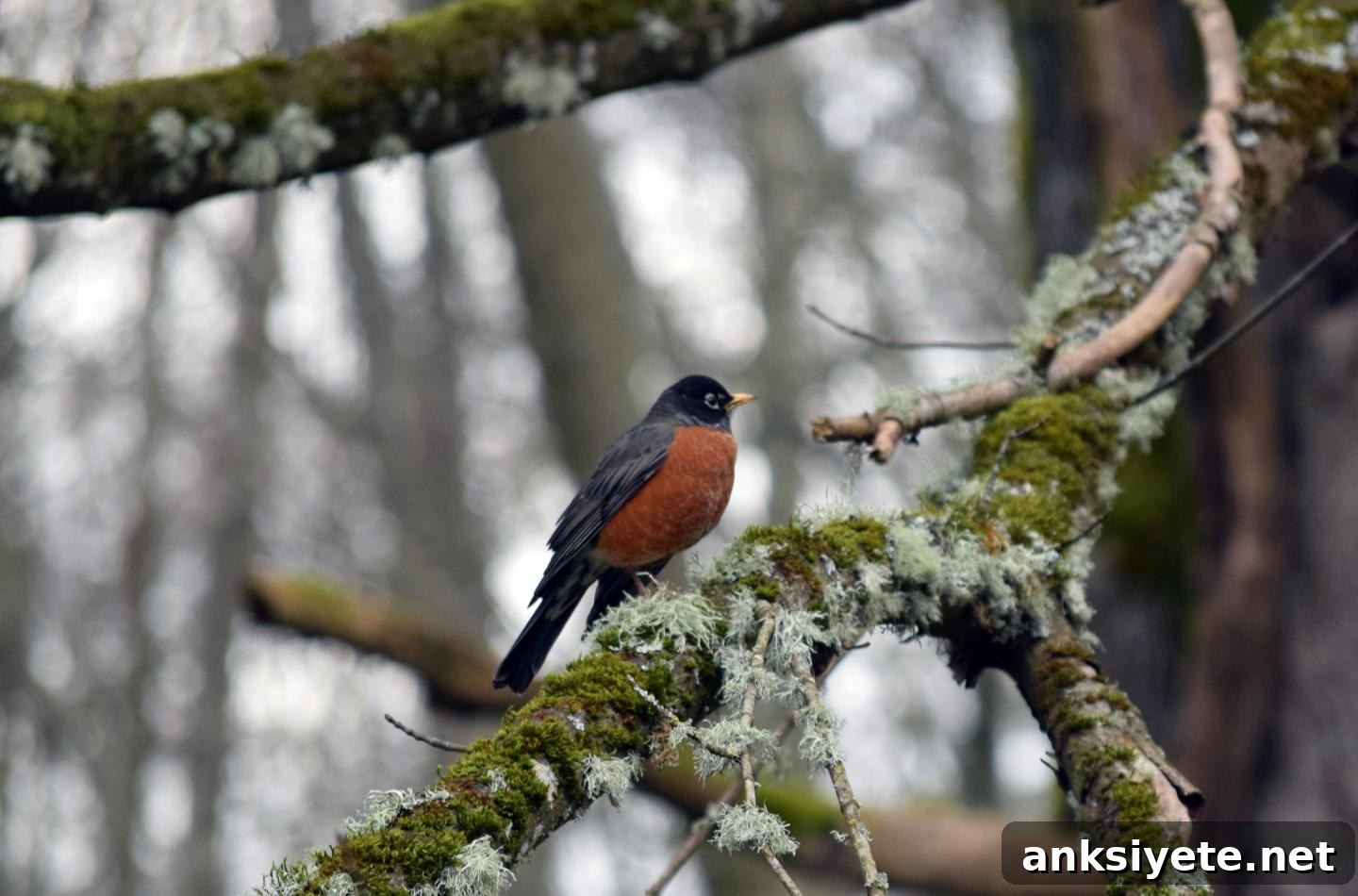
Summary: Experiencing relatively wild places and observing wildlife in urban parks supports both physical health and mental well-being.
Source: University of Washington
As cities expand and sprawl consumes more land, everyday access to natural, untamed places is becoming scarcer for urban residents.
Some neighborhoods gain small pocket parks or green roofs, but these managed, ornamental green spaces are not the same as patches of wild nature. Our species evolved with regular contact with relatively unmanaged environments, and emerging research indicates those experiences matter for thriving.
A new study led by the University of Washington shows that not all green spaces deliver the same benefits. The research, published Jan. 29 in Frontiers in Sustainable Cities, finds that encounters with “relatively wild” places within cities—areas with abundant biodiversity, large natural features, and a sense of solitude—are especially important for physical and mental well-being.
Previous work has documented general health benefits from nature, but this is among the first studies to demonstrate the specific value of wildness within urban parks for human flourishing.
“Our results make it clear that different kinds of nature affect people differently,” said lead author Elizabeth Lev, a graduate student in the UW School of Environmental and Forest Sciences. “Visitors report that the wilder parts of a park provide deeper, more meaningful experiences.”
The team concentrated on Discovery Park in Seattle—about 500 acres and the city’s largest park—because it offers a range of managed and relatively unmanaged landscapes while being under frequent development pressure. The park lies less than a 20-minute drive from downtown, making it a relevant case for the challenges many urban parks face.
At the request of the park’s advisory board, researchers set out to identify which elements of the park mattered most to visitors, so that planners and decision-makers can better weigh the human benefits of preserving wild features.
Researchers collected written narratives from 320 visitors via an online portal, asking each person to describe a meaningful interaction they had with nature in the park. The team then coded these narratives into descriptive categories—what they call a “nature language.” For example, a note stating “We sat and listened to the waves at the beach for a while” was coded as activities like “sitting at beach” and “listening to waves.”
After analyzing all submissions, the researchers identified common “interaction patterns” that recurred across many accounts. The most frequent patterns included encountering wildlife, following established trails, walking to natural viewpoints, gazing at Puget Sound or the mountains, and walking along shoreline edges. These categories formed a practical vocabulary people can use to recognize and seek out fulfilling nature experiences.
The team also evaluated whether each meaningful interaction relied on the park’s relative wildness. They defined “relatively wild” to include areas with minimal management, diverse plant and animal life, large old-growth trees or open spaces, sweeping vistas, and a felt sense of solitude away from urban bustle.
Wild elements proved central to visitor experiences in nearly every case. Examples in the narratives—such as “spotting a bald eagle” or “watching birds perched on an old-growth tree”—linked meaningful moments directly to habitats that sustain wildlife and large, unmanaged trees.
Creating and sharing a clear “nature language” helps people name the types of interactions that nourish them, making those activities easier to find in daily life. For instance, someone who values walking along water’s edge at Discovery Park might recreate a similar but more modest experience by strolling around a downtown fountain during a lunch break.
“We risk losing both the language and the cultural practice of deep interactions with nature,” said senior author Peter Kahn, a UW professor of environmental and forest sciences and psychology. “By documenting which aspects of wild parks matter to people, we hope to inform planning decisions so that development does not erode the very natural features that sustain human well-being.”
The researchers compiled their methods into a handbook so other cities can replicate the study and gather local evidence about what park visitors value. The team hopes such data can be used by city officials and park managers when evaluating development proposals or conservation priorities.
Co-authors include Hanzi Chen of Tongji University, who completed the research while a visiting scholar at UW, and Garrett Esperum, a Seattle resident and member of the Discovery Park Advisory Council.
Funding: This research was funded by the University of Washington.
Source:
University of Washington
Media Contacts:
Michelle Ma – University of Washington
Image Source:
The image is credited to Elizabeth Lev/University of Washington.
Original Research: Open access
“Relatively Wild Urban Parks Can Promote Human Resilience and Flourishing: A Case Study of Discovery Park, Seattle, Washington”. Elizabeth Lev et al. Frontiers in Sustainable Cities. doi: 10.3389/frsc.2020.00002.
Abstract
Relatively Wild Urban Parks Can Promote Human Resilience and Flourishing: A Case Study of Discovery Park, Seattle, Washington
Human interaction with nature supports physical health, mental well-being, and community resilience, yet urban development threatens natural areas within city boundaries. This study asked whether visitors’ benefits at Discovery Park depended on the park’s size and relatively wild character. From 320 participant narratives, researchers identified 520 interaction patterns. The most common patterns clustered around encountering wildlife (27%), following trails (14%), walking to natural destination spots (8%), gazing at Puget Sound or mountain views (6%), walking along beaches or bluffs (5%), and walking with dogs (4%). The analysis found that a large share of meaningful interactions depended on the park’s relative wildness: 77% of interaction patterns relied on wild features, and among participants who described especially meaningful experiences, 95% depended on relative wildness. The findings suggest that protecting large, biodiverse, and relatively unmanaged urban parks supports human flourishing and counters trends that diminish intergenerational connections to nature—an important consideration for urban planning and conservation.