
Neurons are hyperactive and fire more in a newly studied region of the hippocampus
Scientists at Northwestern Medicine have recorded, for the first time, detailed electrical activity from neurons in a relatively understudied hippocampal subregion and identified a cellular mechanism that explains why those neurons become more active with age. The findings point to a potential new therapeutic target for age-related memory loss and Alzheimer’s disease by showing that not all hippocampal regions respond to aging in the same way.
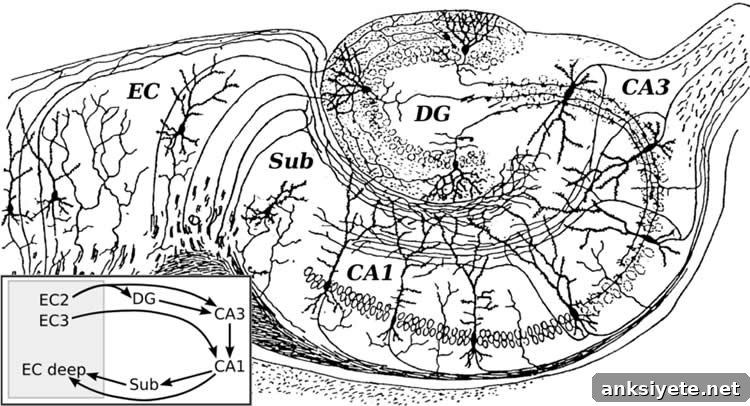
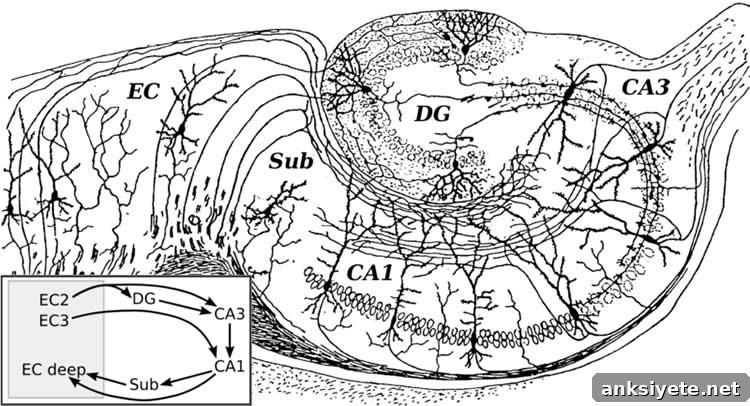
The hippocampus is central to forming and storing memories. Much prior research has focused on the CA1 region, where age-related reductions in neuronal activity have long been associated with memory impairment. In contrast, considerably less attention has been given to CA3, another key hippocampal area involved in memory processing.
In their work, published in the Journal of Neuroscience (appeared the week of September 10, 2015), the team recorded activity from CA3 pyramidal cells in brain slices taken from both young and aged rats. They found an unexpected pattern: instead of declining, CA3 neurons became more excitable with age and fired more frequently. This hyperactivity in CA3 is the mirror opposite of the decreased activity typically observed in CA1 neurons during aging.
Lead author John Disterhoft, the Ernest J. and Hattie H. Magerstadt Memorial Research Professor of Physiology at Northwestern University Feinberg School of Medicine, described the results as surprising and potentially consequential. He noted that although prior human studies had suggested increased CA3 excitability might occur with cognitive impairment, the cellular mechanism behind that change was not known. The new recordings provide a clearer picture of how CA3 neurons change during aging and point toward strategies for more targeted treatments.
To identify the mechanism behind the increased firing, the researchers manipulated ion channel function in CA3 neurons. Their experiments implicated a specific subset of voltage-gated potassium channels — the A-type Kv4.2 and Kv4.3 channels — as contributors to the age-related rise in CA3 excitability. Blocking these channels in aged CA3 neurons reduced their hyperexcitability, restoring firing patterns closer to those seen in young brains. That link between Kv4.2/Kv4.3 channel behavior and neuronal firing offers a focused molecular target for future intervention.
Co-author Daniel Nicholson, an assistant professor at Rush University Medical Center, contributed high-sensitivity light microscopic imaging to visualize where Kv4.2 and Kv4.3 channels are expressed within the CA3 region. These localization data support the electrophysiological findings and strengthen the case that changes in these specific potassium channels underlie the altered activity in aging CA3 neurons.
Matthew Oh, research assistant professor of physiology at Feinberg and a co-author on the study, emphasized the practical value of these results: by identifying which cellular properties change with age and demonstrating that those properties can be modified to resemble a younger state, researchers have a clearer path toward developing therapies that target the correct molecular players.
Disterhoft highlighted the broader implication: treating cognitive decline in aging and neurodegenerative disease may require region-specific approaches within the hippocampus. Therapeutic strategies that uniformly increase neuronal activity—an approach inspired by findings in CA1—could inadvertently worsen hyperactivity in CA3. The new data suggest that effective treatments will likely need to both dampen excessive activity in some circuits and boost activity where it has declined.
Molly Wagster, a branch chief within the neuroscience division of the National Institute on Aging at the National Institutes of Health and a co-funder of the work, noted that these findings underscore the complexity of the aging brain and the need to pursue multiple investigative avenues to identify effective interventions for Alzheimer’s disease and related dementias.
Future studies from this group will examine the entorhinal cortex, a brain region that provides major input to the hippocampus and is itself poorly understood in the context of aging. Comparing how entorhinal neurons behave in young and aged brains will help build a more complete picture of circuit-level changes that underlie age-related memory decline.
Funding: The study received support from National Institute on Aging grants AG08796, AG017139 and AG047073, as well as from the Charles and M.R. Shapiro Foundation and the Schild Fund.
Source: Marla Paul – Northwestern University
Image Credit: The image is credited to Santiago Ramón y Cajal and is in the public domain
Original Research: Journal of Neuroscience (appeared the week of September 10, 2015)