
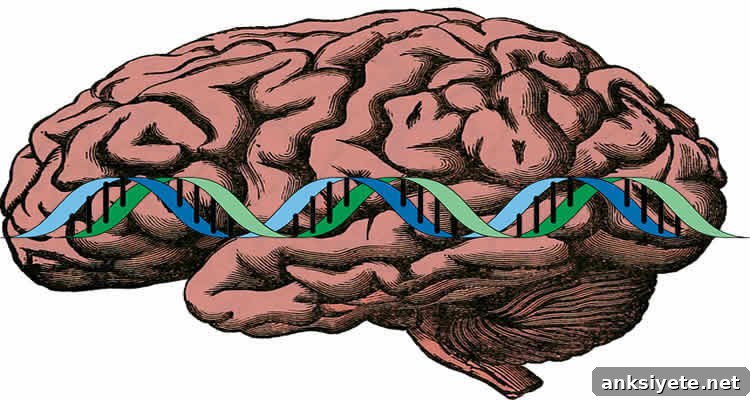
Discovery of Gomafu function increases understanding of its role in psychiatric disease.
U.S. and Australian scientists have identified the mechanism by which a newly studied gene influences brain function and drives behaviors linked to neuropsychiatric disorders. Their work highlights how a noncoding gene, Gomafu, responds to experience and may shape vulnerability to conditions such as anxiety and schizophrenia.
Timothy W. Bredy, assistant professor of neurobiology and behavior at the University of California, Irvine, together with collaborators at the University of Queensland and the Garvan Institute of Medical Research in Sydney, examined the genome for elements that change activity in response to experience. In that search they found Gomafu, a long noncoding RNA recently associated with schizophrenia, and demonstrated that its expression is dynamically regulated in the adult brain.
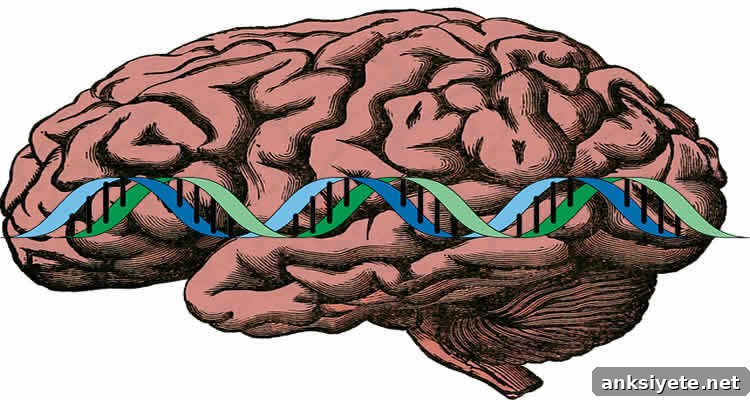
Gomafu does not encode a protein. It belongs to a class of molecules known as long noncoding RNAs (lncRNAs), which are transcribed from parts of the genome historically labeled as “junk” DNA. For decades much of the human genome — roughly 98 percent — was thought to lack function because it does not directly code for proteins. This study provides evidence that some of those sequences are highly active and play important regulatory roles in the mature brain.
Using experience-dependent paradigms and genome-wide analysis, the team showed that levels of Gomafu shift in response to environmental stimuli. When Gomafu expression is experimentally reduced, animals display behavioral changes that mirror features of anxiety and schizophrenia, indicating a functional link between this lncRNA and behaviorally relevant neural processes.
“When Gomafu is turned off, this results in the kind of behavioral changes that are seen in anxiety and schizophrenia,” said Professor Bredy, who is also affiliated with UCI’s Center for the Neurobiology of Learning and Memory and with the Queensland Brain Institute at the University of Queensland. His remarks emphasize the potential of noncoding sequences to influence brain states on time scales relevant to stress and experience.
The researchers propose that noncoding genes like Gomafu may act as a rapid-response surveillance system in the brain. By altering chromatin structure and epigenetic marks, lncRNAs can influence expression patterns of other genes and thereby enable the nervous system to respond quickly to environmental change. Disruption of this regulatory network could contribute to the onset or progression of neuropsychiatric disorders.
These results also speak to an ongoing debate about findings from genome-wide association studies (GWAS). Many genetic variants linked to neuropsychiatric conditions lie within noncoding regions of the genome. The demonstration that a specific noncoding RNA is experience responsive and behaviorally relevant helps explain how variants in noncoding DNA might influence psychiatric risk through regulatory mechanisms rather than changes in protein sequence.
Beyond conceptual advances, the study suggests practical implications: understanding the activity of Gomafu and other lncRNAs could improve prediction of who is at higher or lower risk for developing neuropsychiatric conditions, and could inform novel strategies for prevention and treatment that target regulatory and epigenetic machinery across the lifespan.
The study was published online on February 10 in the journal Biological Psychiatry. Authors include Paola A. Spadaro, Charlotte R. Flavell, Jocelyn Widagdo, Vikram S. Ratnu, Michael Troup and Chikako Ragan from the University of Queensland, and John S. Mattick from the Garvan Institute of Medical Research, with Timothy W. Bredy of UC Irvine. Support for the research came from the National Health & Medical Research Council of Australia, the Australian Research Council and the U.S. National Institute of Mental Health (grant 1R21MH103812).
Contact: Tom Vasich – UC Irvine
Source: UC Irvine press release
Image Source: The image is credited to NeuroscienceNews.com and released into the public domain
Original Research: Abstract for “Long noncoding RNA-directed epigenetic regulation of gene expression is associated with anxiety-like behavior in mice” by Paola A. Spadaro et al., Biological Psychiatry. Published online February 10, 2015, doi:10.1016/j.biopsych.2015.02.004