
Summary: A new set of laboratory tools allows researchers to detect and observe granulins inside cells for the first time.
Source: Emory Health Sciences.
Researchers at Emory University School of Medicine have developed antibody-based tools that enable reliable detection of small proteins called granulins inside cells. Granulins are fragments derived from a larger precursor protein, progranulin, and they are of major interest because mutations in the granulin (GRN) gene cause frontotemporal dementia (FTD). Until now, the location and potential roles of granulins inside cells were unclear.
Frontotemporal dementia is an incurable neurodegenerative disorder and the most common cause of dementia in people under 60. Variants in the GRN gene are also associated with increased risk for other neurodegenerative diseases, including Alzheimer’s disease and Parkinson’s disease, which suggests that understanding granulins could have therapeutic implications across several age-related brain disorders.
The researchers published their findings on August 9, 2017 in the journal eNeuro.
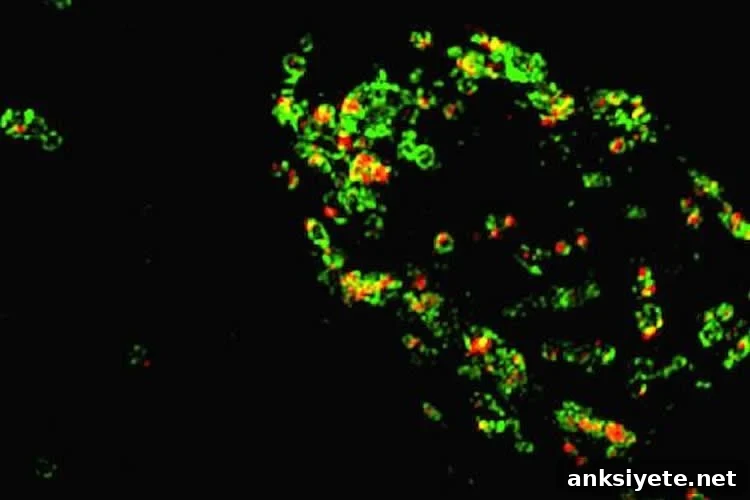
Some prior hypotheses held that granulins were produced outside cells and might be toxic in some situations. Using the newly developed detection tools, the Emory team observed granulins inside cells, localized within lysosomes — the organelles responsible for cellular waste disposal and recycling. Based on these observations, the investigators propose that granulins have important lysosomal roles that help maintain neuronal health, limit neuroinflammation, and protect against neurodegeneration.
Defects in lysosomal function are increasingly recognized in multiple neurodegenerative diseases, including Alzheimer’s and Parkinson’s disease. The discovery that granulins reside stably in lysosomes suggests a possible mechanistic link between progranulin deficiency and lysosomal dysfunction in these disorders.
“A lysosomal function for granulins is exciting and novel,” says senior author Thomas Kukar, PhD, assistant professor of pharmacology and neurology and a member of the Emory Center for Neurodegenerative Disease. “We believe this may help explain why decreased levels of granulins are linked to multiple neurodegenerative conditions, from frontotemporal dementia to Alzheimer’s disease.”
Granulins are produced when progranulin is proteolytically cleaved into smaller, roughly 6 kDa fragments. Genetic deficiency of progranulin explains some FTD cases, both familial and sporadic. When both copies of the progranulin gene are mutated, the consequence can be neuronal ceroid lipofuscinosis (NCL), a lysosomal storage disorder. NCL and other lysosomal storage diseases result from impaired lysosome function and are characterized by the accumulation of lipofuscins — intracellular deposits of fats and proteins that build up when lysosomal clearance fails. NCL typically presents earlier in life, with symptoms such as vision loss, developmental delay, motor impairments, and seizures.
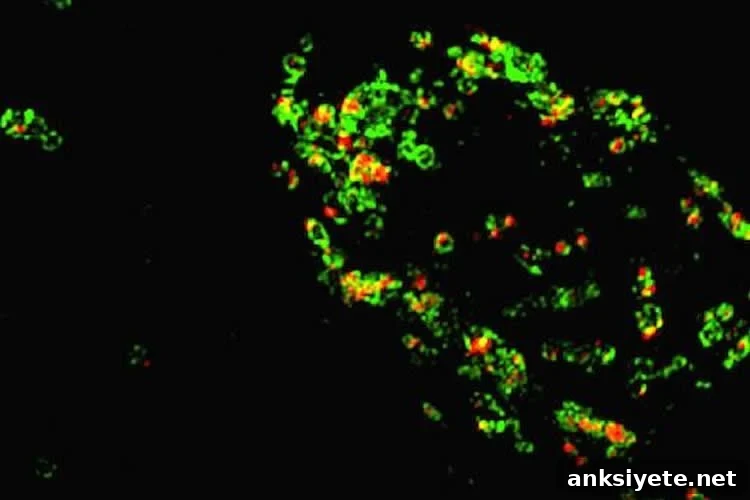
“Over the past few years, evidence accumulated that progranulin deficiency impairs lysosome function, but the precise reason was unknown,” explains first author Christopher J. Holler, PhD. “While some researchers suspected that progranulin is cleaved inside lysosomes, it had not been directly demonstrated. Our paper provides the first clear evidence that mature granulins are generated and persist within lysosomes.”
Holler adds that granulins appear stable in lysosomes, which supports the idea that they serve functional roles rather than being inert degradation by-products. The next research steps will use the new antibody tools to explore the specific molecular activities of granulins in lysosomes. One possibility is that granulins act together with other lysosomal caretakers such as saposins to support lysosomal homeostasis.
Their work also identifies potential therapeutic strategies. Diseases caused by progranulin deficiency, including some forms of FTD and possibly NCL, might be approached by restoring granulins directly, either as replacement proteins or via gene therapy. Protein or enzyme replacement therapies are already used successfully for other lysosomal storage diseases, making granulins a plausible target for similar approaches if safety and delivery challenges can be addressed.
Co-authors on the study include research specialist Georgia Taylor and postdoctoral researcher Qiudong Deng, PhD. A patent application related to this work, titled “Methods to Treat Neurodegeneration with Granulins,” has been filed; the inventors stand to gain from any future commercialization arising from these discoveries.
Funding: This research was supported by the National Institute on Aging (R00AG032362, P50AG025688), the National Institute of Neurological Disorders and Stroke (R01NS093362), the Donors Cure Foundation, the Alzheimer’s Association, the Association for Frontotemporal Degeneration, and the Bluefield Project to Cure Frontotemporal Dementia.
Original research: “Intracellular Proteolysis of Progranulin Generates Stable, Lysosomal Granulins That Are Haploinsufficient in Patients with Frontotemporal Dementia Caused by GRN Mutations” by Christopher J. Holler, Georgia Taylor, Qiudong Deng and Thomas Kukar. Published online August 9, 2017 in eNeuro. DOI: 10.1523/ENEURO.0100-17.2017
Abstract
Intracellular Proteolysis of Progranulin Generates Stable, Lysosomal Granulins That Are Haploinsufficient in Patients with Frontotemporal Dementia Caused by GRN Mutations
Homozygous or heterozygous mutations in the GRN gene, which encodes progranulin (PGRN), cause neuronal ceroid lipofuscinosis (NCL) or frontotemporal dementia (FTD), respectively. Both NCL and FTD show lysosomal dysfunction and neurodegeneration, indicating PGRN is important for lysosomal homeostasis in the brain. PGRN is trafficked to the lysosome, but its precise role there was previously unknown. PGRN can be cleaved into seven ~6 kDa proteins called granulins (GRNs), but prior to this work little was known about how GRNs are produced or whether GRN levels are altered in FTD patients with GRN mutations.
Using newly identified antibodies that detect several human GRNs by immunoblot and immunocytochemistry, the authors found that endogenous GRNs are present in multiple cell lines and are constitutively produced. Extracellular PGRN is endocytosed and rapidly processed into stable GRNs within lysosomes. This processing is conserved between humans and mice and is influenced by sortilin expression and cysteine protease activity. Artificial lysosome dysfunction, induced by alkalizing agents or increased expression of TMEM106B, inhibits PGRN processing into GRNs. Finally, several GRNs are haploinsufficient in primary fibroblasts and cortical brain tissue from FTD-GRN patients. Together, these findings suggest granulins perform critical lysosomal functions and that loss of granulins may be an initiating factor in lysosomal dysfunction and neurodegeneration associated with GRN mutations.
Significance Statement: Progranulin plays a vital but previously undefined role in lysosome biology. The demonstration that PGRN is proteolytically processed into stable, lysosomal granulins implies that GRNs may have functional roles in lysosomes and are not intrinsically toxic. Deficiency of GRNs in FTD caused by GRN mutations could contribute to lysosomal dysfunction and disease initiation, supporting exploration of GRN replacement as a therapeutic strategy. Potential drug approaches for FTD-GRN should be evaluated for effects on both PGRN and GRN production in the brain.