
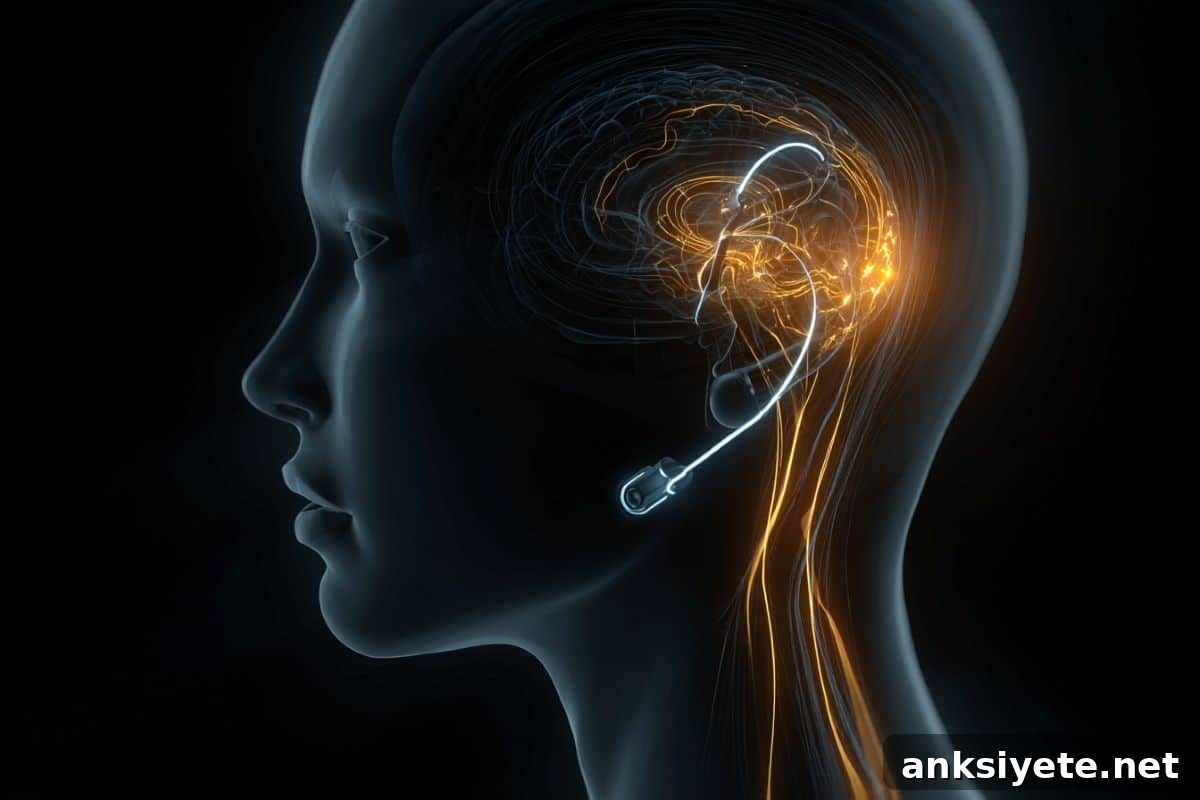
Summary: A precision neuroengineering study offers the first localized evidence that noninvasive ear-based vagus nerve stimulation interacts with human motor pathways specifically during active movement. The clinical trial evaluated transcutaneous auricular vagus nerve stimulation (taVNS) as an adjunct to physical therapy and demonstrates a focused effect on motor circuitry and arousal, rather than broad systemic changes.
By delivering brief bursts of electrical stimulation precisely timed with voluntary finger movements, researchers showed that taVNS does not produce generic physiological shifts. Instead, it selectively enhances motor-cortex activity and triggers a measurable arousal response, suggesting new strategies to optimize rehabilitation for stroke and other mobility impairments.
Key Facts
- The vagal-motor connection: The vagus nerve is a major bidirectional pathway linking the brain with internal organs. Noninvasive stimulation of its auricular branch (taVNS) is being explored as a complement to physical therapy, but until now its real-time effects on motor networks during movement were unclear.
- Movement-paired protocol: Investigators applied brief, targeted taVNS bursts to 36 healthy volunteers performing a randomized computer-cued task that required tapping or withholding a finger tap at unpredictable intervals.
- Anatomical precision: Compared with no-stimulation trials, movement-paired taVNS produced an immediate increase in activity within movement-related brain regions. Shifting the stimulator to a different ear location abolished this effect, demonstrating strong spatial specificity.
- Arousal without spillover: Pupil dilation measurements showed a phasic arousal response associated with movement-paired stimulation, indicating neuromodulatory engagement that supports focused, task-related alertness.
- No collateral physiological change: Other somatic and autonomic measures—such as heart rate and galvanic skin response—remained stable, indicating taVNS selectively targets motor and arousal pathways rather than producing broad systemic side effects.
- Effect without voluntary movement: In a follow-up test on 19 immobile participants, researchers triggered motor pathways externally while delivering taVNS. The stimulation produced targeted finger twitches and enhanced corticospinal output without altering peripheral physiological baselines.
Source: SfN
The vagus nerve connects the brain to major organs and influences many bodily functions. For people participating in physical therapy, noninvasive transcutaneous auricular vagus nerve stimulation (taVNS) is emerging as a potential adjunct treatment.
Despite growing clinical interest, how taVNS interacts with motor systems during active movement had not been rigorously tested. That gap limited efforts to design movement-paired stimulation protocols for rehabilitation.
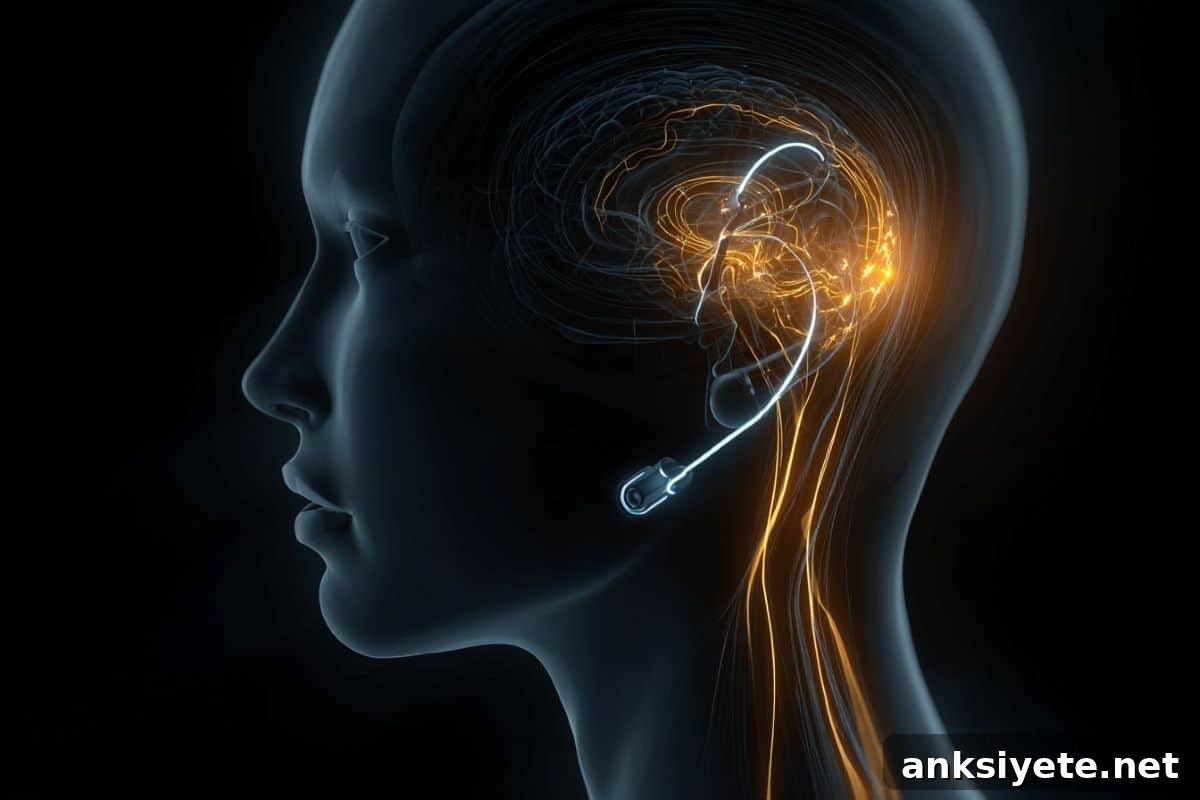
Published in the Journal of Neuroscience, the study, led by Dane Donegan and Paulius Viskaitis at the Federal Institute of Technology Zurich (ETH Zurich), examined how short taVNS bursts delivered during movement affect brain and body systems.
In the primary experiment, 36 healthy adults received 2-second taVNS bursts while performing a randomized “go/no-go” finger-tapping task. Compared with no stimulation, taVNS timed to movement increased activity in sensorimotor brain regions and facilitated corticospinal excitability as measured by motor-evoked potentials.
Stimulation at a control ear location did not produce the same cortical enhancement, supporting the method’s spatial specificity. Simultaneously recorded pupil responses indicated a phasic arousal signal associated with the stimulation, while autonomic indices such as heart rate and skin conductance showed no additional modulation beyond movement-related changes.
A second experiment removed the voluntary element by externally activating motor pathways in 19 immobile participants while applying taVNS. This manipulation produced localized finger twitches and increased motor output without impacting peripheral physiological baselines, reaffirming that taVNS enhances movement-related neural circuits selectively.
The authors interpret these results to mean that taVNS, when paired with movement, preferentially boosts task-engaged motor circuitry and produces a focused arousal state without eliciting nonspecific autonomic effects. These findings provide mechanistic support for movement-paired stimulation protocols in neurorehabilitation and identify pupil responses, EEG sensorimotor activity, and motor-evoked potentials as sensitive biomarkers of phasic taVNS effects.
Viskaitis highlighted the translational potential: the next steps include determining whether these acute neural effects correlate with long-term motor recovery and optimizing stimulation timing and parameters to enhance therapy outcomes.
Key Questions Answered:
A: The auricular branch of the vagus nerve links peripheral inputs to brain systems that control movement. Delivering short taVNS bursts at the moment of voluntary movement produces an immediate enhancement of electrical activity in primary motor regions, effectively amplifying task-related neural signals.
A: Pupil diameter reflects rapid shifts in neuromodulatory state and attention. The study found that movement-paired taVNS evokes a clear phasic pupil response, indicating increased alertness and readiness to engage motor circuits—conditions that can favor motor learning and recovery.
A: In this study, taVNS delivered in brief, movement-timed bursts enhanced motor circuitry and arousal without producing additional changes in autonomic measures like heart rate or skin conductance, suggesting a highly targeted effect with minimal systemic side effects.
Editorial Notes:
- This article was edited by a Neuroscience News editor.
- The original journal paper was reviewed in full.
- Additional context was provided by the editorial staff.
About this neuroscience and neurotech research news
Author: SfN Media
Source: SfN
Contact: SfN Media
Image: Credit to Neuroscience News
Original Research: Open access.
“Transcutaneous Auricular Vagus Nerve Stimulation During Movement Selectively Activates Motor Circuitry Without Additional Cortical or Autonomic Effects” by Cléo Perrin, Flaminia Pallotti, Tiziano Weilenmann, Clément Lhoste, Weronika Potok-Szybinska, Xue Zhang, Nicole Wenderoth, Olivier Lambercy, Dane Donegan and Paulius Viskaitis. Journal of Neuroscience. DOI: 10.1523/JNEUROSCI.2251-25.2026
Abstract
Transcutaneous Auricular Vagus Nerve Stimulation During Movement Selectively Activates Motor Circuitry Without Additional Cortical or Autonomic Effects
Transcutaneous auricular vagus nerve stimulation (taVNS) is a noninvasive neuromodulation technique with growing therapeutic relevance, increasingly paired with physical therapy in neurorehabilitation. Most prior studies examined taVNS at rest, leaving its dynamic effects during movement uncertain. This study tested the neurophysiological basis for pairing brief taVNS bursts with active movement.
Thirty-six healthy adults participated in two experiments where 2-second taVNS bursts were delivered. The first experiment measured autonomic indices (heart rate, galvanic skin response), neuromodulatory markers (pupil diameter), and cortical activity (EEG spectral measures) across three stimulation conditions—taVNS, earlobe sham, and no stimulation—while participants performed a randomized go/no-go task.
The second experiment assessed corticospinal excitability using transcranial magnetic stimulation (TMS)-evoked motor potentials during taVNS. Results showed that taVNS increased TMS-induced motor-evoked potential amplitudes and enhanced EEG sensorimotor activity during movement but not during stillness. Pupil diameter displayed a phasic response to stimulation in both movement and still conditions, indicating neuromodulatory engagement independent of movement state. Autonomic measures were not additionally affected by phasic taVNS beyond the effects of movement.
These findings identify a state-dependent window in which taVNS preferentially augments task-engaged motor circuitry without producing nonspecific autonomic activation, supporting the rationale for movement-paired stimulation protocols and highlighting pupil response, EEG sensorimotor activity, and motor-evoked potentials as sensitive biomarkers of phasic taVNS effects.