
Vaccine research leads to complete remission in child with relapsed neuroblastoma
One year after his final treatment, a six-year-old boy with relapsed, high‑risk metastatic neuroblastoma remains in complete remission. This encouraging case was reported in the January 2013 issue of Pediatrics, the journal of the American Academy of Pediatrics. The study received partial funding from a joint grant through the Andrew McDonough B+ Foundation, Pierce Phillips Charity, and Solving Kids’ Cancer.
Neuroblastoma is a pediatric solid tumor that can be aggressive and difficult to cure when it reaches high‑risk, metastatic stages. Standard treatment for high‑risk neuroblastoma typically combines intensive chemotherapy, radiation therapy, surgical resection when feasible, hematopoietic stem cell transplant, and antibody‑based immunotherapy. Despite these multi‑modal approaches, long‑term survival for children with high‑risk disease remains limited, and survival after a relapse is particularly poor—historically below 5% for many patients. As a result, researchers and clinicians continue to pursue novel, less toxic, and more targeted therapies for recurrent neuroblastoma.
In adult solid tumor trials, immunotherapy strategies that target cancer‑specific antigens such as NY‑ESO‑1, MAGE‑A1, and MAGE‑A3 have shown promise in stimulating immune responses that selectively attack tumor cells. Building on that progress, investigators at the University of Louisville adapted these same tumor‑associated antigens for a pediatric application by developing a dendritic cell vaccine for neuroblastoma. The vaccine approach harnesses a patient’s own immune system—specifically dendritic cells and T cells—to recognize and eliminate cancer cells that express these antigens.
Dendritic cell vaccines are prepared by collecting a patient’s immune cells, exposing those dendritic cells in culture to selected tumor antigens, and then returning the primed dendritic cells to the patient through a series of injections. Once reintroduced, these dendritic cells present antigen to the patient’s T cells, teaching the T cells to identify and kill cancer cells that bear the same antigenic markers. Cancer vaccines differ from traditional preventive vaccines: their goal is therapeutic—treating active disease and reducing the risk of recurrence—rather than preventing initial infection.
The trial led by Kenneth Lucas, M.D., chief of Pediatric Hematology‑Oncology and Stem Cell Transplantation at the University of Louisville Department of Pediatrics, tested a protocol that included a DNA‑hypomethylating agent (decitabine) followed by the dendritic cell vaccine. Funding from nonprofit partners played a critical role in advancing this translational research and supporting the team’s work to develop new immunotherapeutic options for children with neuroblastoma and other aggressive pediatric cancers.
In the reported case, tumor cells that had been detected in the boy’s bone marrow were no longer present one year after the final vaccination, and clinical evaluation showed no evidence of disease. While this represents a single case report and not yet definitive proof of broad efficacy, the result is an important proof of principle that a dendritic cell vaccine targeting tumor‑specific antigens can produce a meaningful clinical response in relapsed pediatric neuroblastoma.
The broader clinical study included children with sarcomas in addition to neuroblastoma and was planned to continue through 2013. For patients facing relapsed neuroblastoma, options in clinical trials remain limited; therefore, innovative strategies that combine targeted immunotherapy with other agents are urgently needed to improve outcomes and reduce long‑term treatment toxicity.
“This research builds on five years of pre‑clinical work that identified three immunological targets specific to this pediatric cancer,” said Scott Kennedy, Executive Director of Solving Kids’ Cancer. “This case highlights the potential therapeutic progress that can be made against neuroblastoma and brings renewed hope to patients and families in the search for a lasting cure.”
Notes about this brain cancer research article
Contact: Jenny Song – Solving Kid’s Cancer
Source: Solving Kid’s Cancer press release
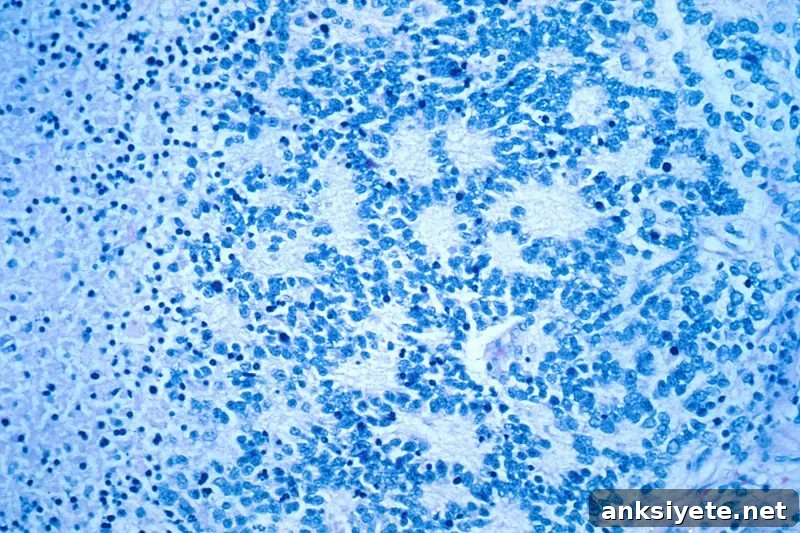
Image source: The neuroblastoma image with rosette formation is credited to Dr. Maria Tsokos, National Cancer Institute. The image has been identified as public domain.
Original research: “Complete Remission Following Decitabine/Dendritic Cell Vaccine for Relapsed Neuroblastoma” by Deepa Kolaseri Krishnadas, PhD; Teresa Shapiro, NP; and Kenneth Lucas, MD. Published in Pediatrics, Vol. 131, No. 1, pp. e336–e341. Published online December 24, 2012. DOI: 10.1542/peds.2012-0376.