
Summary: When people face two options, they often choose the cheaper one. But add a third, mid-priced option, and many will gravitate to the more expensive item because it appears to be the better deal. This cognitive bias, known as the decoy effect, is well documented in human behavior. A new study finds that fruit-eating bats also display this bias, revealing surprising parallels between human and animal decision-making.
Source: Smithsonian Tropical Research Institute
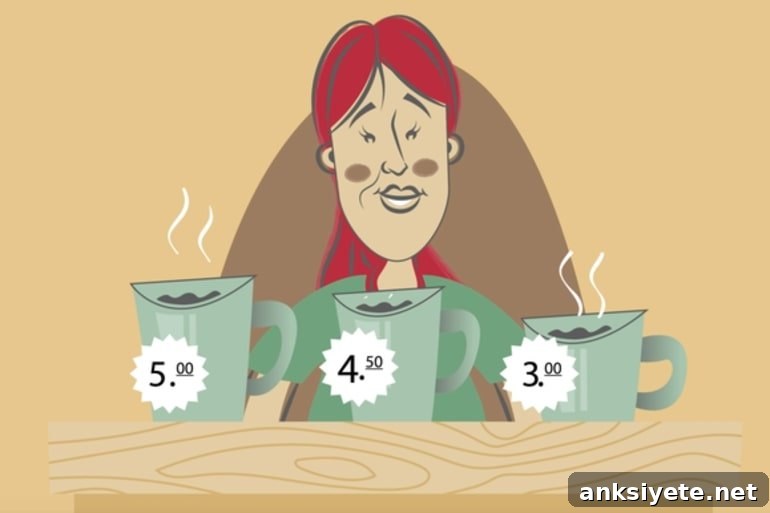
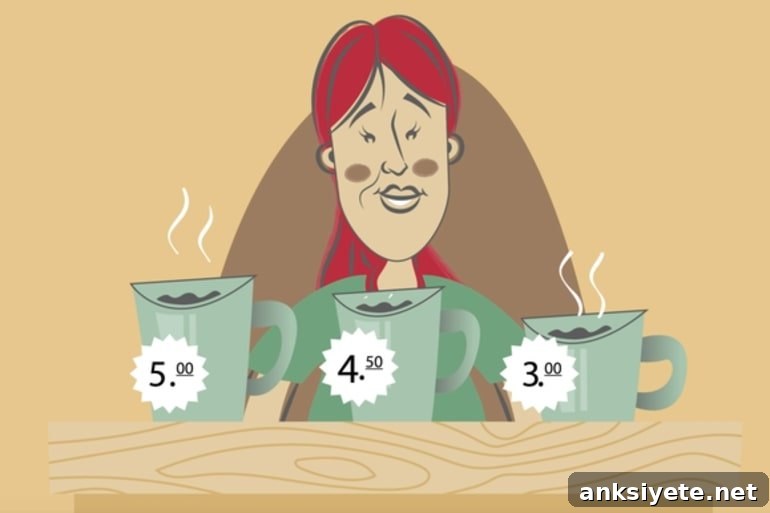
Next time you shop online or stand in front of a supermarket shelf, notice whether you are given two choices or three. Marketers often present a trio of options deliberately: the third option is designed to make a pricier choice look like better value. For example, between a small coffee for $3 and a large for $5, many people prefer the small. But if a medium size is added for $4.50, the $5 choice suddenly seems like the smarter purchase. This simple three-option setup influences decisions ranging from purchases to travel and even voting.
The added option is called a “decoy” because it subtly alters attention and pushes decision-makers toward a target choice.
Irrational choices are not unique to humans—previous studies show that birds, bees and slime molds can also make context-dependent food choices. Claire Hemingway, who recently earned her doctorate from the University of Texas, initially expected similar variability in bats. She was surprised to find that frog-eating bats made largely rational choices, but that fruit-eating bats behaved more like humans and succumbed to the decoy effect.
The Jamaican fruit bat, Artibeus jamaicensis (often abbreviated A.J.), is one of the most common bats in lowland tropical forests from Mexico to northern South America. These fruit-eating bats feed on figs and other fruits and play a crucial role in forest regeneration by dispersing seeds. Their abundance and ease of capture make them practical subjects for behavioral experiments.
“Claire is examining whether the irrationalities we see in human decision-making also appear in bats,” said Rachel Page, Claire’s advisor at the Smithsonian Tropical Research Institute. “Her work bridges animal behavior, economics, marketing theory and cognitive science.”
To test preferences, Claire captured A.J. bats in mist nets and introduced small groups—typically three or four—into a flight cage. After allowing the bats time to acclimate, she presented individual bats with controlled food choices and recorded their selections using security cameras to avoid social influence.
Each bat received choices in isolation. Claire named the bats alphabetically by cohort—Arturo, Aria, Bianca, Barnaby and so on—to track individual responses and consistency across trials.
When presented with two ripe fruits, such as ripe bananas and ripe papaya, bats showed no strong preference. But when Claire introduced a third, less attractive option—unripe bananas—the bats’ behavior changed: most shifted their choices toward the ripe bananas. In other words, the presence of an inferior decoy altered their preference and increased selection of the more desirable, higher-value option.
Earlier work by Claire found that frog-eating bats (Trachops cirrhosus) behaved differently. Those bats evaluated food options independently and resisted decoy influences, making choices consistent with transitive preferences (if A > B and B > C, then A > C). The contrast between these closely related species suggests that diet and foraging demands may shape decision-making strategies.
“These two species are close relatives and share the same forests,” Claire notes, “so the difference in their decision-making points to ecological factors—like diet and prey mobility—playing a key role.” Predators that pursue mobile, evasive prey (such as frogs) may evolve decision strategies that demand greater precision, while frugivores that feed on stationary fruit may be more susceptible to context-dependent biases.
Claire’s broader experimental program produced other intriguing results. For example, when she trained frog-eating bats to associate two different cellphone ringtones with food rewards given at different hunger states, bats were more likely to approach the ringtone linked to food received when they were hungry than the ringtone associated with food given when they were sated. In another test, frogs presented in larger groups were preferred by the bats, though the bats struggled to discriminate between groups that differed only slightly in number. Claire plans to extend these comparative studies to bumblebees during her postdoctoral research to explore how foraging ecology drives decision biases across taxa.
Studying how animals and insects make choices helps illuminate the mechanisms underlying human decision-making. Comparative research that spans species, diets and ecological contexts can reveal how perception, cognition and environmental demands shape the biases and rationalities of foraging decisions.
About this psychology research news
Author: Elisabeth King
Source: Smithsonian Tropical Research Institute
Contact: Elisabeth King – Smithsonian Tropical Research Institute
Image: Image credited to Smithsonian Tropical Research Institute
Original Research: Closed access. “Context-dependent preferences in wild fruit bats” by Claire Hemingway et al., Animal Behavior.
Abstract
Context-dependent preferences in wild fruit bats
Traditional models of choice assume animals evaluate options in absolute terms and assign fitness-related values that lead to consistent decisions across contexts. These expectations align with economic notions of rationality, predicting stable preferences. Yet evidence from humans and other animals shows that decision mechanisms can produce context-dependent choices that violate these rational models.
This study investigated context-dependent decision-making in wild Jamaican fruit bats (Artibeus jamaicensis). The results show that these bats are sensitive to the context of available options and shift preferences when an irrelevant decoy is introduced. These findings contrast with previous results from a closely related species, the frog-eating bat (Trachops cirrhosus), suggesting that diet and ecological niche may influence the presence and strength of decision-making biases.
Comparative studies exploring how diet and ecology shape these biases are essential for understanding how animals make foraging decisions in the wild.