
Summary: A new study finds that deaf infants take longer to become familiar with new visual objects. Researchers say this reveals early differences in how infants process information, even when it is not auditory.
Source: Ohio State University.
Differences in cognitive development between hearing and deaf children begin in infancy, according to new research from The Ohio State University College of Medicine published in PLOS ONE.
Prior research has documented cognitive differences between deaf and hearing children at preschool and school ages. Researchers at The Ohio State University Wexner Medical Center asked a more basic question: when do these differences first appear? To answer it, the team compared visual information processing in hearing and deaf infants to determine whether measurable differences are present in the first years of life.
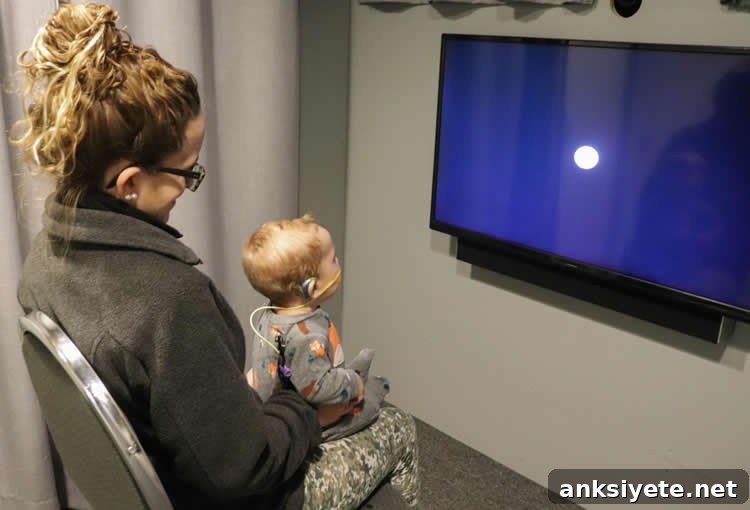
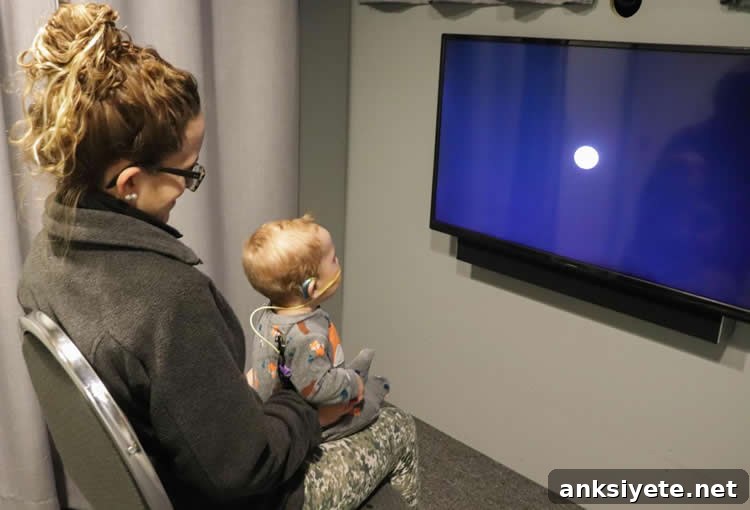
Study co-authors Claire Monroy, a postdoctoral otolaryngology fellow, and Derek Houston, associate professor of otolaryngology, conducted the first direct comparison of visual habituation between deaf and hearing infants. Habituation is the process by which an infant becomes familiar with a stimulus: once an object is encoded, attention to it declines and the infant looks away. The researchers found that deaf infants required more time to habituate to a visual object, indicating a distinct profile of information processing even when stimuli are purely visual.
“This research lays the groundwork for further investigation into the causes and implications of these early differences,” said Dr. K. Craig Kent, dean of the College of Medicine.
In the study, researchers presented a colorful object on a screen to 23 deaf infants and 23 hearing infants, all between 7 and 22 months old. On average, deaf infants looked at the stimulus about 30 seconds longer than hearing infants. In addition, the rate at which deaf infants looked away during habituation was roughly 40% lower than that of hearing infants.
“Many people assume deaf children compensate for lack of hearing by developing superior visual processing. Our findings show a different pattern: deaf infants in this study took longer to become familiar with a visual object,” Monroy explained.
Researchers caution that slower habituation does not necessarily indicate slower learning overall. Because deaf infants rely on vision to explore their surroundings, they may attend more closely to visual details and extract more information from each encounter. Derek Houston suggested, “They might actually be processing more about each object, not less.”
Understanding why these differences occur is the focus of follow-up research. The team aims to identify how early sensory experience influences general cognitive development and how interventions can be tailored to support each child’s strengths and needs.
“Pinpointing the origin of these differences will help us design interventions that are specific and effective for deaf children,” Monroy said. “The earlier we can provide targeted support, the better the developmental outcomes are likely to be.”
Source: Drew Schaar – Ohio State University
Publisher: Organized by NeuroscienceNews.com.
Image Source: Image credited to The Ohio State University Wexner Medical Center.
Original Research: Open access research titled “Visual habituation in deaf and hearing infants” by Claire Monroy, Carissa Shafto, Irina Castellanos, Tonya Bergeson, and Derek Houston, published in PLOS ONE on February 6, 2019.
doi: 10.1371/journal.pone.0209265
MLA: Ohio State University. “Hearing and Deaf Infants Process Information Differently.” NeuroscienceNews, 6 February 2019.
APA: Ohio State University (2019, February 6). Hearing and Deaf Infants Process Information Differently. NeuroscienceNews.
Chicago: Ohio State University. “Hearing and Deaf Infants Process Information Differently.” NeuroscienceNews. (accessed February 6, 2019).
Abstract
Visual habituation in deaf and hearing infants
Early cognitive development depends on the sensory experiences infants gather as they explore their environment. When one sensory modality is atypical from birth, it can shape general cognitive abilities in fundamental ways. This study compared visual habituation in infants with profound hearing loss (tested prior to cochlear implantation) to that of age-matched infants with typical hearing. The researchers measured two complementary indicators of cognitive function and attention: the time required to habituate to a visual stimulus and the rate of looks away during habituation. Results showed that deaf infants were slower to habituate to a visual stimulus and had a lower look-away rate than hearing infants. In deaf infants, these habituation measures also correlated with standardized language assessment outcomes prior to cochlear implantation. These results align with previous evidence that habituation speed and look-away rates reflect the efficiency of information processing, suggesting that deaf infants may take longer to process visual stimuli compared with hearing infants. Overall, the findings support the hypothesis that early hearing loss influences aspects of general cognitive functioning.